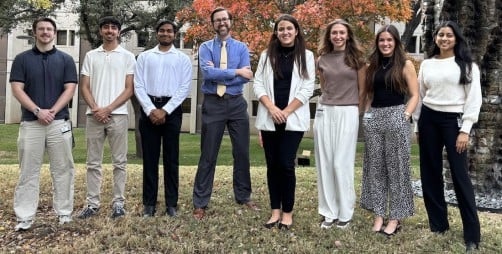
Researchers at UT Southwestern Medical Center have developed a groundbreaking presurgical vaccine strategy that could significantly reduce the risk of infections in patients undergoing joint replacement surgeries. This innovative approach, detailed in a study published on December 1, 2025, in the Proceedings of the National Academy of Sciences, utilizes a novel injectable scaffold designed to enhance the immune system’s response against bacterial infections.
The research team, led by Alexander Tatara, M.D., Ph.D., an Assistant Professor of Internal Medicine and Biomedical Engineering at UT Southwestern, in collaboration with David Mooney, Ph.D., a Professor of Bioengineering at Harvard University, aims to address a pressing issue in orthopedic medicine. Each year, orthopedic surgeons in the United States perform over a million knee and hip replacements, with approximately 2% to 3% of these procedures resulting in infections.
Targeting Infections with Advanced Technology
Orthopedic device infections are predominantly caused by Staphylococcus aureus, particularly the antibiotic-resistant strain known as methicillin-resistant Staphylococcus aureus (MRSA). These infections can lead to severe complications, necessitating additional surgeries and prolonged antibiotic treatments. Dr. Tatara explains, “The infections stem from bacteria that adhere to the surface of artificial joints, forming a biofilm that is resistant to most antibiotics.” This biofilm poses a substantial challenge as it prevents the effective delivery of immune responses to the affected area.
The newly developed scaffold-based vaccine works by creating a three-dimensional framework made of biocompatible materials, such as cryogels or silica rods. These materials are infused with bacterial antigens to attract and activate immune cells, thereby enhancing the body’s natural defenses. The study revealed that this approach triggered an immune response over 100 times more robust than conventional vaccines when tested in a mouse model.
Paving the Way for Better Patient Outcomes
Dr. Tatara emphasizes the potential of this technology to transform patient care in orthopedic surgery. “If we can effectively utilize this scaffold vaccination prior to surgery, we could prevent the formation of biofilms and bolster the immune system against infections,” he stated. This is particularly crucial for patients with weakened immune systems, who are at greater risk of developing post-surgical infections.
In addition to improving patient safety, the scaffold vaccination could reduce the need for extensive treatments that often accompany orthopedic infections. “Current procedures can involve multiple surgeries and long courses of antibiotics, sometimes leading to lifelong antibiotic use,” Dr. Tatara noted, highlighting the potential for quicker recovery times and less invasive treatment options.
The funding for this research comes from several prestigious organizations, including the National Institutes of Health (NIH) and the Wyss Institute for Biologically Inspired Engineering, among others. Dr. Tatara, who joined UT Southwestern in 2024, is now leading a new program focused on immunoengineering, the study of using biomaterials and immunotherapies to tackle medical device infections.
By continuing to collaborate with colleagues across various disciplines, including Biomedical Engineering and Orthopaedic Surgery, Dr. Tatara hopes to advance this innovative research from the laboratory to clinical settings. “Our goal is to develop new strategies to protect our patients from infections associated with medical devices,” he stated. “Collaborative projects like this one illustrate the strength of our institution and align our clinical and research missions to better serve our patients.”
This breakthrough in vaccine technology not only enhances the understanding of infection mechanisms associated with medical devices but also represents a significant step toward more effective preventive measures in orthopedic surgery.