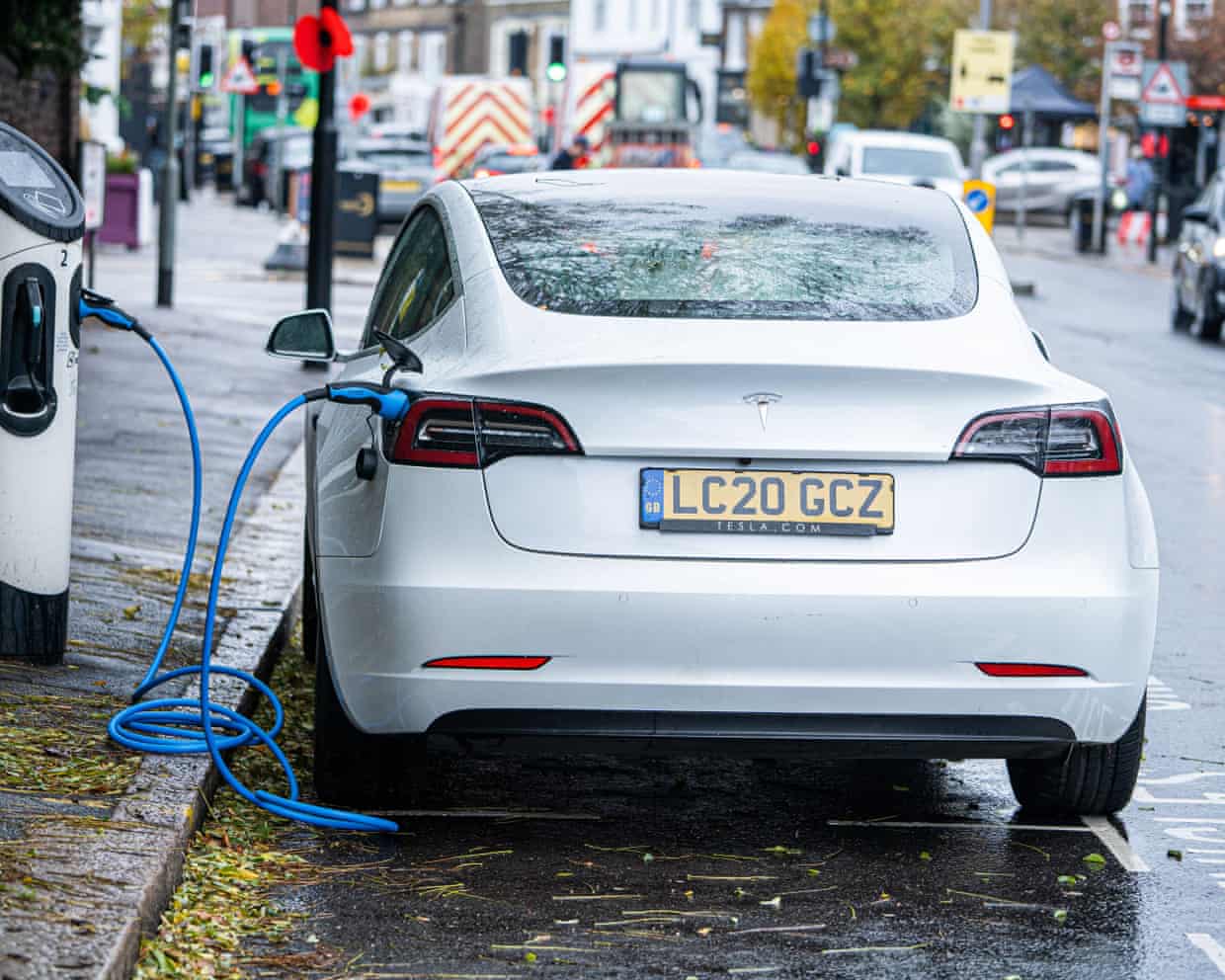
Tesla has privately alerted the UK government that potential changes to electric vehicle regulations could adversely impact sales of battery-operated cars, risking the country’s ability to meet its carbon dioxide reduction targets. Documents obtained by the Fast Charge newsletter reveal that the US electric vehicle manufacturer, led by Elon Musk, emphasized the need for continued support for the used-car market in submissions to a government consultation earlier this year.
In April, the Labour government raised concerns among electric vehicle manufacturers by loosening the requirements of the zero-emission vehicle (ZEV) mandate. This mandate mandates an annual increase in electric vehicle sales, but recent adjustments have created loopholes that allow manufacturers to sell more petrol and diesel vehicles. Critics have highlighted that new taxes on electric cars, introduced in the recent budget, could further diminish demand.
Carmakers such as BMW, Jaguar Land Rover, Nissan, and Toyota, all of which operate factories in the UK, expressed in their consultation feedback that the revised mandate was hindering investments. They reported selling electric vehicles at a loss, which has become a significant concern for various manufacturers.
Despite these concerns, environmental advocates and brands primarily focused on electric vehicles argue that the existing regulations are achieving their intended results. As of now, no carmakers are believed to have faced penalties for sales in 2024. Tesla insisted that it is “essential” for the prosperity of electric vehicle sales that the government refrains from introducing any new loopholes, referred to as “flexibilities.”
According to Tesla, changes to the regulations “will suppress battery electric vehicle (BEV) supply, carry a significant emissions impact and risk the UK missing its carbon budgets.” The latest budget announcement by Chancellor Rachel Reeves further unsettled car manufacturers, as it included plans for a “pay-per-mile” charge on electric vehicles starting in 2028. This charge is expected to reduce the appeal of electric cars in comparison to traditional petrol and diesel models.
Conversely, the budget did extend grants for new electric vehicles, a move welcomed by the sector. Tom Riley, the author of Fast Charge, noted, “Just as the EV transition looked settled, the budget pulled it in two directions at once – effectively robbing Peter to pay Paul.” He suggested that if carmakers continue to advocate for a softer mandate, the Labour government may bear the consequences if climate targets falter.
Tesla, alongside Mercedes-Benz and Ford, requested that their responses to the consultation not be disclosed; however, these documents were acquired through a freedom of information appeal. Many pages were heavily redacted, but one header indicated Tesla’s call for “support for the used-car market.” Tesla has not commented on whether this support would entail grants.
In contrast, both Ford and Mercedes-Benz have opposed stricter regulations that would require them to further reduce average carbon dioxide emissions beyond 2030. Ford criticized European governments for withdrawing support for electric vehicle sales, stating, “Policymakers in many European jurisdictions have not delivered their side of the deal.” The US company has since reversed its earlier support for stronger targets.
Ford also raised concerns about competition from Chinese manufacturers that do not maintain a UK presence and benefit from lower operational costs. Mercedes-Benz proposed reducing VAT on public charging from 20% to 5% to align it with home electricity rates and suggested implementing a price cap on public charging rates.
Tesla has also called for a ban on the sale of plug-in hybrid electric vehicles featuring a battery-only range of less than 100 miles after 2030, a restriction that would eliminate many popular models in that category. Both Ford and Mercedes-Benz, as well as Tesla, have refrained from providing further comments on these developments.