Researchers at National Taiwan University have made significant strides in understanding the unique properties of copper chalcogenides, particularly their ability to convert carbon dioxide (CO2) into formate with remarkable selectivity. This breakthrough addresses a long-standing question in the field of catalysis and could have substantial implications for carbon capture and utilization.
For years, the reason behind the exceptional selectivity of copper chalcogenides in transforming CO2 into formate has puzzled scientists. Conventional knowledge suggested that such selectivity is typically found in p-block metals like tin or bismuth, rather than transition metals like copper. Despite extensive research, the underlying mechanisms remained elusive until this recent study.
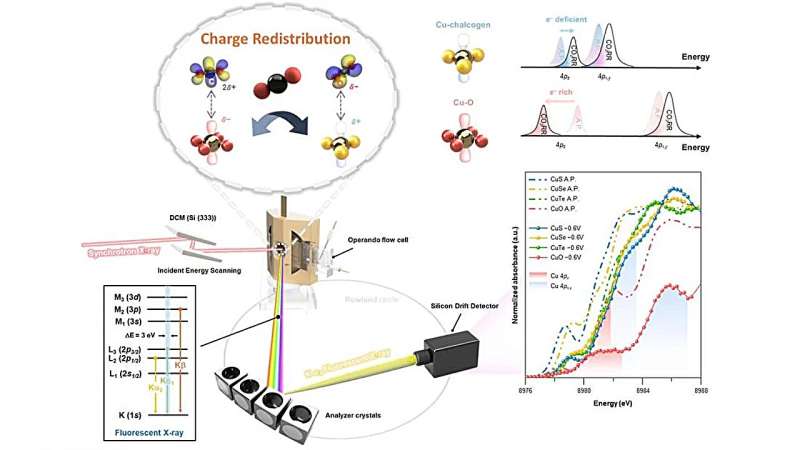
The research team, led by Professor Hao Ming Chen, published their findings in Nature Communications on December 3, 2025. They employed advanced operando synchrotron-based X-ray spectroscopic techniques to capture direct evidence of the charge-redistribution dynamics that underpin the catalytic process. This innovative approach allowed them to gain insights into how copper chalcogenides maintain high selectivity for formate production.
One of the key discoveries is that chalcogenide anions stabilize the catalytic structure, preventing the over-reduction of cuprous (Cu+) species to metallic copper (Cu0). This stabilization preserves an electronic configuration conducive to the formation of mono-carbon intermediates, specifically carbon monoxide (CO) and formate. Additionally, the study highlights that these anions promote a charge-redistribution process within the Cu+ sites. This mechanism effectively stabilizes O-bound formate intermediates, ensuring that CO2 reduction primarily leads to formate rather than competing products like CO or multi-carbon compounds.
The research team demonstrated that the optimal CuS catalyst achieved a remarkable 90% faradaic efficiency for formate production at a potential of −0.6 V, with a formate partial current exceeding an ampere-scale. These results indicate the potential for scalability, making this research applicable for industrial uses in carbon conversion technologies.
Professor Hao Ming Chen noted the significance of their findings, stating, “Copper chalcogenides have fascinated researchers for decades because of their enhanced formate selectivity, but the true origin of this behavior was never fully understood. Our study reveals that charge-redistribution dynamics redefine the fundamental principles governing CO2 reduction selectivity and offer a new design strategy for tuning catalyst electronic structure via chalcogen modification.”
This study marks a pivotal advancement in the field of electrocatalysis, shedding light on how charge redistribution can influence selective reactions. The insights gained from this research could pave the way for the development of more efficient catalysts that may play a crucial role in mitigating climate change by enhancing CO2 conversion processes.
As the global community continues to seek innovative solutions for carbon emissions, the findings from National Taiwan University offer a promising avenue for future research and application in sustainable technologies.