Col. Gen. Vladimir Chirkin, a former commander of Russia’s ground forces, has publicly criticized the Kremlin’s intelligence community for its handling of the Ukraine invasion, asserting that they provided misleading assessments that contributed to Moscow’s lack of preparation. In an interview with the Russian radio outlet RBC on November 27, 2023, Chirkin stated that the invasion, which began in February 2022, was predicated on significant miscalculations regarding Ukraine’s political landscape and military capabilities.
Chirkin expressed disappointment over the intelligence assessments that indicated a supposed pro-Russian sentiment among the Ukrainian population. He noted, “Russian leadership had been misled into thinking that 70% of Ukraine’s population supported a pro-Russian government. It turned out to be exactly the opposite. 30% for us and 70% against.” This misjudgment, according to Chirkin, led to a series of early setbacks for Russian forces, which he characterized as a “seriously cruel lesson.”
The general’s remarks are notable for their starkness, particularly for a senior military figure from Russia, even one who is no longer in active service. He reflected on the confident predictions made at the onset of the invasion, where many believed the war would conclude swiftly. “Everyone, if you recall, started saying in February 2022 that the war would be over in three days. We’ll beat them all now,” he said. “But unfortunately, it didn’t work out that way. I would give our entire Russian intelligence community a failing grade.”
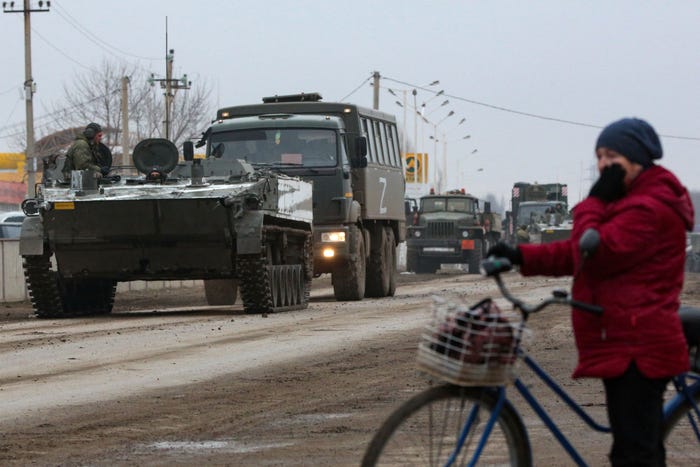
Chirkin’s evaluation aligns with assessments from Western and Ukrainian analysts, who also criticized Russia for underestimating its adversary. The failure to secure air superiority, logistical challenges, and confusion among troops contributed to the Kremlin’s withdrawal from the Kyiv region in late March 2022, a significant early setback in the conflict.
In the interview, Chirkin addressed what he termed the “Tbilisi syndrome,” describing a scenario in which military personnel are hesitant to make independent tactical decisions without explicit orders from their superiors. This phenomenon, he suggested, impeded the effectiveness of Russian forces during the initial stages of the invasion.
While Chirkin’s criticisms are pointed, he refrained from directly challenging the official narrative that justified the invasion of Ukraine. His commentary remained focused on operational failures and the evolution of Russian warfare tactics over recent years, emphasizing the need for the military to adapt to contemporary challenges.
The interview’s candid nature surprised even the host, with RBC‘s Yuri Tamantsev remarking on the unexpected frankness displayed by Chirkin. This level of openness is particularly striking given the current climate in Russia, where sharing “false information” about the war can result in severe legal repercussions, including lengthy prison sentences.
Chirkin’s military career has been marked by controversy, including his removal from command in 2013 over bribery charges. After a conviction in 2015 for accepting a bribe of 450,000 rubles, he served time in a labor camp before having his sentence commuted. His comments, while critical, reflect a growing acknowledgment among some former military leaders of the significant challenges facing the Russian military in its ongoing conflict in Ukraine.
As the war continues to evolve, the implications of Chirkin’s insights may resonate within military and political circles, prompting further scrutiny of the strategic decisions made by the Kremlin in the ongoing conflict.