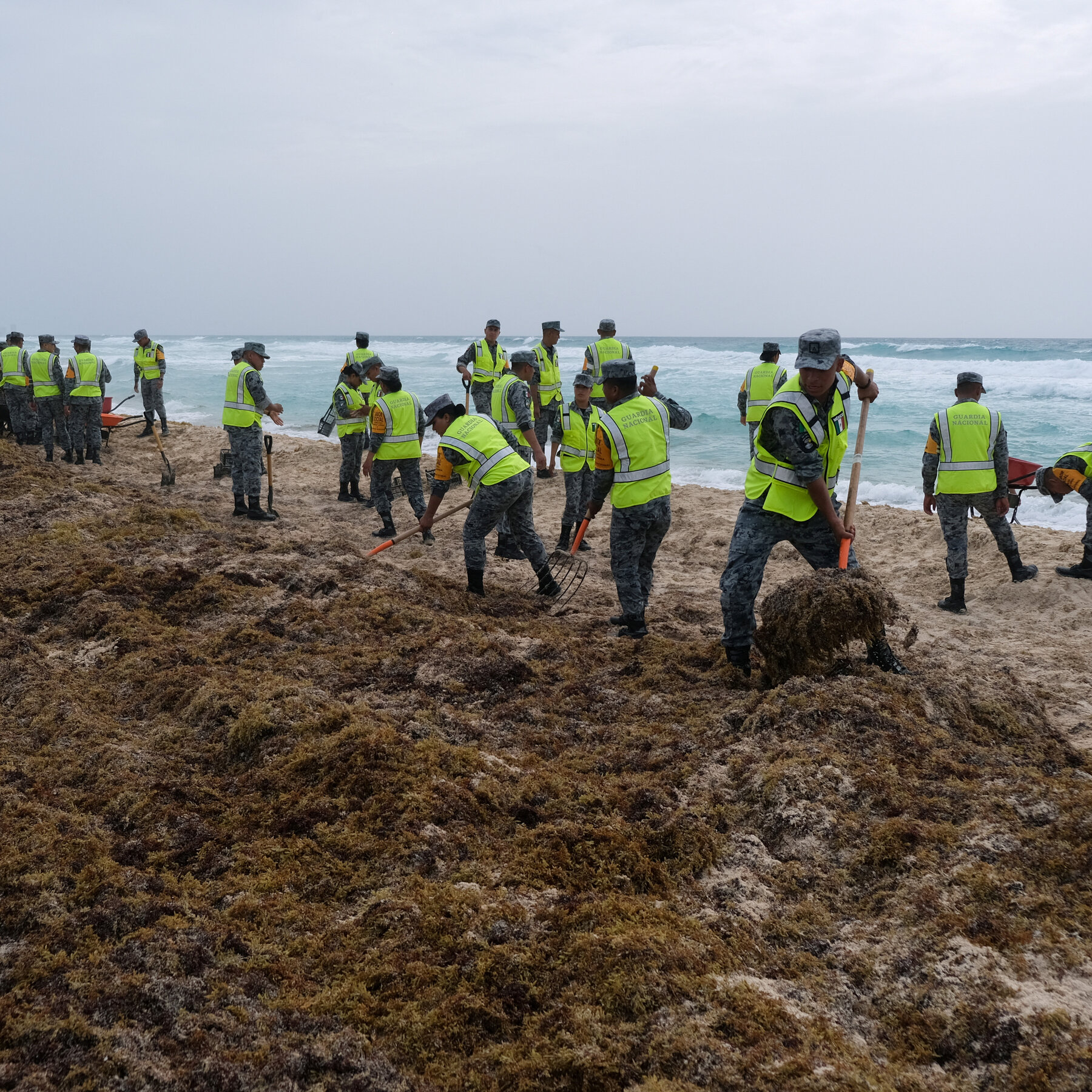
Recent climate shifts have dramatically impacted seaweed ecosystems in the Atlantic Ocean. While a record-breaking bloom of yellowish-brown seaweed threatens coastal regions near the Equator, a centuries-old patch in the North Atlantic is facing significant decline.
Research conducted by NASA has revealed that the Caribbean Sea is experiencing an unprecedented growth of this seaweed, specifically the species known as sargassum. This bloom has expanded in size, covering approximately 15 million square kilometers as of 2023. Such growth has led to severe disruptions along popular beaches, affecting tourism and local economies.
In contrast, a long-established sargassum patch located in the North Atlantic is diminishing. This area, which has existed for hundreds of years, has seen a decline attributed to changing ocean currents and rising sea temperatures. The Gulf Stream, a vital current in the North Atlantic, is reportedly shifting due to warming waters, which affects the nutrient flow crucial for sustaining the sargassum ecosystem.
The environmental consequences of these shifts are significant. According to a study from the University of California, Santa Barbara, the vast increase in sargassum near the equator could disrupt marine life and lead to further ecological imbalances. Beaches that are usually pristine are now suffering from the accumulation of decaying seaweed, resulting in unpleasant odors and potential health risks for residents and tourists alike.
Local governments are grappling with the challenges posed by these changes. Some regions have initiated cleanup operations to manage the seaweed influx, which can cost thousands of dollars. For instance, in parts of the Caribbean, the cleaning efforts have exceeded $1 million this year alone.
The disparity between the booming sargassum near the Equator and the vanishing patch in the North Atlantic highlights the complex nature of climate change. The phenomenon is not uniform; rather, it manifests differently across regions, impacting various ecosystems in unique ways.
As the sargassum blooms grow and recede, scientists emphasize the need for continued research to understand the long-term implications of these shifts. The interconnectedness of oceanic systems means that changes in one area can have ripple effects far beyond local environments.
The evolving situation serves as a stark reminder of the ongoing consequences of climate change. While some regions may see the effects as an annoyance or temporary challenge, the broader implications for marine biodiversity, coastal economies, and environmental health are profound. Addressing these challenges will require coordinated efforts among governments, scientists, and local communities to adapt to the changing tides of our oceans.