A groundbreaking study conducted by researchers at Cornell University has unveiled new insights into the mechanisms by which psilocybin, the active compound in magic mushrooms, impacts brain connectivity related to depression. The research, published on December 5, 2023, in the journal Cell, combines the use of psilocybin with a modified rabies virus to map the brain’s neural circuits more effectively.
The study demonstrates that psilocybin weakens specific cortico-cortical feedback loops, which are often implicated in negative thinking patterns associated with depression. Additionally, it strengthens pathways to subcortical regions responsible for translating sensory perceptions into actions. This dual action may contribute to the drug’s potential in therapeutic settings, where clinical trials have indicated lasting reductions in depressive symptoms following a single treatment.
Quan Jiang, a postdoctoral researcher and lead author of the study, emphasized the importance of understanding the rewiring of the brain initiated by psilocybin. “A lot of people were excited about the earlier study because psychedelics are promising therapeutics, but we don’t know why they work,” Jiang noted. “Our study showed that the rewiring in the brain lasts a long time.”
Mapping the Brain’s Neural Pathways
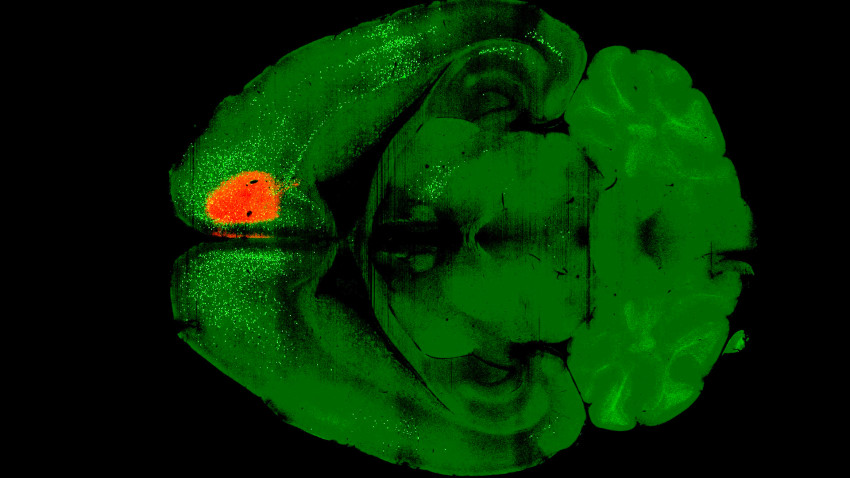
The research team, led by Alex Kwan, Ph.D., a professor of biomedical engineering at Cornell University, adopted a novel approach to investigate how psilocybin alters brain connectivity. Rather than solely relying on optical imaging, the team introduced a variant of the rabies virus, engineered by collaborators at the Allen Institute for Brain Science in Seattle. This virus acts like a mapping tool, tracing the intricate wiring of the brain and revealing how psilocybin adds new connections.
The study involved administering a single dose of psilocybin to the frontal cortical pyramidal neurons of mice. One day later, the researchers introduced the modified rabies virus, which labels neurons connected to those affected by psilocybin. After a week, the team imaged the brain and compared its connectivity to that of a control group that received only the virus. The results indicated that psilocybin significantly weakened recurrent connections within the cortex, which may elucidate why individuals with depression often engage in rumination, or persistent negative thinking.
Jiang explained, “Rumination is one of the main points for depression, where people have this unhealthy focus and they keep dwelling on the same negative thoughts. By reducing some of these feedback loops, our findings support the interpretation that psilocybin may rewire the brain to break, or at least weaken, that cycle.”
Broader Implications for Therapeutic Development
Unexpectedly, the research revealed that psilocybin’s rewiring effects spanned the entire brain rather than being limited to a few specific regions. Kwan expressed surprise at the scale of the changes observed, stating, “This is really looking at brain-wide changes. That’s a scale that we have not worked at before.”
Moreover, the study highlighted that the firing activity of neural circuits could influence how psilocybin rewires the brain. This finding opens new avenues for therapeutic applications, suggesting that by manipulating neural activity in specific regions, researchers might enhance beneficial plasticity while mitigating negative effects.
The study’s co-authors include several notable contributors, such as postdoctoral researcher Ling-Xiao Shao, doctoral student Amelia D. Gilbert, and researchers from various institutions, including Yale University and the Chinese University of Hong Kong. The research received support from One Mind and the National Institutes of Health.
As research into the therapeutic potential of psychedelics continues to evolve, findings like these may play a crucial role in developing innovative treatments for depression, offering hope to millions affected by this condition worldwide.