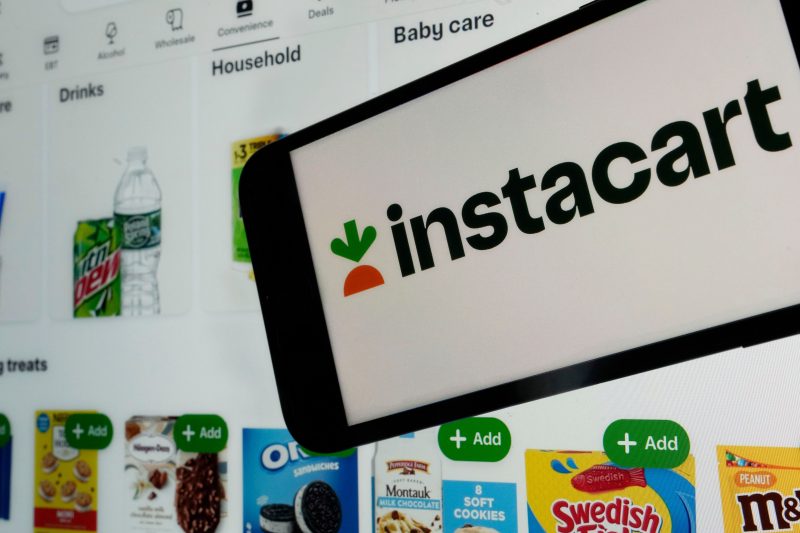
Instacart has acknowledged a recent study indicating that some customers are charged different prices for the same items on its app. The report highlights a pricing disparity for identical products sourced from the same retailers, raising concerns about fairness in its pricing practices.
The findings, published in early March 2024, scrutinize the pricing mechanisms employed by the popular grocery delivery service. According to the study, which analyzed prices across various customer accounts, discrepancies were observed that cannot be attributed solely to promotions or discounts. Some customers reportedly paid significantly more for the same groceries, which has led to questions about the company’s pricing strategy.
Details of the Study
The analysis was conducted by researchers who monitored prices on the Instacart app over a period of several weeks. They found that even when shopping from the same grocery store, customers received different pricing for identical items. For instance, one customer may see a price of $3.50 for a particular brand of cereal, while another might be charged $4.00 for the same product.
This price discrepancy was not limited to just a few items; it spanned a wide range of products, including fresh produce, dairy, and household essentials. The study’s authors emphasized the potential implications for consumer trust, noting that if customers perceive unfair pricing, it could impact their willingness to use the service in the future.
Instacart’s Response
In response to the findings, Instacart issued a statement reaffirming its commitment to transparency and fairness. The company explained that pricing variations can occur due to multiple factors, including local market conditions, customer demand, and the dynamic nature of pricing algorithms. Instacart assured users that it continuously evaluates its pricing structure to ensure competitive rates.
Furthermore, Instacart highlighted that it employs a technology-driven approach to optimize pricing based on real-time data. This strategy aims to provide customers with the best possible deals while also allowing retailers to manage inventory effectively.
Despite these explanations, consumers remain concerned. Many have taken to social media to express their frustration, questioning why they are charged differently for the same items. The issue has sparked a broader conversation about pricing transparency in the online grocery sector.
As the landscape of grocery shopping evolves, companies like Instacart face increasing scrutiny over their pricing strategies. With online shopping becoming more prevalent, consumers are more aware than ever of potential discrepancies. This scrutiny could lead to heightened expectations for transparency and fairness in pricing across the industry.
Instacart’s handling of this situation will likely influence how it is perceived by customers moving forward. The company may need to take proactive measures to address these concerns, such as enhancing communication about its pricing policies and implementing additional safeguards to ensure equitable pricing for all users.