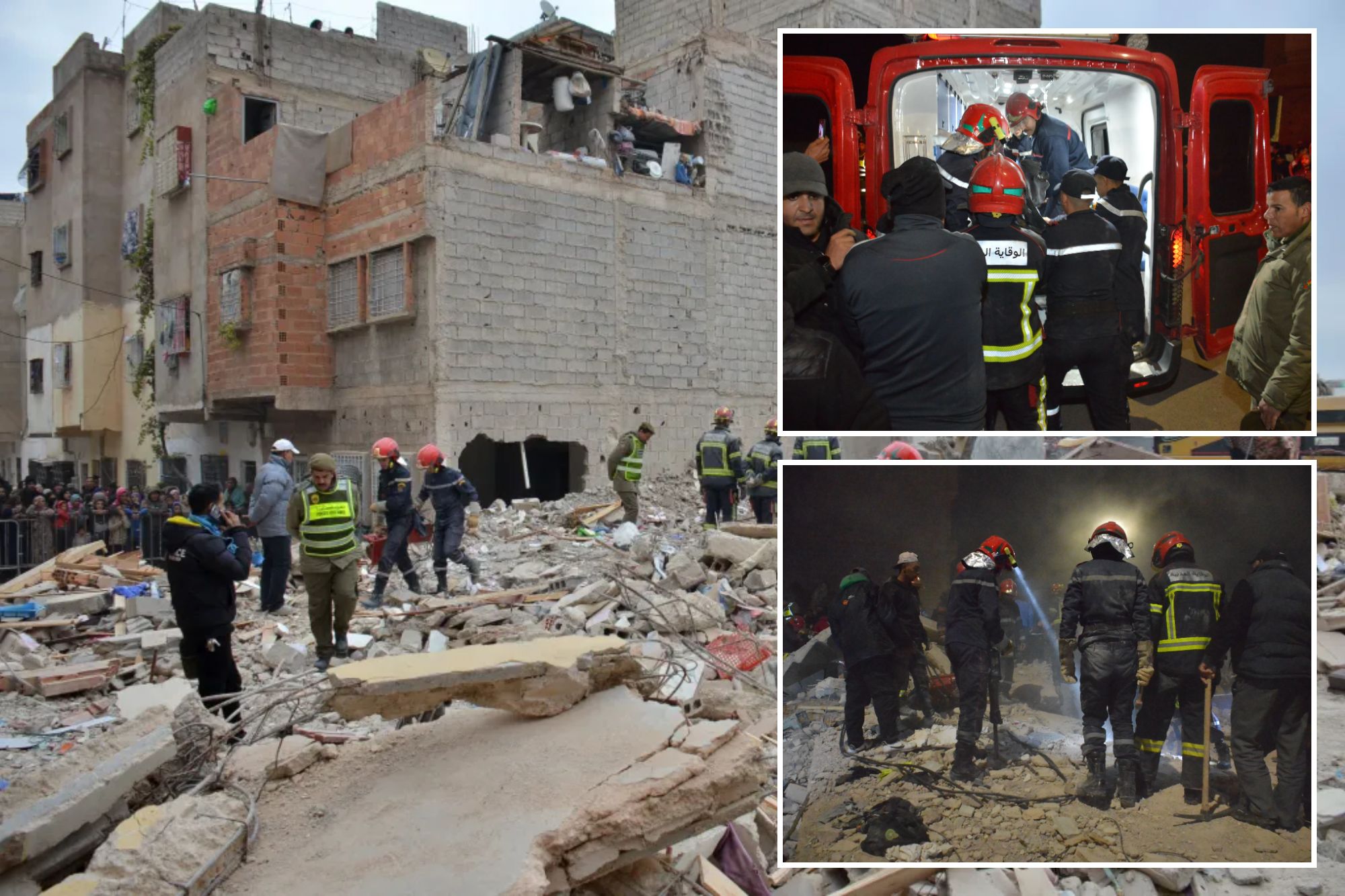
At least 22 people were killed and 16 others injured following the collapse of two adjacent buildings in Fez, one of Morocco’s oldest cities, on the night of October 25, 2023. The incident was confirmed by the local prosecutor, who stated that while one of the buildings was unoccupied, the other was hosting an Aqiqah, a traditional Muslim celebration marking the birth of a child.
Local authorities reported that eight families lived in the building where the celebration occurred. Both structures had four stories and had displayed visible signs of damage prior to the collapse, including cracks that had been noted by residents.
Rescue Efforts and Community Impact
Rescue operations are currently underway, with workers and local residents sifting through debris in search of survivors. A survivor, who tragically lost his wife and three children, informed Medi1 TV that rescuers had managed to recover one body but he remained hopeful for more. Footage from state-owned broadcaster SNRT News depicted the harrowing scene, where community members expressed their shock and grief. One elderly woman, wrapped in a blanket, recalled hearing her son warn her about the imminent danger just moments before the building fell.
Witnesses indicated that the buildings, located in the densely populated Al-Mustaqbal neighborhood, had shown signs of distress for some time. Despite these warnings, residents remained in the buildings until the fatal incident occurred. Efforts to reach the Interior Ministry for comments on the situation went unanswered.
Context of Building Safety in Morocco
The collapse has drawn attention to broader issues regarding building safety across the country. In January, Adib Ben Ibrahim, the housing secretary of state, stated that approximately 38,800 buildings in Morocco had been classified as at risk of collapse. This incident marks one of the deadliest structural failures in Morocco since a minaret fell in Meknes in 2010, resulting in the deaths of 41 people.
Fez, which served as the capital of Morocco in the eighth century, has been a focal point for recent discontent. Two months prior to this tragedy, the city experienced a wave of anti-government protests driven by deteriorating living conditions and inadequate public services. The frustrations of the local population have been exacerbated by the government’s focus on ambitious infrastructure projects, including preparations for the 2030 FIFA World Cup and the current African Cup of Nations soccer tournament.
As rescue efforts continue, the community grapples with the loss and the urgent need for better living conditions. The tragic collapse serves as a stark reminder of the vulnerabilities faced by many residents in Morocco’s historic cities.