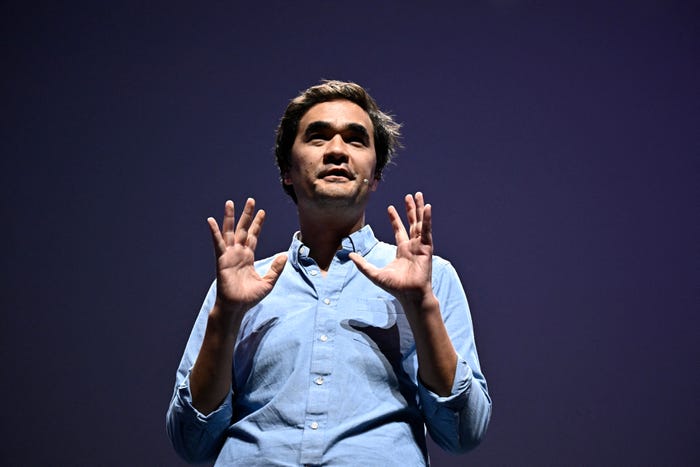
OpenAI’s head of business products, Olivier Godement, has identified three job sectors poised for significant automation in the coming years. During a recent episode of the “Unsupervised Learning” podcast, Godement discussed the implications of artificial intelligence (AI) on roles within life sciences, customer service, and computer engineering.
Godement emphasized that the life sciences industry, particularly pharmaceutical companies like Amgen, will undergo substantial changes due to automation. He noted that the administrative tasks involved in drug development are ripe for automation. “The time it takes from once you lock the recipe of a drug to having that drug on the market is months, sometimes years,” he stated, adding that AI can effectively handle the aggregation and analysis of vast amounts of data. This capability could streamline the lengthy process of drug approval and market introduction.
Godement remarked that while complete automation of white-collar jobs is not imminent, there are clear use cases emerging in coding and customer service. He suggested that although the automation of software engineering jobs is not yet fully realized, there is significant potential for advancement. “We have a line of sight essentially to get there,” he explained, referring to the evolution of AI tools that assist with coding.
The discussion surrounding the future of software engineering has intensified, especially in light of a study by Indeed that identified software engineers, quality assurance engineers, product managers, and project managers as the most affected roles during recent layoffs. The push for AI-assisted coding tools has sparked considerable debate within the tech community regarding job security and the evolving nature of work.
Godement’s insights extend to customer-facing roles, where he sees potential for automation in sales and customer experience. He mentioned ongoing collaborations with T-Mobile in the United States to enhance customer service quality through AI. “My sense is we’ll probably be surprised in the next year or two on the amount of tasks that can be automated reliably,” he stated, highlighting the rapid advancements in AI technology.
These observations align with broader concerns expressed by AI leaders about the future of white-collar jobs. Geoffrey Hinton, often referred to as the “Godfather of AI,” previously noted that while AI is expected to outperform humans in various intellectual tasks, some professions will remain relatively safe for the time being. He specifically mentioned that fields requiring physical manipulation, such as plumbing, are less vulnerable to automation in the near future.
As advancements in AI technology continue to reshape the workforce, the conversation around job security and the potential for automation remains crucial. Godement’s predictions serve as a reminder that while AI can enhance efficiency, it also poses challenges for traditional employment roles across various sectors.