The Kyushu Grand Sumo Tournament, the final major competition of the year, commenced in Fukuoka on November 9 and concluded on November 23. This prestigious event showcased not only the athletic prowess of the competitors but also the rich traditions associated with sumo wrestling, particularly through the presence of formal attire worn by judges.
In attendance were five stablemasters, serving as ringside judges, all dressed in traditional black crested kimono and wide-legged hakama. These garments are mandated by the Japan Sumo Association, which upholds strict aesthetic standards for judges appearing at the dohyo (sumo wrestling ring). Their attire reflects the solemnity and grandeur of the sport.
Earlier in October, the atmosphere was equally vibrant at the Centennial Tournament held at the Ryogoku Kokugikan in Tokyo. This event marked the 100th anniversary of the Japan Sumo Association and featured a reenactment of the “Sumai no Sechie” ceremony, a historical court ritual from the Nara (710-794) and Heian (794-late 12th century) periods. The ceremony involved wrestling bouts presented to the emperor, providing a glimpse into the origins of grand sumo and its deep ties to Japanese history.
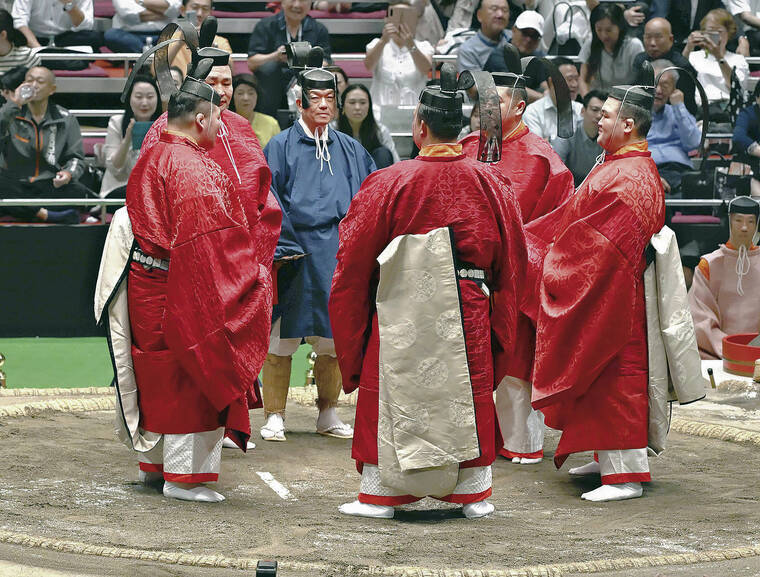
The reenactment transported spectators back a millennium, as judges, dressed in striking red court attire and traditional eboshi caps, sat in the front row. Among them were five stablemasters who previously held the prestigious ranks of yokozuna (highest rank) or ozeki (second-highest rank). Their participation added an air of authenticity to the proceedings.
When former wrestlers, including stablemaster Nishonoseki (previously known as Kisenosato), donned elaborate costumes reminiscent of ancient judges, the atmosphere erupted with gasps and applause. These magnificent outfits seemed to leap out of an illustrated Heian scroll, captivating the audience with their historical significance. Few outside of actors in period dramas have the opportunity to wear such elaborate clothing.
The event also featured a staged scenario in which the five judges convened on the dohyo for a referees’ conference to resolve a disputed call. Following the performance, stablemaster Otowayama (formerly Kakuryu) expressed his thoughts on the experience, saying, “It was a new experience, as we don’t usually get to wear this kind of attire.” His commentary underscored the unique blend of tradition and contemporary competition that defines sumo wrestling.
The Kyushu Grand Sumo Tournament not only celebrated the athleticism of its competitors but also served as a reminder of sumo’s enduring heritage. As it concluded, the event left participants and spectators alike with a renewed appreciation for the cultural significance of this ancient sport.