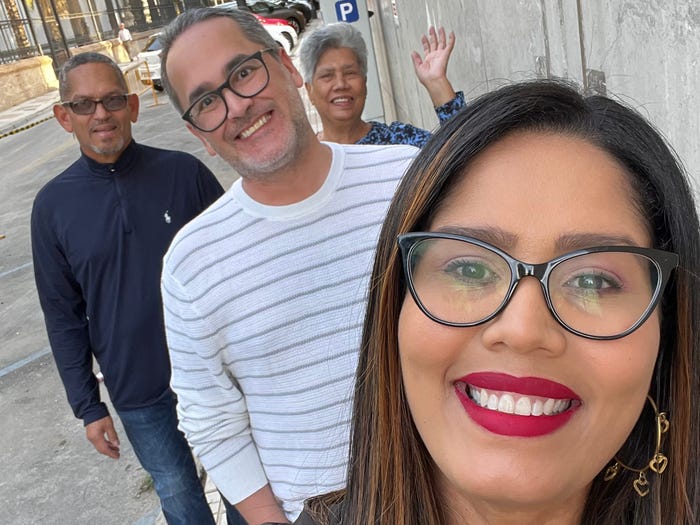
UPDATE: A family in Orlando is grappling with the urgent challenges of early-onset Alzheimer’s disease as they navigate a life-altering diagnosis. Zahydie Burgos’s husband, Francisco “Pako” Burgos, was diagnosed at just 46 years old, prompting her parents to relocate from Puerto Rico to provide essential care.
In late 2020, Zahydie noticed troubling changes in Pako’s behavior, including unexpected online shopping sprees and difficulties in communication. As a federal lawyer, he was previously known for his sharp judgment, but the pandemic seemed to exacerbate his decline.
By January 28, 2022, after various tests, a neurologist confirmed the devastating diagnosis of Alzheimer’s disease. This news was particularly alarming as Pako had witnessed his father succumb to the same illness at age 70. “I was in denial,” Zahydie recounted. “How can that be? He’s only 46.”
The family’s journey took a pivotal turn when Zahydie’s parents moved in to help. “It wasn’t even a conversation,” she explained, highlighting the immediate need for support. Roberto Burgos, Zahydie’s father, now walks 30,000 steps a day to stay fit for the demands of caregiving. This arrangement allows Zahydie to continue her full-time work as a licensed psychologist while managing her husband’s care.
Pako has been receiving treatment, including medication named Lequembi and participation in a clinical trial for a drug called Etalanetug. Despite the difficulties, the family remains hopeful, advocating for awareness of early detection of Alzheimer’s through organizations like Us Against Alzheimer’s.
The couple’s emotional journey has inspired them to create lasting memories, visiting places like Athens and Venice as part of their “bucket list” tours. “Pako’s diagnosis has upended our lives, but it has also been empowering,” Zahydie stated.
Family members have formed a supportive network, frequently visiting and assisting with appointments. Zahydie’s 85-year-old mother-in-law calls daily, and siblings step in to alleviate some of the burden.
As the family shares their story, they highlight the profound impact of Alzheimer’s, not just on individuals but on familial dynamics. Zahydie emphasizes the importance of recognizing early symptoms and the need for community support for caregivers.
This urgent situation sheds light on the realities faced by families dealing with Alzheimer’s, sparking conversations about awareness, advocacy, and the crucial role of family support.
Stay tuned for more updates on this developing story.