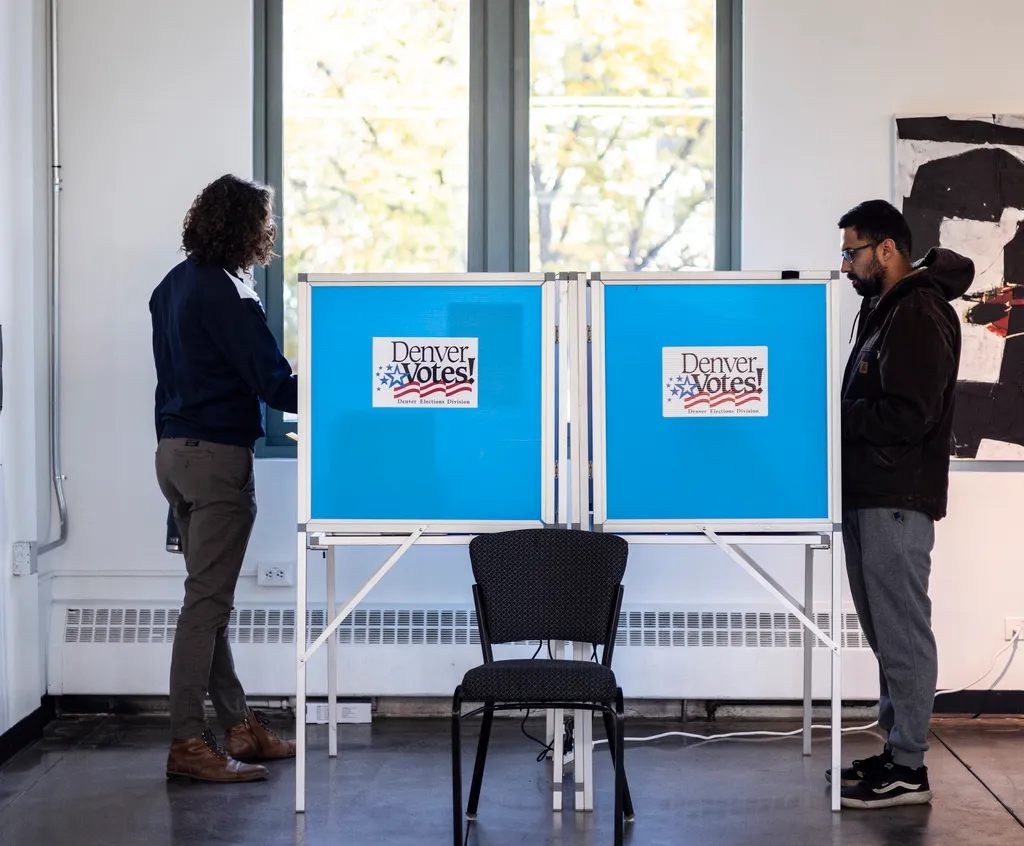
UPDATE: The Justice Department has just announced federal lawsuits against Colorado, Hawaii, Massachusetts, and Nevada for failing to provide detailed voter registration data. This marks a significant escalation in the department’s aggressive pursuit of voter information, with 18 states now facing legal action.
The lawsuits, filed on September 21, 2023, claim these states are violating federal laws by not supplying statewide voter registration lists upon request. The Justice Department alleges that compliance is crucial for ensuring the integrity of elections, especially as the nation approaches the pivotal 2026 election cycle.
“This Department of Justice will not permit states to jeopardize the integrity of elections by refusing to abide by our federal elections laws,” stated Harmeet K. Dhillon, Assistant Attorney General of the Civil Rights Division. The department seeks sensitive data, including names, dates of birth, residential addresses, and even partial Social Security numbers, raising alarms over voter privacy.
Democratic officials are pushing back. Jena Griswold, Secretary of State for Colorado, firmly declared, “We will not hand over Coloradans’ sensitive voting information to Donald Trump. He does not have a legal right to the information.” Meanwhile, Francisco Aguilar, Nevada’s Secretary of State, expressed concerns about the intentions behind the requests, describing them as an attempt to intimidate states.
The controversy surrounding these lawsuits reflects deepening divisions over election security. Critics argue that the federal government’s actions could undermine state control over elections, a principle enshrined in the Constitution. Aguilar emphasized, “Elections are run by the states,” highlighting the tension between state autonomy and federal oversight.
In addition, officials from Hawaii have raised similar objections. In a letter dated September 22, Hawaii Deputy Solicitor General Thomas Hughes asserted that state law mandates the confidentiality of voter registration data, challenging the Justice Department’s legal basis for the requests.
The implications are far-reaching. The Justice Department has requested voter registration rolls from at least 26 states recently, igniting a nationwide debate on privacy rights versus election integrity. States such as California, Michigan, and Pennsylvania are also among those previously sued.
In Wisconsin, the bipartisan Elections Commission voted against providing unredacted voter information, with concerns about legality and voter privacy taking center stage. This decision showcased the growing resistance against federal oversight in election administration.
The lawsuits have prompted widespread reactions and could spark further legal battles. “I will continue to protect our elections and democracy, and look forward to winning this case,” Griswold vowed following the lawsuit’s announcement.
As developments unfold, the Justice Department’s actions will be closely monitored. The outcome of these lawsuits may set a precedent for how voter data is handled across the United States, impacting millions of voters and the future of election integrity.
Stay tuned for more updates on this critical issue as it continues to develop.