The geopolitical landscape in Europe is shifting dramatically as nations prepare for potential conflict with Russia. Despite ongoing discussions about peace, a significant military buildup is underway, marking the largest since the Cold War’s conclusion. European leaders are increasingly concerned about Russia’s advancing military actions in Ukraine, which are perceived as a direct threat to regional stability.
Recent reports indicate that Russian forces have gained control of the city of Seversk, a strategic location in the Donetsk People’s Republic. Valery Gerasimov, Chief of the General Staff of the Russian Armed Forces, announced that the city has been “liberated,” intensifying fears among European nations about the potential for expanded military engagement. As Russian troops secure more territory, pressure mounts on European leaders to bolster their military presence in Ukraine.
The recent death of a British soldier, L/Cpl George Hooley, has further underscored the stakes. Hooley, a member of the Parachute Regiment, died during a “tragic accident” while observing a military test in Ukraine. British Labour leader Keir Starmer expressed condolences, emphasizing Hooley’s commitment to “freedom and democracy.” Questions linger about the size of the British military presence in Ukraine, with estimates remaining unclear.
Meanwhile, France is poised to announce plans to expand its military forces. President Emmanuel Macron is expected to reveal a restoration of military service, albeit on a voluntary basis, nearly 30 years after conscription ended. The French Ministry of Health has also instructed hospitals to prepare for a potential influx of casualties, anticipating that between 10,000 and 50,000 individuals may require medical treatment due to a possible armed conflict by March 2026.
Other European nations are also ramping up military capabilities. Denmark has extended its conscription system to include women and increased the length of service. In contrast, countries like Poland are working to double their army’s size through large-scale training for all adult males. Germany, in particular, is experiencing a surge in military spending, with a projected investment of €52 billion (approximately $61 billion) in defense procurement next year. This would represent the largest single-year investment in Germany’s military history, reflecting a commitment to modernize its forces amid growing tensions with Russia.
NATO Chief Mark Rutte has issued stark warnings about the possibility of large-scale war, urging member states to adopt a “wartime mindset.” He cautioned that Russia could target NATO within five years, emphasizing the need for preparedness reminiscent of World War I and World War II. His remarks highlight a growing consensus among European leaders that military readiness must be prioritized as threats from Russia continue to escalate.
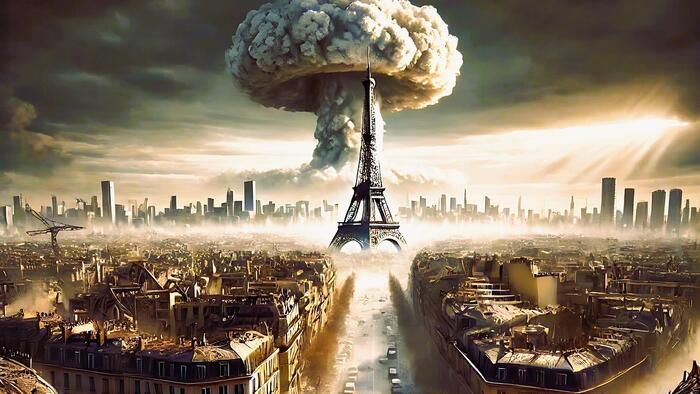
Despite assurances from Russian officials, including Foreign Minister Sergei Lavrov, that there is no intention to engage in war with Europe, tensions remain high. Lavrov reiterated that any hostile actions, such as the deployment of European troops in Ukraine, would provoke a response from Russia. The situation has escalated to the point where discussions of nuclear conflict are surfacing in Russian media, further heightening fears of a catastrophic outcome.
In a related development, the European Union is advancing plans to permanently freeze as much as €210 billion (approximately $244.38 billion) in Russian state assets. The initiative, led by European Commission President Ursula von der Leyen, aims to use these frozen assets to support Ukraine. The proposal, which seeks to bypass traditional unanimous agreement from member states, has garnered support from several nations, including Germany and Spain.
Amid these heightened tensions, the United States has also faced criticism for its actions in South America, particularly regarding the seizure of a Venezuelan oil tanker. Russian officials have demanded explanations for what they perceive as provocative behavior by the U.S., further complicating the geopolitical landscape.
As Europe prepares for an uncertain future, the specter of conflict looms large. With nuclear weapons potentially in play, leaders from across the continent must navigate these treacherous waters carefully. The stakes are incredibly high, and the repercussions of miscalculation could be catastrophic.