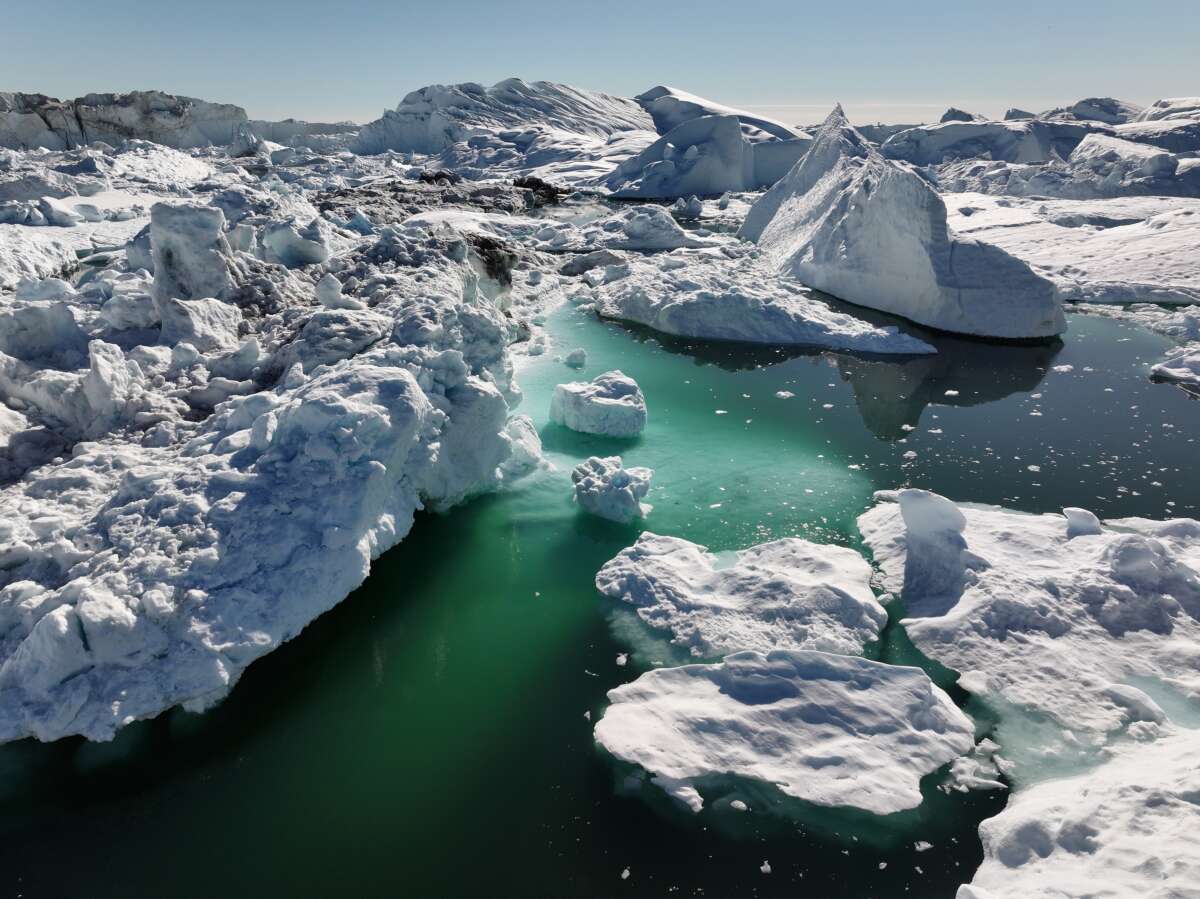
UPDATE: The Arctic has just recorded its hottest year on record, with air temperatures soaring between October 2024 and September 2025, according to the latest findings from the National Oceanic and Atmospheric Administration (NOAA). This alarming data, revealed in the 20th Arctic Report Card released on January 10, 2025, highlights the dramatic alterations the climate crisis is inflicting on this fragile region.
The report indicates not only the warmest temperatures but also the lowest maximum sea-ice extent and the wettest year recorded in the Arctic. Shockingly, the past decade marks the warmest period in a region heating at rates two to four times faster than the global average.
“After 20 years of continuous reporting, the Report Card serves as both a chronicle of change and a warning for the future,” stated report editors Matthew Langdon Druckenmiller, Rick Thoman, and Twila A. Moon. They emphasize that the transformations occurring over the next 20 years will reshape Arctic environments, impact local communities, and alter global climate systems.
The warming trend extends beyond just the summer months. Fall 2024 saw the warmest temperatures on record, followed closely by winter 2025, which was the second warmest. Snow cover during June is now just half of what it was in the 1960s, and winter precipitation patterns are changing, leading to increased rainfall even in traditionally cold months.
The report revealed a staggering statistic: March 2025 recorded the lowest maximum sea-ice extent in nearly 50 years of satellite observations. The oldest, thickest ice has diminished by over 95% since the 1980s, now confined to areas north of Greenland and the Canadian archipelago.
“We are witnessing an entire marine ecosystem transform within a single generation,” said Hannah-Marie Ladd, director of the Indigenous Sentinels Network. She highlighted that changes in marine and terrestrial ecosystems are already visible, with southern species shifting northward due to warming temperatures.
Local Arctic communities are facing increased weather hazards as ocean temperatures rise, glaciers melt, and permafrost thaws. For instance, the remnants of ex-Typhoon Halong in October 2025 forced the evacuation of over 1,500 residents from Alaska’s southwestern coast, severely impacting local villages. The melting glaciers are also leading to sudden flooding and landslides, while the phenomenon of “rusting rivers” is degrading water quality due to oxidized iron from melting permafrost.
Globally, the effects of Arctic warming are alarming. The Greenland ice sheet lost 129 billion tons of ice, directly contributing to rising sea levels worldwide. Zack Labe, a scientist from Climate Central, remarked, “We can point to the Arctic as a faraway place, but the changes there affect the rest of the world.”
Despite facing censorship and budget cuts, the report’s findings remain clear. The Union of Concerned Scientists highlighted that the current administration’s cuts to climate science funding are already impacting essential data collection and research. However, the implications of the report are stark: “The Arctic is the canary in the coal mine,” warned Tom Di Liberto, media director at Climate Central.
As the crisis intensifies, the need for global action to reduce fossil fuel pollution has never been more urgent. The Arctic is not only a barometer of climate change but also a critical indicator of the health of our planet.
The world is watching as the Arctic’s fate unfolds. The next steps are crucial, and the time to act is now. Keep an eye on forthcoming developments as scientists and communities work to adapt to these rapid changes.