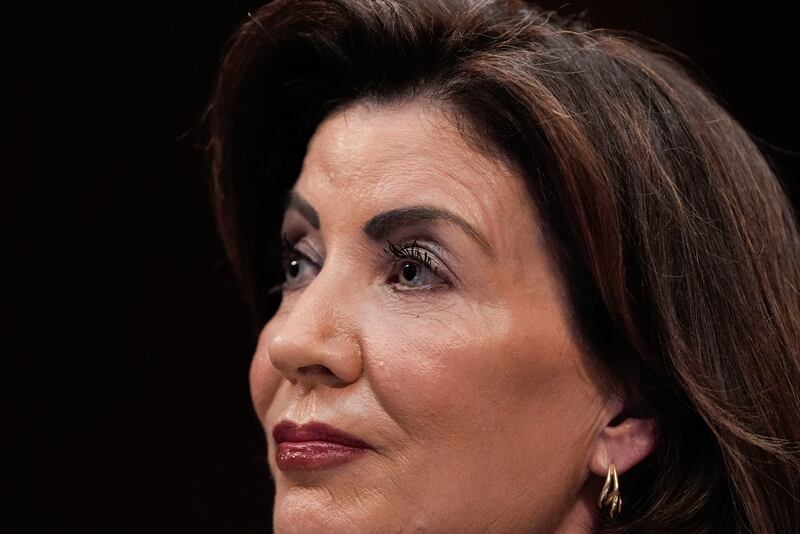
New York is on the verge of becoming the 13th state in the United States to legalize medication-assisted suicide for individuals with terminal illnesses. On Wednesday, Governor Kathy Hochul announced her intention to sign the Medical Aid in Dying Act into law, which includes several stipulations aimed at ensuring patient autonomy and safeguarding against coercion.
The legislation has garnered significant attention, having passed the New York House with a vote of 81-67 and the Senate with 35-27. It has been awaiting Hochul’s signature since early October. Similar legislation was enacted in Illinois just last week, furthering a trend across the country. In addition to New York, the District of Columbia has also legalized assisted suicide, with individual states establishing their own regulations.
Details of the Legislation
Under the new law, individuals expected to die within six months must submit a written request for medication that will end their lives. This request requires the signatures of two witnesses to prevent coercion, as noted by ABC News. Initially, the bill required only two physicians to confirm the patient’s terminal diagnosis, but Hochul advocated for an increase to three physicians to provide further oversight. Additionally, the request must be accompanied by confirmation from a psychologist or psychiatrist verifying the patient’s mental competence. A five-day waiting period is also mandated.
Religious-affiliated outpatient facilities are permitted to opt out of participating in this program. Notably, the law is only applicable to residents of New York, which could influence the dynamics of individuals seeking assisted suicide from neighboring states.
Reactions and Controversies
The legislation has sparked strong reactions from various groups. The New York State Catholic Conference, led by Cardinal Timothy Dolan, has expressed robust opposition, asserting that the legislation signals a troubling message about the value of vulnerable lives. Dolan stated that Hochul’s decision “signals our government’s abandonment of its most vulnerable citizens.” The Catholic Church has consistently condemned assisted suicide, labeling it as “intrinsically evil” without exception, as articulated in a recent document from the Vatican.
Hochul has faced criticism not only from religious leaders but also from disability advocacy groups who argue that such laws may undermine the rights of those with disabilities. In her defense, she wrote an essay in the Albany Times Union, explaining her decision was influenced by the stories of New Yorkers suffering from severe pain and terminal illnesses, including her own experience with her mother, who succumbed to Amyotrophic Lateral Sclerosis (ALS).
Supporters of the bill argue that it is a compassionate response to those enduring unbearable suffering. They contend that individuals facing terminal diagnoses should have the right to choose a dignified end to their lives, a sentiment echoed in states like Oregon, which was the first to pass similar legislation in 1997.
As the debate over assisted suicide continues, New York’s impending legalization is likely to influence discussions across the nation and could lead to further legislative changes in other states. The conversation surrounding medical aid in dying remains complex, with passionate advocates on both sides. As such, the implications of this law extend beyond legal boundaries, touching on ethical, moral, and personal dimensions of end-of-life care.