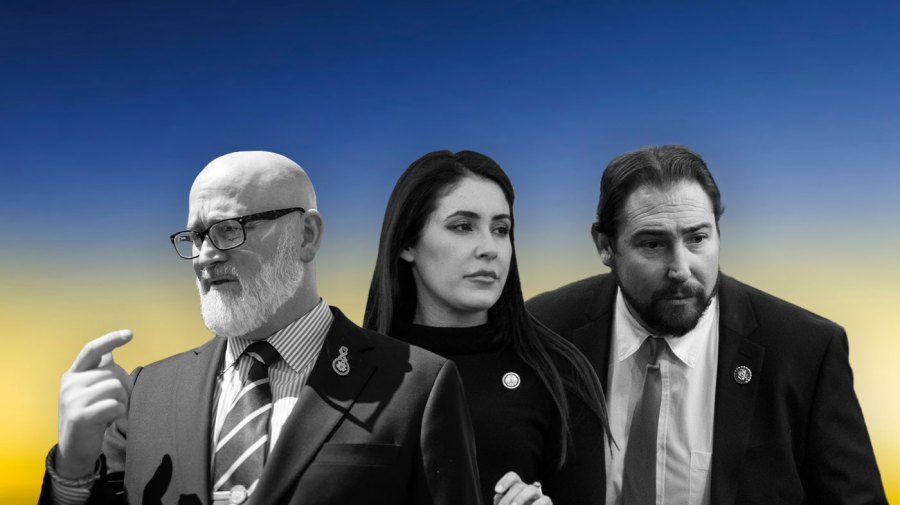
A group of House Republicans recently hosted an Orthodox Christian delegation that raised concerns about alleged religious persecution in Ukraine. The meeting took place on Capitol Hill on March 12, 2024, and was attended by Representatives Anna Paulina Luna (R-Fla.), Eli Crane (R-Ariz.), and Derrick Van Orden (R-Wis.). The delegation included clergy members, some of whom are affiliated with the Russian Orthodox Church, which has been vocal about its stance regarding the conflict in Ukraine.
The gathering aimed to advocate for the protection of Orthodox Christians in Ukraine, where the delegation claims followers face systemic discrimination and persecution. This assertion aligns with the narrative promoted by the Russian Orthodox Church, which has been a significant player in the geopolitical tensions surrounding the region. The church has publicly criticized the Ukrainian government for actions it deems hostile toward Orthodox Christians.
The meeting has sparked division among Republican lawmakers. While some members expressed support for the delegation’s concerns, others have cautioned against endorsing narratives that could exacerbate tensions between the United States and Ukraine. This internal discord reflects broader debates within the GOP regarding foreign policy and the party’s stance on Ukraine.
During the advocacy day, the participating representatives highlighted the importance of religious freedom and the need for the U.S. government to address the alleged injustices faced by Orthodox Christians in Ukraine. They urged lawmakers to consider these issues when formulating foreign policy and to advocate for the rights of religious minorities.
Critics of the meeting argue that the involvement of clergy tied to the Russian Orthodox Church raises questions about the motivations behind the delegation’s claims. They emphasize the need for a nuanced understanding of the situation in Ukraine, where the Orthodox Christian community is diverse and includes members of various factions, including those aligned with the Ukrainian Orthodox Church.
The reaction to the event has been mixed. Supporters of the delegation view it as an essential step in bringing attention to the plight of Orthodox Christians, while opponents warn that it could undermine U.S. support for Ukraine amid ongoing conflict. The complexities of religious and political affiliations in this context make it a sensitive subject for lawmakers and constituents alike.
As the situation evolves, the dynamics within the Republican Party regarding Ukraine and religious freedom are likely to continue to unfold, potentially influencing future legislative initiatives and foreign policy decisions. The meeting serves as a reminder of the intricate relationship between religion and politics, particularly in areas affected by conflict and division.
With the ongoing war in Ukraine and its ramifications on global politics, the discussions held on Capitol Hill this week will likely reverberate beyond the immediate context, affecting how the U.S. engages with both Ukraine and Russia moving forward.