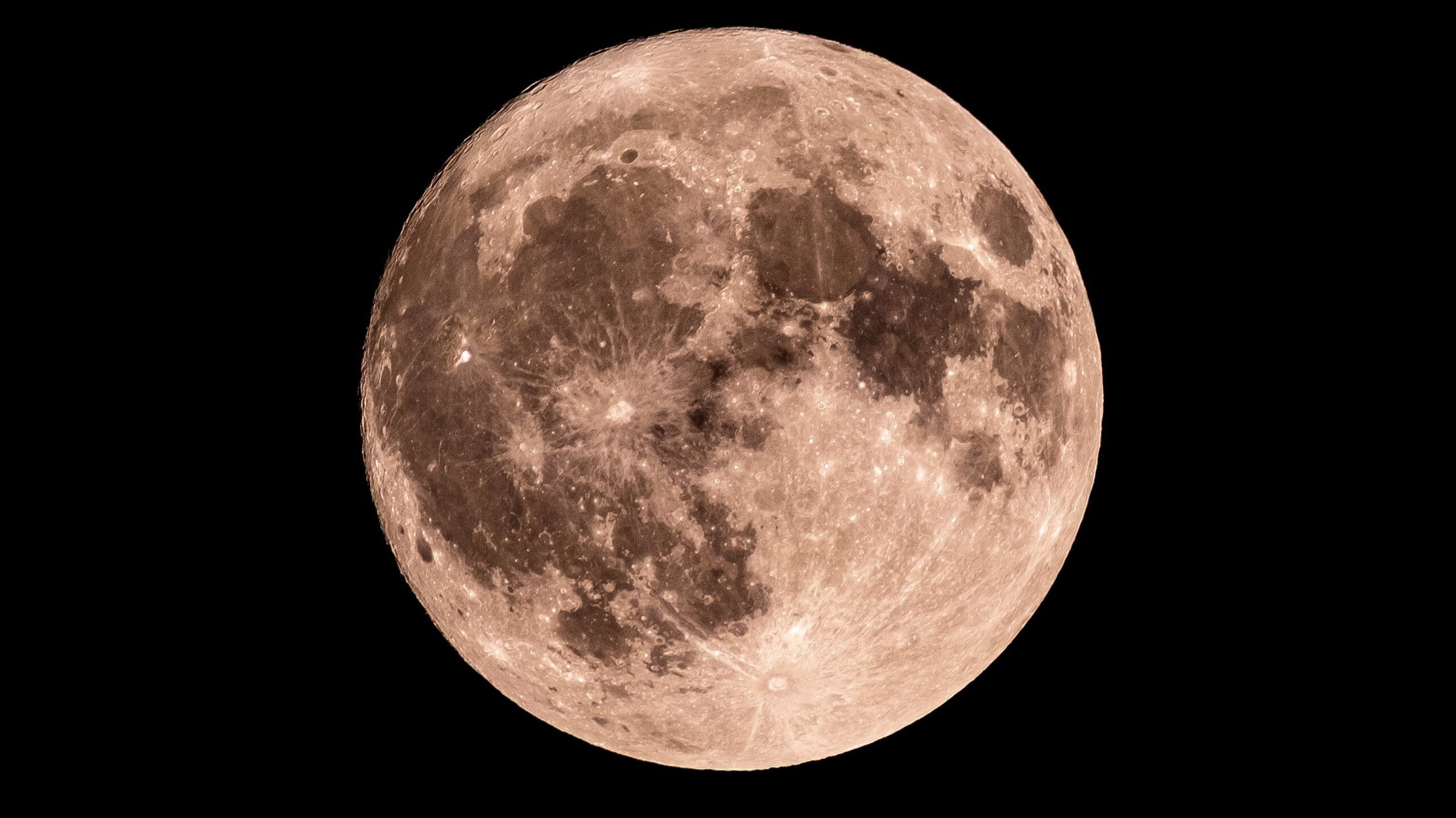
The Moon enters a new lunar cycle, revealing its Waxing Crescent phase on December 21. This celestial event indicates that the Moon will gradually become larger and brighter each night as it approaches its next Full Moon. Currently, only 2% of the Moon is illuminated, making it difficult to observe any surface details.
Understanding the Lunar Cycle
According to NASA, the Moon completes its lunar cycle approximately every 29.5 days. This process consists of several phases, during which the Moon orbits Earth. Despite always showing the same face to our planet, the visibility of sunlight reflecting off its surface changes throughout the cycle. As a result, the Moon can appear fully illuminated, partially lit, or entirely dark at different times.
The lunar phases are categorized as follows:
– **New Moon**: The Moon is positioned between Earth and the Sun, rendering it invisible from our perspective.
– **Waxing Crescent**: A small sliver of light appears on the right side for observers in the Northern Hemisphere.
– **First Quarter**: Half of the Moon is illuminated on the right side, resembling a half-moon.
– **Waxing Gibbous**: More than half of the Moon is lit, but it has not yet reached full brightness.
– **Full Moon**: The entire face of the Moon is illuminated and fully visible.
– **Waning Gibbous**: The Moon begins to lose light on the right side.
– **Third Quarter (Last Quarter)**: Another half-moon, with the left side now illuminated.
– **Waning Crescent**: A thin sliver of light remains on the left side before it returns to darkness.
Upcoming Full Moon and Observations
The next Full Moon will occur on January 3, following the most recent Full Moon on December 4. As the Moon progresses through its phases, skywatchers can anticipate a gradual increase in brightness and size leading up to this event.
For those keen to observe the Moon’s phases, clear skies and minimal light pollution will provide the best viewing conditions. With the current Waxing Crescent phase, enthusiasts can look forward to a more luminous Moon in the nights ahead, perfect for stargazing and lunar photography.
Understanding these lunar phases not only enhances our appreciation of the night sky but also connects us to the rhythms of nature that have guided humanity for centuries.