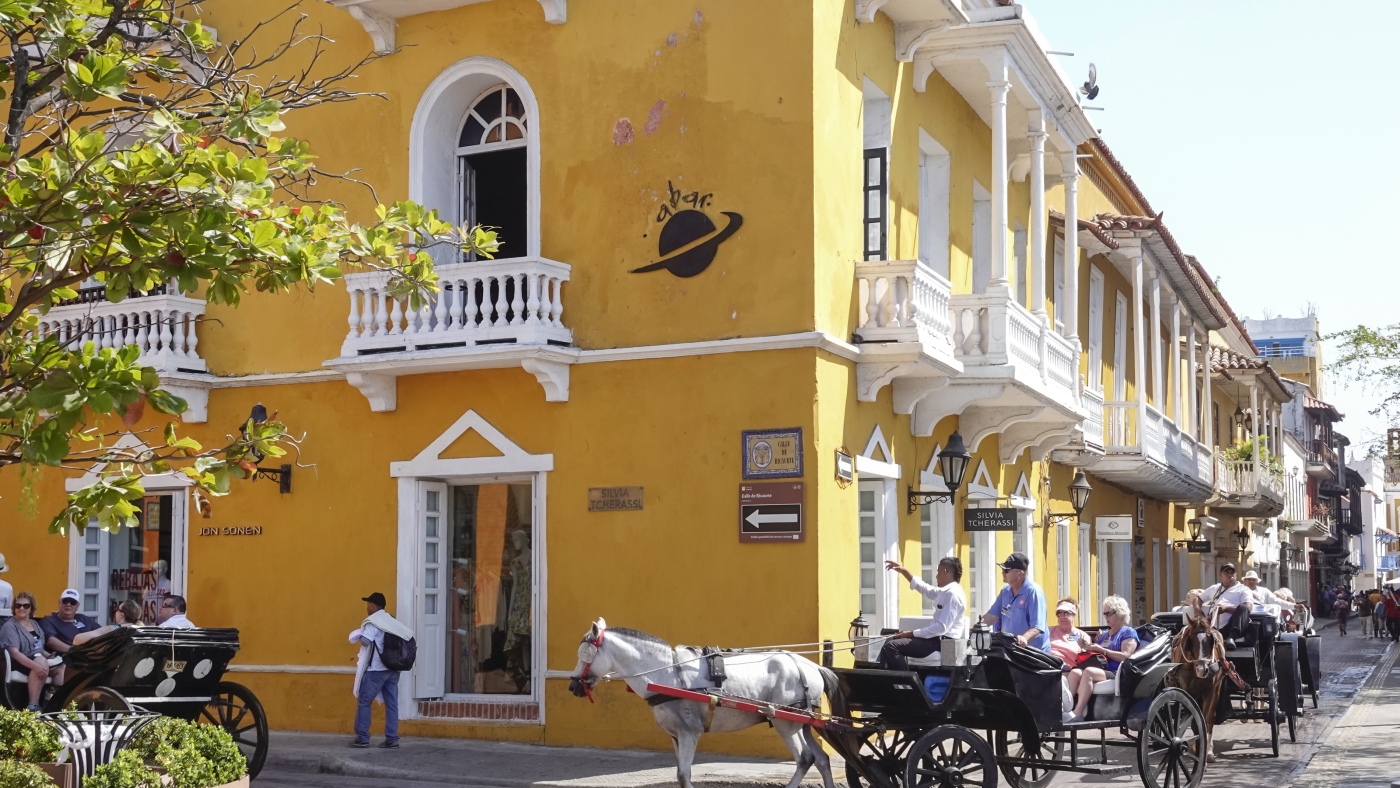
Cartagena, a historic city on Colombia’s Caribbean coast, is set to replace its iconic horse-drawn carriages with electric buggies. The city government announced that as of December 29, 2023, the traditional horse carts will be outlawed, a decision driven by concerns over animal welfare. This change has sparked a heated debate between horse cart owners, traditionalists, and animal rights activists.
For years, the horse-drawn buggies have offered tourists a charming way to explore Cartagena’s sun-drenched plazas and colonial architecture. The large-spoked wheels of the carriages clatter along the cobbled streets, creating a nostalgic experience for visitors. However, advocates for animal rights argue that these carriages pose significant risks to the horses.
Fanny Pachon, a local animal rights activist, stated that the stress of city traffic and the harmful pavement can lead to injuries and exhaustion in the horses. “On several occasions, horses have collapsed from exhaustion,” she noted, emphasizing that while horses are pack animals, they are best suited for rural environments rather than city streets.
The shift towards electric vehicles has been championed by comedian Alejandro Riaño, who has spent years advocating for this change. Riaño successfully raised over $25,000 in a crowdfunding campaign to develop a prototype electric vehicle designed to resemble traditional horse buggies. His efforts culminated in a test run of the electric carriage prototype on Cartagena’s streets two years ago. “We have shown there is the technology now to do things differently,” Riaño remarked.
The city plans to introduce a fleet of 62 electric carriages imported from China, developed in partnership with Corpoturismo, an agency dedicated to promoting tourism in the region. These new vehicles will feature large wheels and open tops, similar to traditional buggies, and will be powered by batteries that can last for approximately 70 km (43 miles) on a single charge. Notably, the new carts will utilize solar energy for charging, aligning with global movements towards sustainability.
Liliana Rodriguez, director of Corpoturismo, expressed optimism about the transition. “These are the kinds of changes that new generations are demanding,” she said, highlighting the potential for Cartagena to serve as a model for other cities still using horse-drawn carriages.
Despite the city’s plans, horse cart owners are expressing deep concerns about their livelihoods. Miguel Angel Cortez, who operates two horse carts, reported earning around $150 per day. He indicated that while he is not opposed to the transition, he is seeking clarity on how they will be compensated. Discussions of a possible $10,000 payment to cart owners have surfaced, but many feel this amount would not adequately address their financial losses.
Cartagena’s mayor, Domek Turbay, accused cart owners of “sabotaging” negotiations, claiming the municipal government is willing to share profits from the new electric vehicles. Yet, no formal agreement has been reached, prompting cart owners to threaten legal action if they are excluded from the transition. “I get the feeling that they are trying to take advantage of the situation,” Turbay stated in an interview with NPR.
As part of the rollout, tourists will be able to ride the new electric buggies for free during the first two months. Some current horse cart drivers have expressed interest in transitioning to the new vehicles, while others remain skeptical about whether visitors will embrace the electric alternatives. “People come to Cartagena for tradition,” said Cristian Munoz, a horse cart driver. “Without the horses, it’s not the same.”
The decision to ban horse-drawn buggies marks a significant shift for Cartagena, a city that has long celebrated its colonial heritage. As the community navigates this transition, the outcomes will likely affect both the economy and the cultural landscape of this cherished destination.