Richard Strauss’s opera “Elektra,” first performed in 1909, received a powerful revival at the Wiener Staatsoper, showcasing the intense psychological drama that has captivated audiences for over a century. The production, based on Hugo von Hofmannsthal’s libretto, dives deep into the tortured mind of Elektra, who is consumed with the desire for vengeance against her mother, Klytämnestra, for the murder of her father, Agamemnon. The opera is renowned for its dense orchestral score, which creates a vivid soundscape reflecting themes of violence, despair, and the tragic nature of revenge.
Staging and Musical Direction
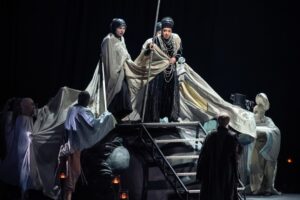
The revival of Harry Kupfer’s iconic 1989 production retains its impactful visual aesthetic. The stage is enveloped in darkness, dominated by a fragmented statue of Agamemnon, which sets a somber tone for the unfolding drama. Conductor Alexander Soddy led the Vienna State Opera Orchestra with precision, generating an atmosphere rife with tension. His direction highlighted the orchestra’s rich sound, from the shimmering strings to the clear brass, effectively capturing the opera’s emotional extremes.
Outstanding Performances
Ausrine Stundyte took on the titular role of Elektra, delivering a performance characterized by emotional depth and dramatic intensity. The character’s relentless focus on vengeance is portrayed through a series of intense dialogues that showcase her mental disintegration. Stundyte’s soprano, though lyrical and beautiful, sometimes struggled to convey the overwhelming force required for the role, particularly in her highest notes, which lacked the expected impact.
In a striking contrast, Nina Stemme made her role debut as Klytämnestra, bringing a nuanced complexity to the character. Stemme, known for her previous work in the role of Elektra, showcased her powerful soprano while conveying the emotional weight of a mother steeped in guilt and desperation. Her dramatic entrance, adorned in elaborate jewels and a flowing cape, added a chilling visual element to the performance.
Camilla Nylund also shone in her portrayal of Chrysothemis, Elektra’s sister, presenting a character who serves as a voice of reason amidst chaos. Nylund’s radiant soprano offered a fresh perspective, showcasing vulnerability while maintaining an impressive vocal presence. Her performance was a revelation, demonstrating her ability to embody a character caught between familial loyalty and a desire for escape.
Supporting Cast and Impactful Conclusion
Derek Welton portrayed Orest, the brother who returns to fulfill the tragic cycle of revenge. His bass-baritone voice added depth, particularly during the touching reunion with Elektra. The opera’s minor characters, including maids and servants, contributed significantly to the overall impact, with particular praise for Jenni Hietala, whose performance as the Fifth Maid stood out for its technical excellence.
The opera concludes with Elektra’s ecstatic dance of death, symbolizing her final descent into madness. The staging effectively reflects her inner turmoil, as she becomes entangled in the ropes of her father’s statue while the chaos of revenge unfolds offstage. This production of “Elektra” proved to be a resounding success, reaffirming its status as a monumental work in the operatic canon, and captivating audiences with its powerful performances and striking musical direction.