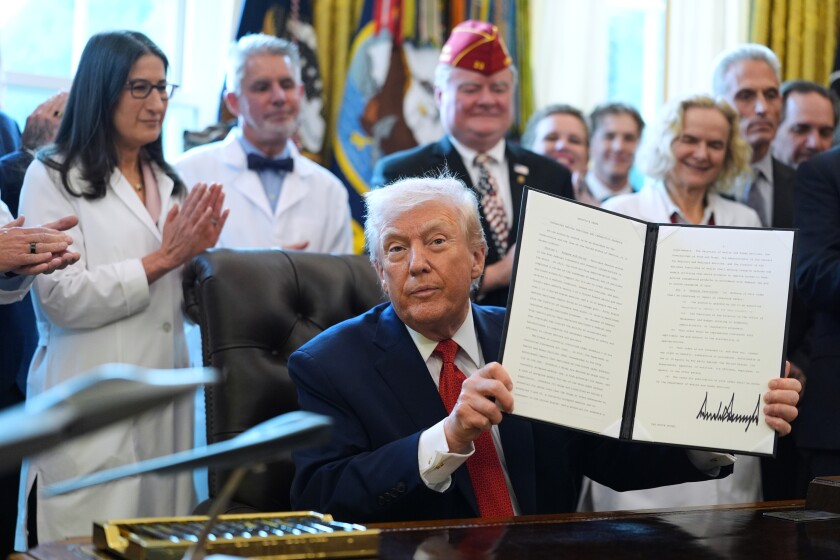
President Donald Trump has ordered the reclassification of marijuana from Schedule I to Schedule III under the Controlled Substances Act. This change, announced recently, marks a significant shift in federal policy regarding marijuana, which has been classified as a highly dangerous drug with no accepted medical use since 1970.
The reclassification follows a review by the U.S. Department of Health and Human Services (HHS), which found “credible scientific support” for marijuana’s therapeutic benefits in treating conditions such as pain, nausea, and loss of appetite associated with medical conditions. The decision acknowledges that marijuana’s dangers do not warrant its continued placement in the most restrictive category of controlled substances.
Historically, the reclassification is seen as a vindication for advocates who have long argued that marijuana should not be treated alongside substances like heroin and LSD. Nearly four decades ago, Francis Young, then the chief administrative law judge at the Drug Enforcement Administration (DEA), concluded in a lengthy ruling that marijuana had accepted medical use. Although his conclusions were initially dismissed by John Lawn, the DEA Administrator at that time, Young’s stance has gained support over the years.
According to HHS, marijuana is “one of the safest therapeutically active substances known to man,” and the majority of users do not experience dangerous outcomes. The department’s review emphasized that while marijuana is associated with a high prevalence of abuse, its profile does not justify retaining it in Schedule I. Instead, HHS recommended moving cannabis to Schedule III, which includes substances like ketamine and anabolic steroids.
In May 2024, Attorney General Merrick Garland proposed a rule to implement this recommendation, which President Trump is eager to finalize. Trump has suggested that this change will benefit “American patients suffering from extreme pain, incurable diseases, aggressive cancers, seizure disorders, neurological problems, and more.”
While the reclassification will pave the way for more comprehensive medical research by reducing regulatory hurdles associated with Schedule I drugs, it does not equate to legalization. The Food and Drug Administration (FDA) must still approve specific cannabis-based products as legitimate prescription medications. Moreover, state-licensed marijuana businesses will continue to operate under federal prohibition, although they may face less severe penalties.
Despite the limitations, the reclassification offers some potential financial relief for marijuana businesses. It allows these enterprises to claim standard deductions on their income tax returns, addressing a significant disadvantage they currently face with high effective tax rates.
The evolving landscape of marijuana legislation indicates a growing acceptance of its medical use. Currently, 40 states have legalized marijuana for medical purposes, with 24 states permitting recreational use as well. This trend has created a discrepancy between state and federal laws, a situation that many Americans find increasingly untenable.
Trump’s statement clarified that his order does not legalize marijuana in any form. Nevertheless, the implications of this reclassification suggest a shift towards a more open approach to cannabis research and its potential benefits, a change that advocates have long sought.
With these developments, the ongoing debate surrounding marijuana’s classification and use in the United States continues to evolve, reflecting changing public perceptions and the growing body of scientific evidence supporting its medical applications.