Recent research led by Prof. Zhixue Du from the Guangzhou Institute of Geochemistry, part of the Chinese Academy of Sciences, reveals that enormous quantities of water may have been securely stored deep within Earth’s mantle during its formative years. This study, published in the journal Science on December 11, 2025, challenges previous assumptions about the planet’s early water retention, suggesting that a hidden reservoir could have played a crucial role in transforming the molten Earth into the vibrant, life-sustaining world we know today.
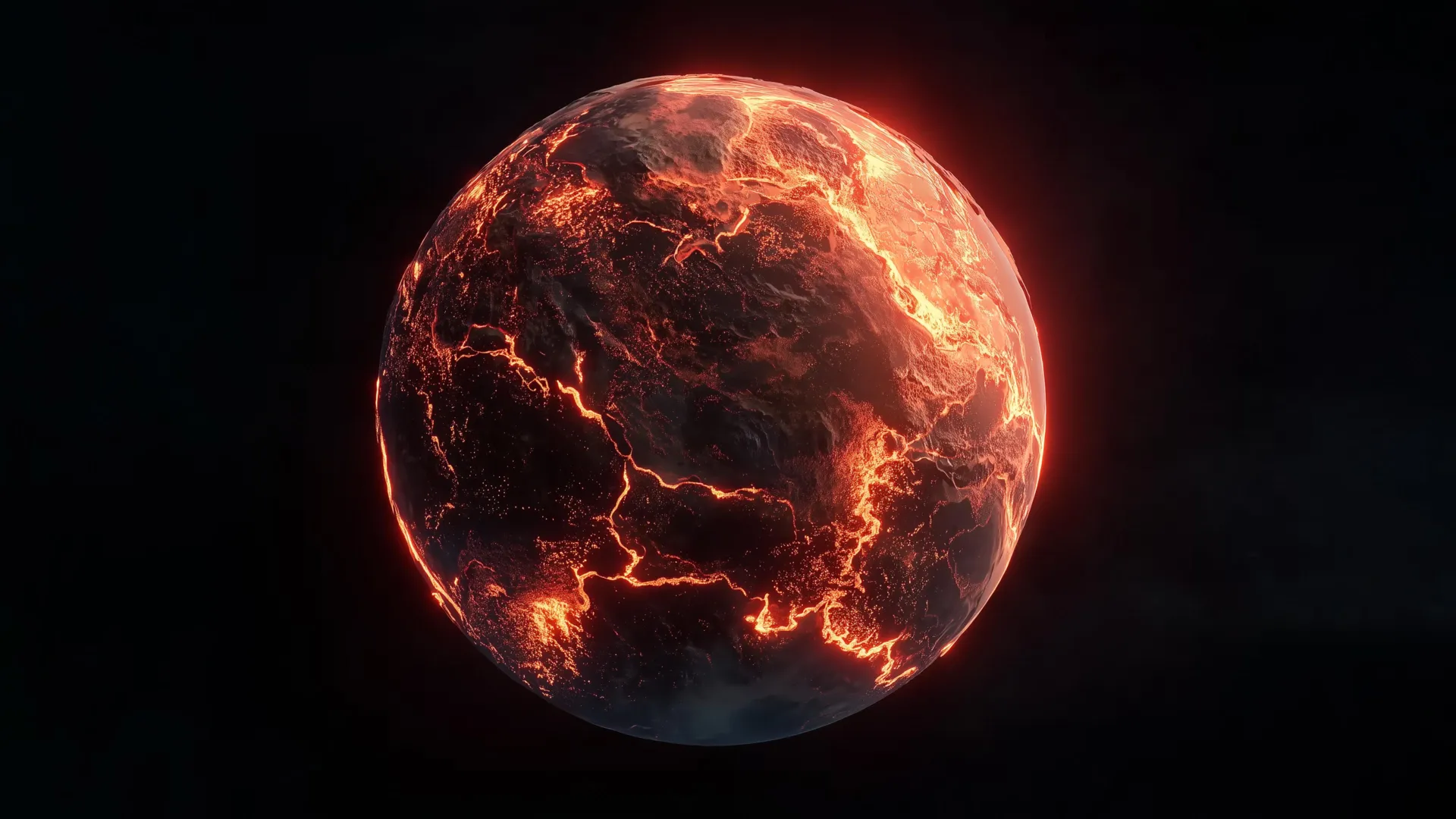
Approximately 4.6 billion years ago, Earth was characterized not by tranquil oceans, but by a tumultuous landscape dominated by a swirling sea of magma. The extreme heat from ongoing celestial impacts rendered liquid water incapable of existing on the surface. Despite this, the recent findings indicate that water may not have been entirely lost to space but instead locked away deep beneath the surface.
Discovering Bridgmanite’s Role
The research team focused on bridgmanite, the most prevalent mineral in Earth’s mantle. Previous studies suggested that this mineral could only hold minimal amounts of water, but Du’s team demonstrated that it can store significantly more water at elevated temperatures than earlier believed. Their findings imply that as Earth cooled and solidified, bridgmanite acted as a microscopic reservoir, potentially capturing water volumes comparable to those in today’s oceans.
To investigate this phenomenon, the researchers encountered notable challenges, including replicating the intense conditions found more than 660 kilometers beneath the surface and accurately measuring tiny quantities of water in mineral samples. They developed a diamond anvil cell system that combined laser heating with high-temperature imaging, successfully simulating conditions reaching up to 4,100 °C.
Revolutionizing Understanding of Earth’s Water Storage
Utilizing cutting-edge analytical techniques such as cryogenic three-dimensional electron diffraction and NanoSIMS, the team was able to visualize how water is distributed within bridgmanite. Collaborating with Prof. LONG Tao from the Institute of Geology of the Chinese Academy of Geological Sciences, they employed atom probe tomography, which provided insights akin to “chemical CT scans” of the mineral structure.
The results revealed that bridgmanite’s capacity to trap water increases significantly at higher temperatures, indicating that during Earth’s most intense magma ocean phase, this mineral could have stored much more water than previously thought. Their models suggest that this hidden reservoir could be between five to 100 times larger than past estimates, with total water volumes ranging from 0.08 to 1 times the volume of today’s oceans.
This reservoir of water did not remain static; instead, it contributed to the geological dynamics of the planet. By lowering the melting point and viscosity of mantle rocks, the trapped water facilitated internal circulation and plate tectonics, which are essential processes for Earth’s geological activity. Over time, some of this water was gradually released to the surface through volcanic eruptions, aiding in the development of Earth’s early atmosphere and oceans.
The research indicates that this ancient water source may have been pivotal in Earth’s transition from a hostile, fiery environment to a planet capable of supporting life, illustrating the profound impact of geological processes over billions of years. As scientists continue to explore these hidden depths, our understanding of Earth’s formation and its capacity to host life may expand significantly.
The findings are a testament to the intricate interplay between Earth’s physical composition and its ability to nurture life, reminding us of the mysteries still held beneath our feet.