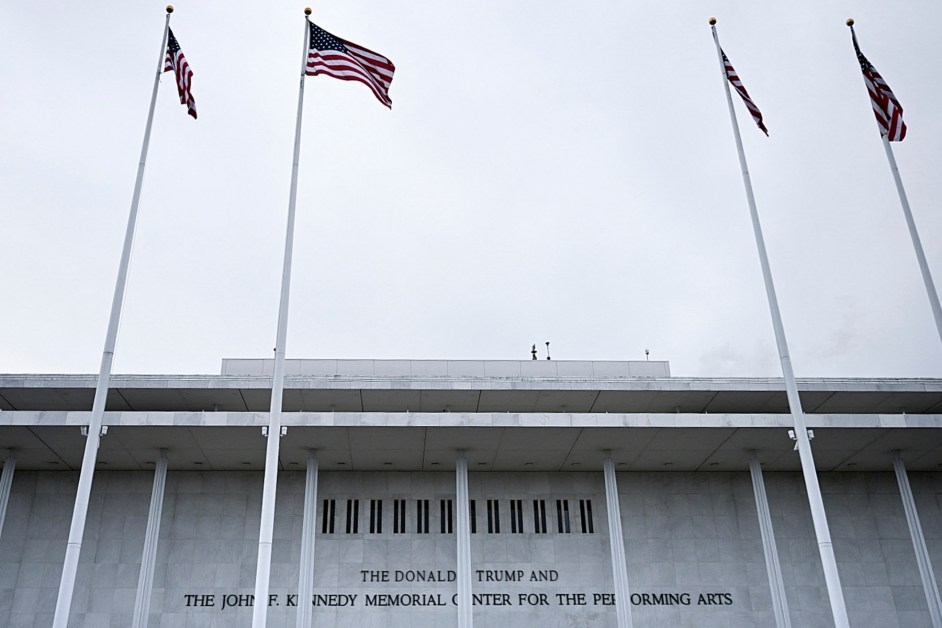
The president of the Kennedy Center, Richard Grenell, announced plans to seek $1 million in damages from jazz musician Chuck Redd following Redd’s abrupt cancellation of a Christmas Eve performance. This decision came just days after the White House revealed that Donald Trump‘s name would be added to the venue, a move that has sparked considerable controversy.
In a letter shared with The Associated Press, Grenell expressed strong disapproval of Redd’s choice to withdraw from the concert, linking it directly to the renaming of the center in honor of Trump. He characterized the cancellation as “classic intolerance” and argued that it would have significant financial repercussions for the non-profit arts institution. Grenell wrote, “Your decision to withdraw at the last moment — explicitly in response to the Center’s recent renaming — is classic intolerance and very costly to a non-profit Arts institution.”
Redd, a notable drummer and vibraphone player, has been a fixture at the Kennedy Center’s holiday “Jazz Jams” since 2006. In an email to The Associated Press, he stated that he chose to cancel the concert after observing the renaming announcement on the Kennedy Center’s website and later on the building itself. He described the event as a cherished holiday tradition that often featured student musicians. In his words, “One of the many reasons that it was very sad to have had to cancel.”
The Kennedy Center was established as a living memorial to President John F. Kennedy, who was assassinated in 1963. Following the announcement of the renaming, concerns have been raised regarding the legality of such a decision. Scholars have indicated that the law prohibits the board of trustees from transforming the center into a memorial for anyone else or placing another person’s name on the building’s exterior.
Grenell, a known ally of Trump, was appointed by the former president after changes in leadership at the Kennedy Center. The White House indicated that the board, chosen by Trump, approved the renaming. Kerry Kennedy, the niece of John F. Kennedy, has publicly committed to removing Trump’s name from the building once he leaves office. Additionally, Ray Smock, a former House historian, has highlighted that any modifications to the center’s designation would require congressional approval.
As the situation unfolds, it raises significant questions about the intersection of politics and the arts, particularly within institutions that carry historical and cultural weight. The Kennedy Center’s future as a non-partisan arts venue may be impacted by these developments, reflecting ongoing tensions in the broader cultural landscape.