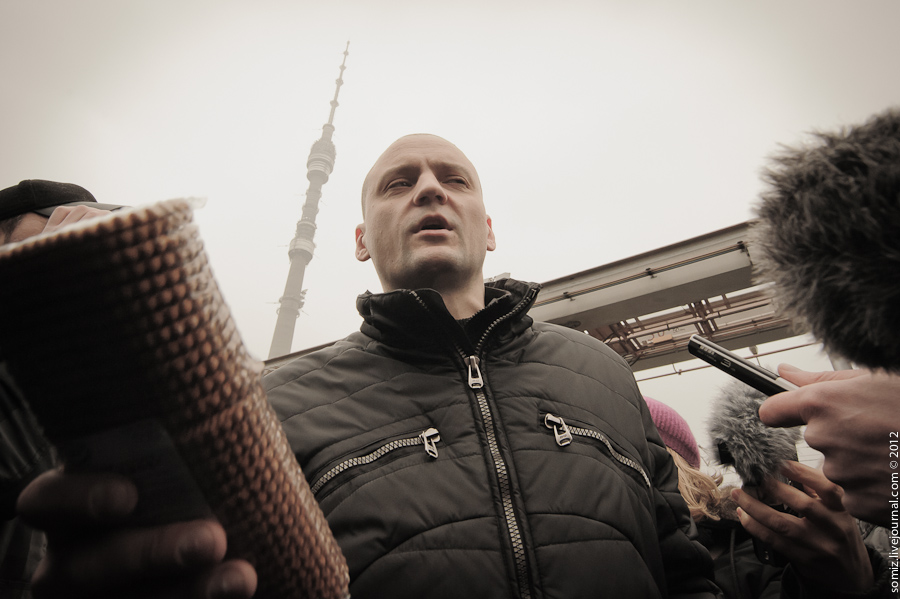
A Moscow court has sentenced pro-war activist and outspoken critic of President Vladimir Putin, Sergei Udaltsov, to six years in a maximum-security prison. The ruling was issued on Thursday by the 2nd Western District Military Court, which found Udaltsov guilty of justifying terrorism through an article he published over two years ago. The article defended five young Marxist activists from Ufa, who were accused of forming a terrorist organization after a police raid in March 2022.
Udaltsov, a prominent figure in left-wing circles and one of the leaders of the 2011–2012 Bolotnaya Square protests, has a history of political commentary. In his writings, he has expressed support for various facets of Russia’s foreign policy, including the ongoing war in Ukraine. His conviction underscores the current limits on free speech in Russia, where the judiciary appears to take a stringent stance against dissenting voices.
The significance of this case extends beyond Udaltsov’s personal circumstances. It raises profound questions about the state of free expression in Russia. Udaltsov’s sentence originated from his written commentary rather than any violent actions. This distinction emphasizes the increasing risks faced by individuals who criticize law enforcement or judicial processes. The ruling serves as a reminder of the potential consequences of expressing views that challenge the government’s narratives.
The broader context of Russia’s involvement in the war with Ukraine has notably influenced its political landscape. Critics argue that the ongoing conflict has emboldened authorities to act with greater impunity. As the government faces less scrutiny than it would under normal circumstances, many believe that dissenters are being silenced at an alarming rate.
While President Vladimir Putin continues his military engagement abroad without facing domestic legal repercussions, Udaltsov’s imprisonment highlights a troubling disparity. The conviction raises critical concerns about how political power can protect certain individuals from accountability while harshly punishing others for mere expression.
Udaltsov’s case is emblematic of the broader challenges faced by activists and critics in Russia. As the government intensifies its crackdown on dissent, the implications for civil liberties and the rule of law are becoming increasingly severe. This situation not only affects those within the country but also draws international scrutiny regarding the state of democracy and human rights in Russia.