The 1980s produced a range of vehicles that are now often considered design missteps, leaving many drivers unwilling to be seen in them today. This retrospective examines five notable cars from that decade, highlighting their aesthetic flaws and disappointing performance.
AMC Pacer: The Fishbowl on Wheels
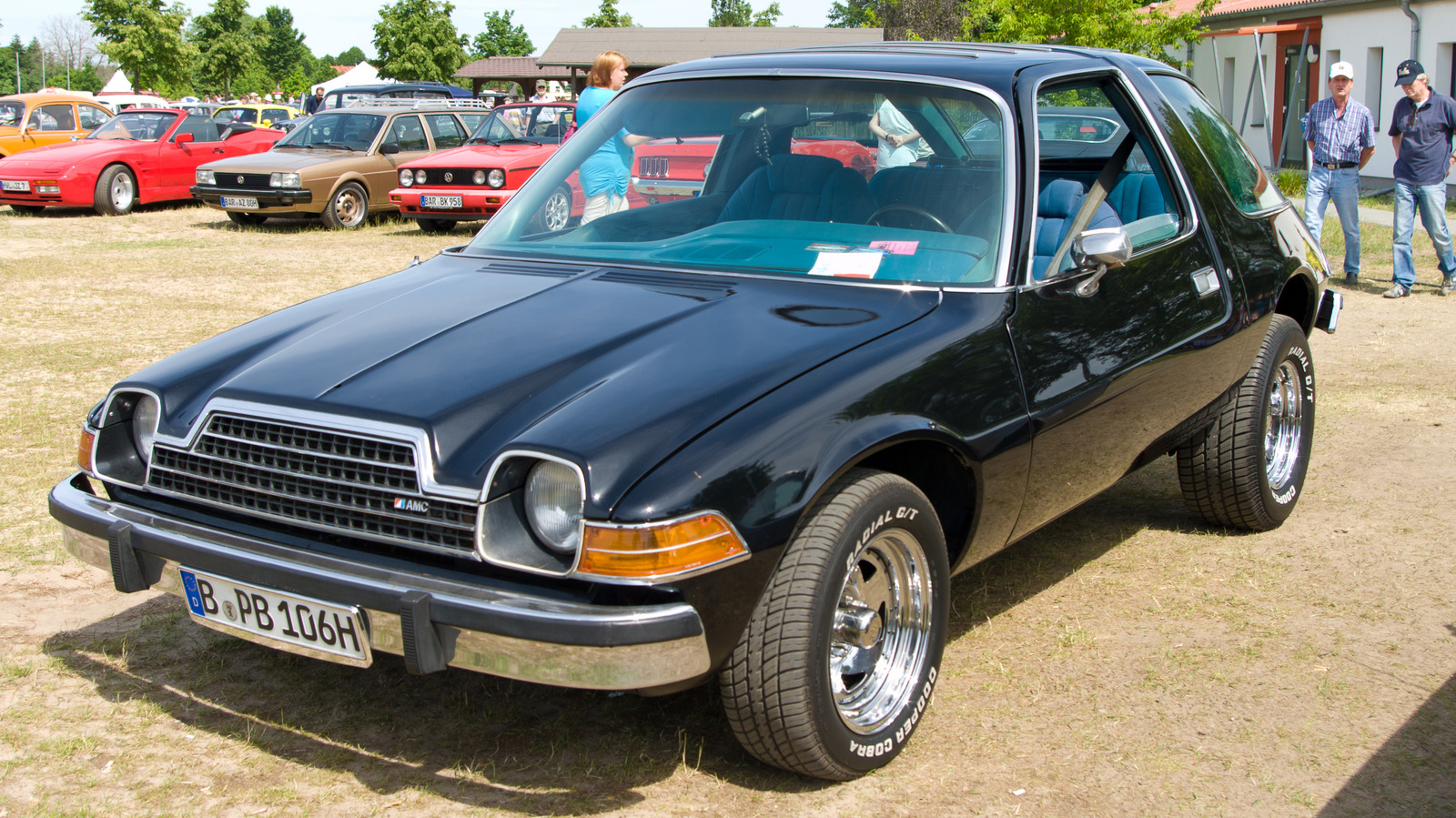
The AMC Pacer, produced from 1975 to 1980, earned the nickname “the fishbowl” due to its excessive glass area. Intended to enhance visibility, this design feature resulted in an awkward driving experience, likened to “a goldfish being boiled in its own bowl,” according to Motor Trend. Initially, the Pacer was to be powered by a rotary engine, but due to fuel economy and emissions challenges, AMC ultimately fitted it with an inline-six engine, followed by a V8 option. Sales peaked at 117,244 units in 1976 but plummeted to around 2,000 by 1980, reflecting a diminishing interest in the model.
MGB: A British Classic in Decline
The final model year for the MGB was 1980, marking the end of an iconic British sports car. Originally celebrated for its elegant chrome bumpers, the MGB’s design suffered drastically due to new U.S. regulations mandating 5 mph bumpers. The result was a model that critics described as unattractive, with Car and Driver commenting that it “acted like a septuagenarian running a decathlon.” The car’s handling was further compromised by increased ride height and the removal of the front sway bar, ultimately leading to a lackluster performance that tarnished its legacy.
Lincoln Versailles: A Missed Opportunity
Ford’s attempt to capture the compact luxury market with the Lincoln Versailles resulted in one of the decade’s most criticized designs. Launched in 1977 at a starting price of $11,500, the Versailles was essentially a rebadged Ford Granada with minimal changes in styling. Despite offering features like leather seats and automatic temperature control, it failed to compete with the Cadillac Seville, achieving only 4,784 sales in its final year. Overall, its four-year sales totaled approximately what Cadillac achieved in a single year.
Dodge Rampage: A Brief, Unpopular Run
The Dodge Rampage, introduced in 1982, was Chrysler’s take on a car-based pickup, but its reception was lukewarm at best. Built on the platform of the Dodge Omni, it featured a design described as “homely” by Motor Trend. With only 37,401 units sold during its production run, which ended in 1984, the Rampage struggled to gain traction in the market despite its practicalities, such as a cargo capacity of up to 1,145 pounds.
Ford EXP: An Unfulfilled Promise
Initially considered a potential success, the Ford EXP became known for its unusual design and lackluster performance. Launched as Ford’s first two-seater production car since the original Thunderbird, it was intended to appeal to entry-level buyers seeking a personal luxury coupe. Despite some initial interest, sales fell short of expectations, prompting Ford to introduce a turbocharged version in 1984, which improved performance but could not save the model from being discontinued by the end of 1988.
The vehicles of the 1980s serve as a reminder of a unique era in automotive history, marked by ambitious designs that often missed the mark in both aesthetics and functionality. As manufacturers continue to evolve, these models remain a testament to the challenges of car design and consumer preferences during that decade.