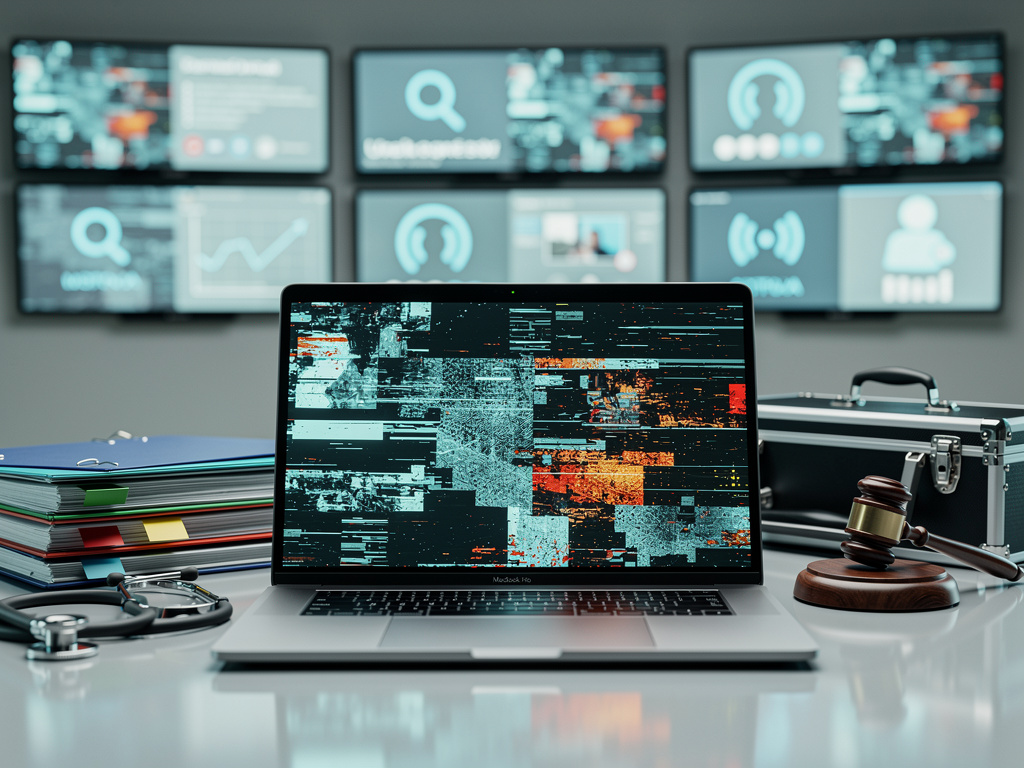
Virtual interactions are becoming increasingly essential in today’s world, yet new research from Cornell University highlights a troubling consequence of video call glitches. Published in the journal Nature, the study reveals that even brief disruptions during video calls can significantly affect perceptions of trust and competence, leading to negative impacts in various sectors including employment, healthcare, and legal proceedings.
The research illustrates that technical issues during a video call elicit a sense of “uncanniness,” a feeling akin to the discomfort associated with lifelike robots. This response manifests in a range of real-world consequences. For instance, candidates in simulated job interviews with glitchy connections were 20% less likely to receive positive hiring recommendations, despite delivering identical responses. Additionally, archival data indicated that inmates participating in virtual parole hearings faced a 15% lower chance of release when technical issues occurred.
Trust Erosion in Professional Settings
As platforms like Zoom and Microsoft Teams proliferate for purposes such as telemedicine and remote court appearances, the implications of these findings are profound. According to Malia Mason, a professor at Columbia Business School, the distortions introduced by video glitches can lead to perceptions of deception. Her team’s analysis emphasizes that these disruptions compromise the sense of presence, making interactions feel less genuine.
The Cornell study employed various experiments, including both live and recorded interactions, revealing that participants exposed to glitches rated others as less trustworthy and likable. This distrust often arose without individuals consciously recognizing the impact of the technology. Additional findings suggested that healthcare providers perceived patients experiencing glitches as less credible, with glitch-exposed medical consultations leading to an 18% increase in the likelihood of providers dismissing patient concerns.
Broader Implications Across Sectors
The impact of video call glitches extends beyond individual interactions, particularly in sensitive areas such as justice and healthcare. An investigation into virtual parole hearings unveiled a correlation between technical issues and harsher judgments, where inmates appearing via glitchy video were frequently judged as evasive or insincere. This issue is compounded for individuals from rural or low-income areas, where internet reliability is often a challenge.
In healthcare, a rise in telemedicine has underscored the importance of clear communication. Instances of audio delays can lead physicians to misinterpret patient hesitance about symptoms, potentially resulting in misdiagnoses. Reports from Cornell Chronicle highlighted cases where minor disruptions during therapy sessions resulted in premature terminations, adversely affecting mental health outcomes.
As organizations increasingly rely on virtual platforms, the need for equity in digital communication becomes apparent. The study emphasizes that marginalized groups, who frequently face connectivity issues, may bear the brunt of these biases, hindering their opportunities in global job markets.
To address these challenges, companies are investing in technological improvements. Zoom has introduced AI-driven error correction features aimed at minimizing glitches, while Microsoft Teams has implemented “glitch detection alerts” to notify users of potential issues. However, experts caution that these solutions may not entirely alleviate the unconscious bias generated by video disruptions.
Looking forward, policymakers are considering regulatory measures to ensure that connectivity does not dictate the quality of virtual interactions. In the EU, proposals under the Digital Services Act aim to establish standards that minimize glitches in official proceedings, while U.S. lawmakers are exploring similar initiatives for telehealth reimbursement processes.
As the digital landscape evolves, the potential for innovation remains significant. Startups like Polyhedra are working on blockchain-verified video streams to enhance authenticity, while established companies explore advanced technologies to reduce latency and improve the quality of virtual communications.
In summary, the findings from the Cornell study reveal critical flaws in our increasing reliance on digital communication. By addressing the challenges posed by video call glitches, stakeholders can work towards fostering equitable environments that ensure technology does not inadvertently derail opportunities or outcomes.