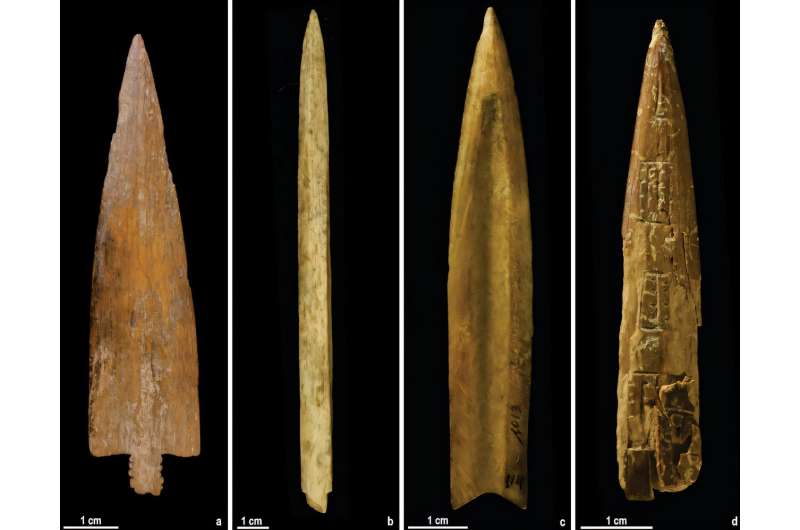
Research into ancient bone arrow points in the Sierras de Córdoba, Argentina, has uncovered significant insights into organized craft production during the Late Prehispanic Period, approximately 1220 to 330 years before the present. A team led by Dr. Matías Medina, alongside colleagues Sebastián Pastor and Gisela Sario, has published a detailed analysis of these tools in the International Journal of Osteoarchaeology. Their findings shed light on the manufacturing techniques employed by prehistoric communities, filling a notable gap in archaeological knowledge.
The Late Prehispanic Period in this region was marked by communities that practiced a flexible mixed economy, combining hunting, gathering, and farming. This adaptability allowed them to maintain high mobility while utilizing seasonal camps. Despite their contributions to material culture, evidence of their tool-making practices remained limited. As Dr. Medina notes, “Publications dealing specifically with bone technology were, for decades, scarce, especially in South America.”
Uncovering Craft Production Techniques
To address this knowledge gap, the research team analyzed 117 bone artifacts sourced from the Museo Arqueológico Numba Charava. These items were collected non-systematically throughout the 20th century from various locations in the southern Punilla Valley, which meant many lacked precise provenance. The study revealed that the primary raw material used for these arrow points was likely bones from the guanaco, a type of camelid hunted for food, with additional contributions from other animals like pampas deer being less common.
The manufacturing process involved splitting the long bones, specifically metapodia, lengthwise to create workable blanks. These blanks were then shaped through grinding, scraping, and whittling until they resembled arrowheads. Notably, some points featured barbs and decorative elements. Dr. Medina pointed out that only three decorated points have been documented, which featured incised lines and small triangles, similar to designs found on other artifacts in central Argentina.
The research suggests that these arrow points were primarily intended for warfare rather than hunting, with decorative features serving as expressions of social identity. “Incised decoration or other stylistic attributes, such as extra-barbs, express social identity and leave a potent reminder of the maker’s cultural affiliation on wounded enemies,” Dr. Medina explained.
Significance of the Findings
This study not only enhances understanding of tool-making practices in the Southern Punilla Valley but also raises questions about the broader implications for other regions where such tools were crucial. The findings indicate that arrowheads were locally produced, with each point exhibiting unique characteristics, even if few were decorated. The time-consuming yet standardized production process suggests that crafting techniques were likely passed down through generations within nuclear families, reinforcing the idea that these families were central to both food and tool production during the Late Prehispanic Period.
Dr. Medina emphasized the need for comparative studies with neighboring regions, such as the Low Paraná and Uruguay River floodplains, which are over 500 kilometers away. These areas developed complex bone technologies to adapt to the scarcity of stone materials, resulting in a diverse array of bone tools, including harpoons and arrow points made from different skeletal parts.
In conclusion, the research conducted by Dr. Medina and his team represents a significant advancement in the understanding of ancient craft production in Argentina. As they continue to explore the implications of their findings, the study highlights the need for further research into the technological aspects of prehistoric societies and their adaptive strategies in a challenging environment.