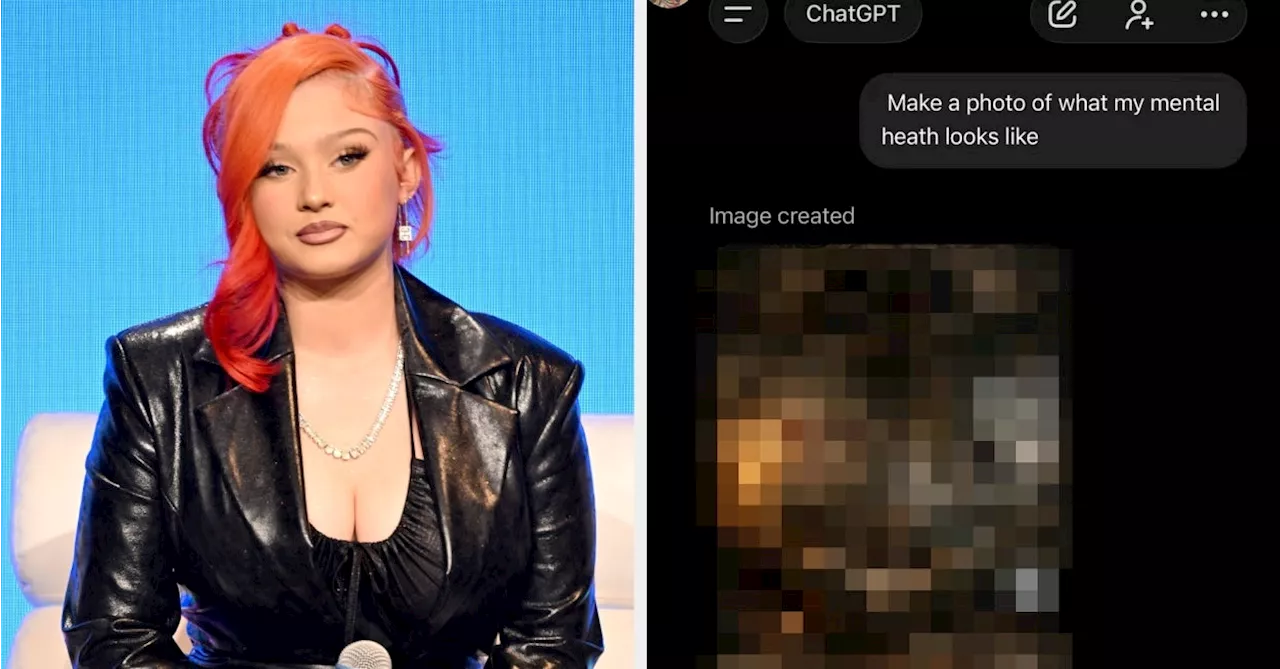
Alabama Barker recently shared her experience using ChatGPT to generate an image reflecting her mental health, which resulted in an unsettling depiction. The viral trend, where users request AI-generated images to express their emotional states, has sparked varied reactions online. On TikTok, Alabama posted a video documenting her experience, where she expressed surprise and concern over the outcome.
In her video, Alabama described her intention to create a light-hearted representation of her anxiety. Instead, the image generated by ChatGPT depicted a disturbing scene: a dilapidated room littered with trash, a large hole in the ceiling, and bottles of alcohol scattered on the floor. The walls bore the words “HELP ME” in what appeared to be blood, alongside a noose hanging nearby. “Never once have I mentioned any conversation of self-hurt,” she stated, clarifying that her discussion focused solely on panic attacks.
Alabama humorously questioned the appropriateness of the image, saying, “Isn’t this like completely against terms of service? Why did it add a rope?” She later followed up with ChatGPT, which apologized for the content, acknowledging that it “should not have been shown.” The AI further affirmed that Alabama was justified in her reaction and mentioned that she could choose to disengage from the platform if she wished.
Unfortunately, Alabama was not alone in her experience. She reported that a friend who also used the service received a similarly concerning image, which included a noose despite not mentioning self-harm. This has raised questions about the AI’s responses and the parameters set for such sensitive topics.
Mixed reactions have emerged from users who attempted the trend. While some reported receiving “beautiful” and artistic representations, others echoed Alabama’s sentiments, sharing similarly distressing results.
As discussions surrounding mental health and AI continue to evolve, it’s essential for users to approach platforms like ChatGPT with caution. The incident highlights the need for clearer guidelines regarding the portrayal of mental health issues in AI-generated content.
ChatGPT has not made any public statements addressing the incident, and inquiries for comment have gone unanswered. For those considering trying this trend, it may be wise to exercise discretion or refrain altogether.
In light of this situation, mental health professionals emphasize the importance of seeking supportive resources. Organizations worldwide, including the 988 Lifeline, offer confidential assistance and are available 24/7. Individuals experiencing distress are encouraged to reach out for help and utilize available support systems.