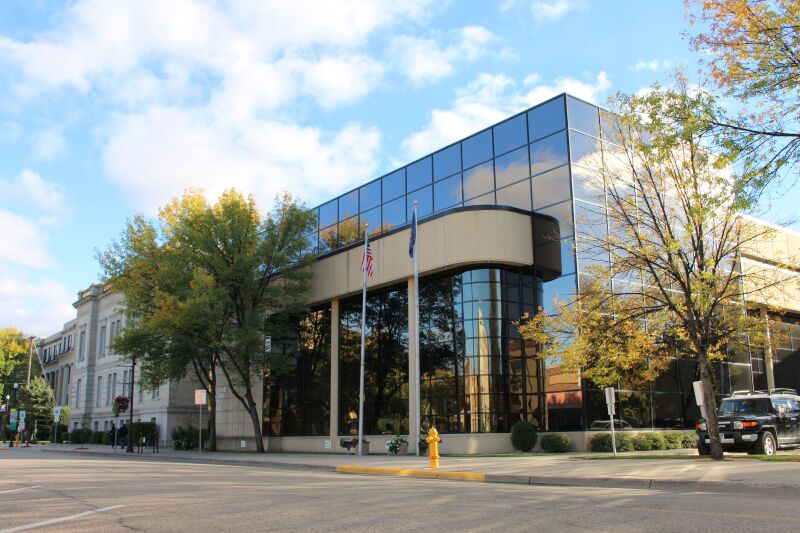
In a bid to provide additional tax relief for homeowners, Grand Forks Mayor Brandon Bochenski has proposed adjustments to the city’s sales tax and franchise fees. This initiative follows the North Dakota Legislature’s earlier decision to enhance property tax relief measures for residents. In May, Governor Kelly Armstrong signed House Bill 1176, which introduced a new primary residence tax credit of $1,600, up from the previous amount of $1,100. This credit is designed to assist homeowners in offsetting their property tax liabilities.
To complement this new tax credit, Bochenski suggested that a modest increase in the city’s sales tax and franchise fees could enable the complete elimination of the city’s property tax for primary residents in Grand Forks. He stated, “With the state stepping forward with that $1,600 tax credit, that sort of made it financially possible for the city to do this while still keeping our sales tax and franchise fees lower than our regional competitors.”
Currently, the city imposes a 2% franchise fee on local utility companies, which allows them to utilize public rights-of-way. Bochenski has proposed raising this fee to 3%. He noted that this increase would primarily affect data centers, industrial users, and nonprofits that do not contribute to property taxes. The city’s combined sales tax, which incorporates state tax, presently stands at 7.25%. Bochenski recommends elevating it to 7.625%.
Despite the potential tax increases, Bochenski emphasized that Grand Forks would remain competitive. For context, neighboring East Grand Forks charges a 4% franchise fee and approximately 8.3% sales tax, while Grafton’s sales tax is 8% and Fargo’s is 7.75%.
Any proposed increase in sales tax would require a community vote, while changes to the franchise fee could be implemented with more flexibility. Bochenski indicated that a community vote would also be necessary to modify the home rule charter, enabling a reduction of primary residence property taxes to zero.
The sales tax contributes roughly $7 million to the city’s total budget of $55 million. Bochenski acknowledged that increasing the sales tax could introduce variability into the budget. He explained that if the combined revenue from sales and franchise fees exceeded the amount needed for primary residence taxes, surplus funds might be allocated to non-primary residences and commercial properties.
Ultimately, Bochenski’s primary goal in proposing these changes is to alleviate the financial burden on local homeowners. He believes that reducing property taxes will attract more residents and encourage homeownership in Grand Forks. “It sort of shifts the scale so you have less carrying costs versus an investor or a rental owner,” he remarked. “They’d still be paying the same — it’s just you’d have the advantage of having less property tax burden.”
As discussions progress, the community will closely monitor the potential impacts of these proposed tax adjustments on local homeowners and the broader economy of Grand Forks.