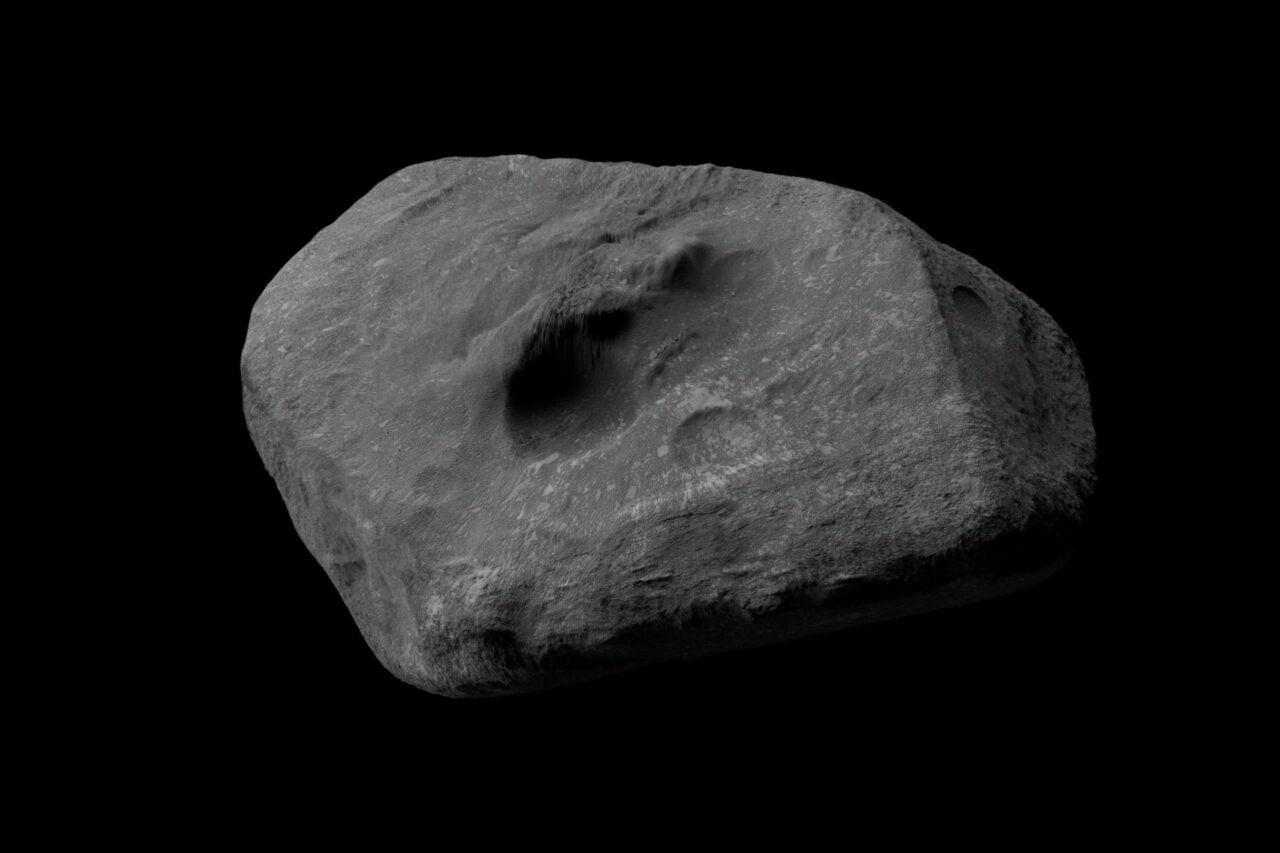
A recent study has identified specific types of asteroids that could become prime targets for future mining missions. Conducted by researchers from Spain’s Institute of Space Sciences, this research highlights the potential for extracting valuable resources from these celestial bodies. The findings, published in the Monthly Notices of the Royal Astronomical Society, focus on carbon-rich asteroids, which are the most common type found in the solar system.
The study is rooted in over a decade of analysis of samples from carbonaceous chondrites, a variety of meteorites rich in carbon, water, and organic compounds. According to Pau Grèbol Tomás, a graduate student at the Institute and co-author of the paper, “It sounds like science fiction, but it also seemed like science fiction when the first sample return missions were being planned thirty years ago.” This sentiment reflects the ongoing evolution of space exploration and resource extraction.
Unlocking Asteroid Mining Potential
Asteroid mining remains largely uncharted territory. NASA’s OSIRIS-REx mission has successfully demonstrated the feasibility of extracting material from an asteroid and returning it to Earth. However, scaling this operation to a commercial level presents significant challenges. Advanced propulsion systems, in-orbit refining technologies, and large-scale reentry capabilities are still in development.
Several startups are actively pursuing the operational frameworks necessary for asteroid mining. Notably, California-based AstroForge launched its first mission in April 2023 to test its ability to refine asteroid materials in orbit. Unfortunately, the company reported that it lost contact with its spacecraft, highlighting the difficulties faced in this nascent industry. Despite setbacks, such initiatives will continue if there is a viable economic incentive for mining these asteroids.
Researchers aim to establish which asteroids offer the greatest potential for profitable extraction. “Most asteroids have relatively small abundances of precious elements, and therefore the objective of our study has been to understand to what extent their extraction would be viable,” Tomás explained.
Scientific Insights on Asteroid Composition
The research team characterized 28 meteorite samples, conducting detailed chemical analyses using mass spectrometry. They focused on six common types of carbonaceous chondrites to gain insights into the chemical composition and evolutionary history of these celestial bodies. Josep M. Trigo-Rodríguez, an astrophysicist and the lead author of the study, noted the scientific importance of these meteorites, stating, “The scientific interest in each of these meteorites is that they sample small, undifferentiated asteroids.”
Their analysis revealed that a specific type of asteroid, rich in the minerals olivine and spinel, could serve as an ideal target for future mining efforts. These minerals indicate the presence of valuable metals such as iron, nickel, gold, platinum, and rare earth elements. The discovery of these target asteroids could significantly impact the future landscape of space resource extraction.
As research continues and technology advances, the dream of asteroid mining may transition from science fiction to reality. The implications for resource acquisition, economic development, and space exploration are profound, paving the way for new opportunities beyond Earth.