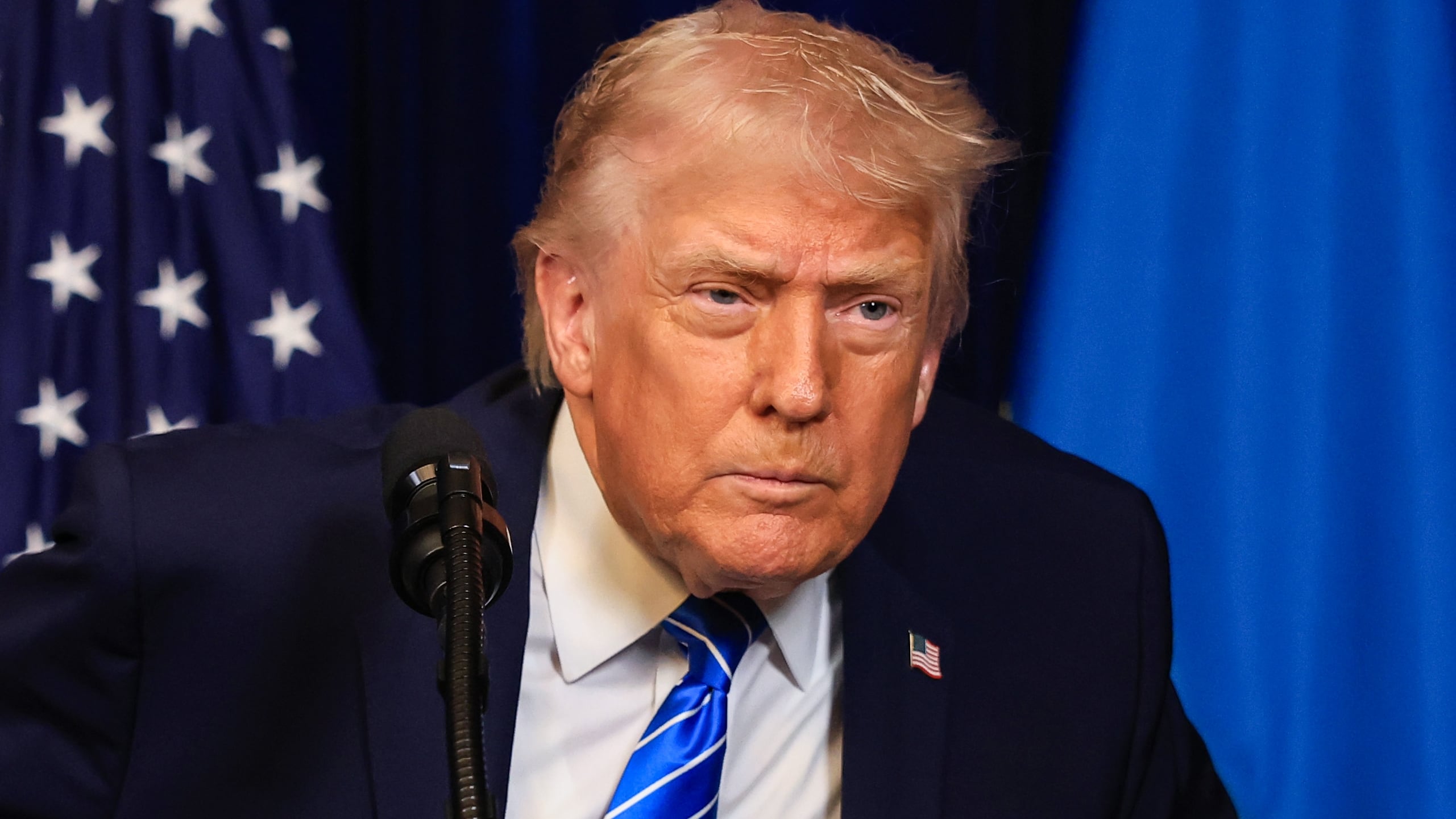
President Donald Trump has made headlines once again with revelations about his unconventional medical beliefs. In a recent interview with the Wall Street Journal, he disclosed that he takes a significantly higher dose of aspirin than recommended, a practice he has maintained for 25 years. Trump stated, “I don’t want thick blood pouring through my heart,” contradicting the advice of his own medical professionals.
These comments highlight a pattern of controversial health-related statements made by the former president, raising questions about his understanding of medical advice and public health. Below is a closer examination of some of Trump’s most perplexing medical beliefs.
Aspirin, Superstition, and Self-Diagnosis
In the interview, Trump revealed he takes 325 milligrams of aspirin daily, far exceeding the recommended 81 milligrams typically advised for heart health. His physician, Navy Captain Sean Barbabella, noted that Trump suffers from “superficial chronic venous insufficiency,” a condition that can cause bruising. Despite medical recommendations, Trump stated, “I take the larger one, but I’ve done it for years.”
His approach to aspirin reflects a broader trend in his medical philosophy, where he often prioritizes personal belief over established medical guidelines. Trump further admitted he applies makeup to his hands to conceal bruises resulting from his aspirin use, illustrating the lengths to which he goes to maintain his regimen.
Vaccine Skepticism and Misinformation
Trump’s skepticism surrounding vaccines is well-documented. Nearly two decades ago, he suggested a connection between vaccines and autism, claiming that children receive too many vaccinations at once. In a meeting with leaders from Autism Speaks in 2007, he stated, “When I was growing up, autism wasn’t really a factor… my theory is the shots.” This belief persisted throughout his presidency, despite extensive research debunking any link between vaccines and autism.
His appointment of Robert F. Kennedy Jr., a prominent anti-vaccine advocate, to a health advisory role further amplified concerns. Kennedy recently claimed that the pain reliever Tylenol could also be linked to autism, a stance supported by Trump during a joint press conference, even though experts have refuted this assertion.
Misinformation During the COVID-19 Pandemic
During the early stages of the COVID-19 pandemic, Trump referred to chloroquine and hydroxychloroquine as “game changers,” promoting their use despite a lack of scientific evidence supporting their effectiveness against the virus. His encouragement led to widespread prescriptions before the FDA revoked its approval for COVID-19 treatment in June 2020, citing risks including serious heart complications.
Trump also suggested unproven remedies, such as injecting disinfectants to combat COVID-19, which led to a spike in poisoning incidents, particularly in urban areas like New York City. These statements illustrate a concerning trend of misinformation during a public health crisis, with real-world consequences for health outcomes.
Beliefs on Exercise and Wind Turbines
Trump’s views on exercise are equally unconventional. A report from The New Yorker in 2017 suggested he believes the body has a finite amount of energy, implying that exercise depletes this energy reserve. “Other than golf, he considers exercise misguided,” the article noted. This perspective contradicts established health advice, which consistently highlights the benefits of regular physical activity.
Additionally, Trump’s criticism of wind turbines includes the bizarre claim that they may cause cancer. During a 2019 Republican fundraiser, he stated, “They say the noise causes cancer,” despite the American Cancer Society confirming there is no scientific evidence linking wind turbines to cancer.
Trump’s medical beliefs reflect a combination of personal superstition, misinformation, and a disregard for established health guidelines. As he continues to share his views, the implications for public understanding of health issues remain significant. The intersection of personal beliefs and public health emphasizes the need for clear communication from credible medical sources to counteract misinformation in an increasingly complex health landscape.