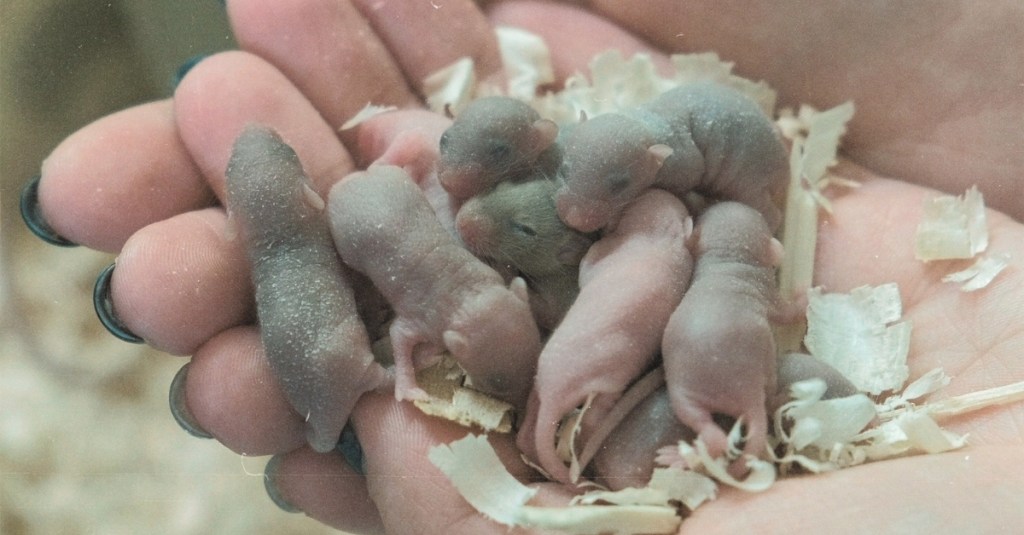
BREAKING: A female mouse has given birth to a litter of healthy pups after returning from space, marking a significant breakthrough for scientists studying life beyond Earth. The birth occurred on December 10, 2023, following a two-week journey aboard China’s Shenzhou-21 mission, which launched on October 31, 2023.
This remarkable development sheds light on the potential for reproduction during long-term space missions. The female mouse delivered nine pups, with six surviving, a result consistent with laboratory norms, according to researchers at the Chinese Academy of Sciences.
Researchers including Wang Hongmei are particularly excited about this finding, which suggests that the short-term exposure to microgravity and space radiation did not impair the mouse’s reproductive capabilities. This is a key consideration for future human missions to Mars and permanent off-Earth settlements.
The mission was not without challenges. A change in the return schedule extended the mice’s time in orbit, raising concerns about food supplies. Ground teams had to test emergency rations, ultimately selecting soy milk as a backup after thorough safety checks. An AI system carefully monitored the mice’s movements, eating habits, and sleep cycles, adhering to a strict Earth-based day-night cycle.
Now, researchers are closely observing the pups to track their growth patterns and physiological changes, aiming to determine whether these offspring can reproduce normally. This investigation is crucial in identifying any potential reproductive issues that may arise from space exposure, which could have significant implications for future manned missions.
While the successful birth does not eliminate all uncertainties regarding mammalian reproduction in space, it does rule out one dire possibility: that spaceflight could completely disrupt reproductive functions. This small but significant event provides hope that reproduction might remain viable in extraterrestrial environments.
As humanity looks toward extended missions beyond our planet, the implications of this development cannot be overstated. The future of human reproduction in space may hinge on these early findings from a small group of mice. Researchers will continue to monitor the pups closely, and the scientific community eagerly anticipates what this could mean for the next generations of space travelers.
Stay tuned for more updates as this groundbreaking study unfolds.