Researchers from the Chinese Academy of Sciences have revealed how humic substances derived from crop residues can significantly influence microbial metabolism and antibiotic resistance in soils. Their study, published on December 5, 2025, in the journal Agricultural Ecology and Environment, highlights a critical balance between promoting soil fertility and potential ecological risks associated with antibiotic resistance gene (ARG) accumulation.
Key Findings on Humification and Soil Health
Every year, billions of tons of lignocellulosic biomass, primarily from crop residues, enter soils globally. This organic matter undergoes a natural process of decomposition and humification, which is vital for maintaining soil health and carbon sequestration. However, the composition of this organic matter is not ecologically neutral; it significantly impacts microbial access to carbon, energy, and resistance traits within soil ecosystems.
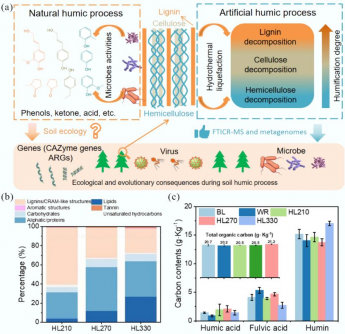
The research team led by Xiangdong Zhu simulated the natural humification process using controlled thermal treatments of rice straw at temperatures of 210, 270, and 330 °C. These temperatures correspond to different stages of lignocellulose decomposition, allowing the researchers to synthesize artificial humic substances known as HL210, HL270, and HL330.
Through advanced chemical characterization techniques such as excitation-emission matrix fluorescence spectroscopy and gas chromatography-mass spectrometry, the study assessed the impact of these humic substances on soil microbial functional responses. The findings revealed that as the temperature of humification increased, there was a notable transformation of lignin-derived structures into lipids and aliphatic compounds.
The Link Between Humification and Antibiotic Resistance
One of the most striking outcomes of the study was the correlation between the degree of humification and the accumulation of ARGs. Specifically, the abundance of ARGs increased up to 4.6-fold in soils treated with HL330, closely linked to elevated levels of lignin-derived phenolics. The enriched ARGs were primarily associated with antibiotic efflux, target protection, and inactivation mechanisms, predominantly contributed by microbial groups such as Proteobacteria, Acidobacteria, Firmicutes, and Chloroflexi.
Moreover, metagenomic sequencing showed that carbohydrate-active enzymes (CAZymes) became more prevalent, with glycoside hydrolases and glycosyl transferases accounting for 97.8% of total CAZymes. This shift indicates enhanced microbial degradation capabilities as a result of higher temperature treatments.
The research concluded that while humification may improve soil carbon storage and fertility, it can also foster conditions that facilitate the spread of antibiotic resistance genes. This duality emphasizes the need for careful management of crop residues.
Understanding these dynamics is crucial for developing sustainable agricultural practices, including residue-return strategies and carbon management approaches. By optimizing these practices, it is possible to maximize ecological benefits while minimizing the risks associated with antibiotic resistance.
This study not only sheds light on the complex interactions between agricultural practices and soil health but also serves as a reminder of the unintended consequences that can arise from well-intentioned environmental practices.
The research received funding from the National Natural Science Foundation of China, showcasing the importance of continued investment in agricultural and environmental research.