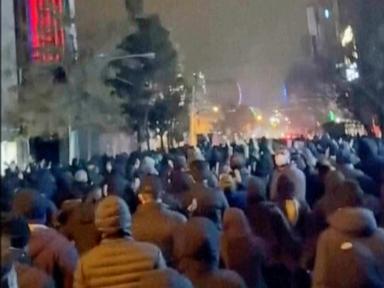
Nationwide protests in Iran, challenging the country’s theocratic regime, have escalated significantly, with at least 116 people reported dead as of Sunday, according to activists. Demonstrators have filled the streets of the capital, Tehran, and other cities, marking the protests’ continuation beyond two weeks. The violence has intensified amid a communications blackout, complicating efforts to assess the situation from outside the country.
The Iranian government has severely restricted internet access and cut off phone lines, as reported by the U.S.-based Human Rights Activists News Agency. In addition to the death toll, the agency noted that approximately 2,600 individuals have been detained during the unrest. Concerns are mounting that the ongoing information blackout could embolden hard-line factions within Iran’s security forces to launch a more brutal crackdown on demonstrators.
U.S. President Donald Trump has expressed support for the protesters, stating on social media that “Iran is looking at FREEDOM, perhaps like never before. The USA stands ready to help!!!” Reports from major news outlets indicate that Trump has been presented with military options to address the situation in Iran, although no final decision has been made.
Growing Tensions and Government Response
Footage shared online from Iran, likely transmitted via Starlink satellite technology, shows demonstrators gathering in various neighborhoods, including Punak in northern Tehran. Protesters have been seen waving their mobile phones and making noise with metal objects, while fireworks lit up the night. In Mashhad, Iran’s second-largest city, confrontations with security forces have been documented, with protesters blocking roads with flaming debris.
The Iranian state media has attempted to depict a calm atmosphere by broadcasting correspondents appearing in various cities, although Tehran and Mashhad were notably absent from these reports. Instead, the state media highlighted pro-government demonstrations in cities like Qom and Qazvin.
Iran’s Supreme Leader Ayatollah Ali Khamenei has indicated that a crackdown is imminent. On Saturday, Mohammad Movahedi Azad, the attorney general, warned that participation in protests would be classified as an “enemy of God” offense, which carries the death penalty. His statements highlighted the government’s escalating threats against demonstrators and those accused of supporting them.
Historical Context and Economic Strain
The protests, which initially erupted on December 28, 2023, were sparked by the dramatic collapse of the Iranian rial, which has dropped to over 1.4 million rials to $1. This economic turmoil, exacerbated by international sanctions related to Iran’s nuclear program, has fueled widespread dissatisfaction with the ruling regime.
In a show of solidarity, exiled Crown Prince Reza Pahlavi called for continued protests, encouraging demonstrators to display Iran’s historical national symbols. His remarks have sparked debates, as some protesters have expressed nostalgia for the era before the 1979 Islamic Revolution.
While the protests have garnered international attention, the Iranian government’s restrictions on media and communications have made it increasingly challenging to verify conditions on the ground. As the situation unfolds, the potential for increased violence remains a significant concern among observers and activists alike.