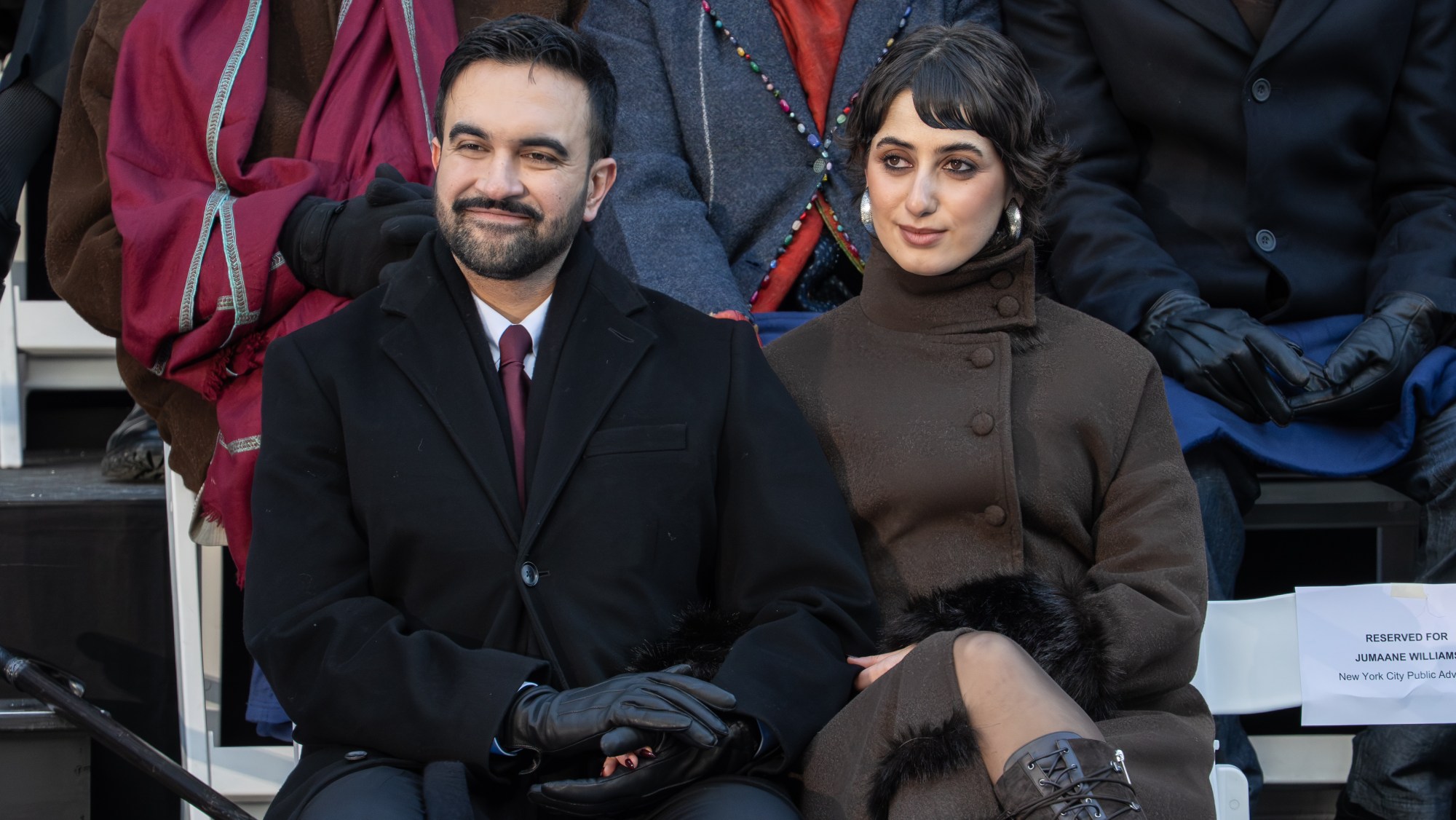
Rama Duwaji, the newly appointed First Lady of New York, has ignited a fashion controversy following her recent appearance in a vintage Balenciaga coat and Miista boots. Styled by former Vogue editor Gabriella Karefa-Johnson, this look has drawn mixed reactions, particularly given the political backdrop of her husband, Mayor Zohran Mamdani, who has positioned himself within a democratic socialist framework.
The outfit, consisting of a vintage Balenciaga coat and $630 Miista boots, quickly went viral, attracting both admiration and criticism. Observers noted the striking contrast between the luxury fashion statement and Mamdani’s focus on affordability and social equity. Critics took to social media to question the optics of a public figure, associated with progressive values, donning high-end designer attire.
Duwaji’s ensemble was reportedly not purchased but rented, with the Balenciaga coat sourced from Irene Albright’s Albright Library, which operates bi-coastally. The boots are believed to have been loaned from the Miista brand. Despite the rental nature of the items, the backlash intensified, leading to harassment of those involved in the styling process online.
Stylist’s Silence Amid Controversy
Gabriella Karefa-Johnson, who has styled Duwaji, faced scrutiny following her controversial exit from Vogue and a previous viral incident during Paris Fashion Week. After giving several interviews about her work with Duwaji, she has since remained silent, reportedly signing a non-disclosure agreement with the mayor’s office. Efforts to reach her for comment by The Hollywood Reporter have gone unanswered.
The situation has brought attention to issues of privilege and representation in political fashion. Some observers speculate on whether Karefa-Johnson will continue to be the stylist for New York’s First Lady amid this scrutiny.
Emerging Style Icon
Duwaji’s recent fashion shoot in The Cut, published on December 23, 2025, adds another layer to her public persona. The spread, styled by fashion editor Jessica Willis, features pieces from Jacquemus, Diotima, and Marc Jacobs, many of which were also noted as “on loan.” This editorial positioning has led some to draw parallels between Duwaji and Peggy Moffitt, a celebrated muse of the 1960s known for her influential style.
As the fashion world watches closely, questions remain about how Duwaji will navigate her role as First Lady while addressing the criticism of her fashion choices. Will she continue to rent designer fashion, or will this controversy lead her to adopt a different approach? The evolving narrative around her style is emblematic of the broader intersection of fashion, politics, and public perception in today’s cultural landscape.