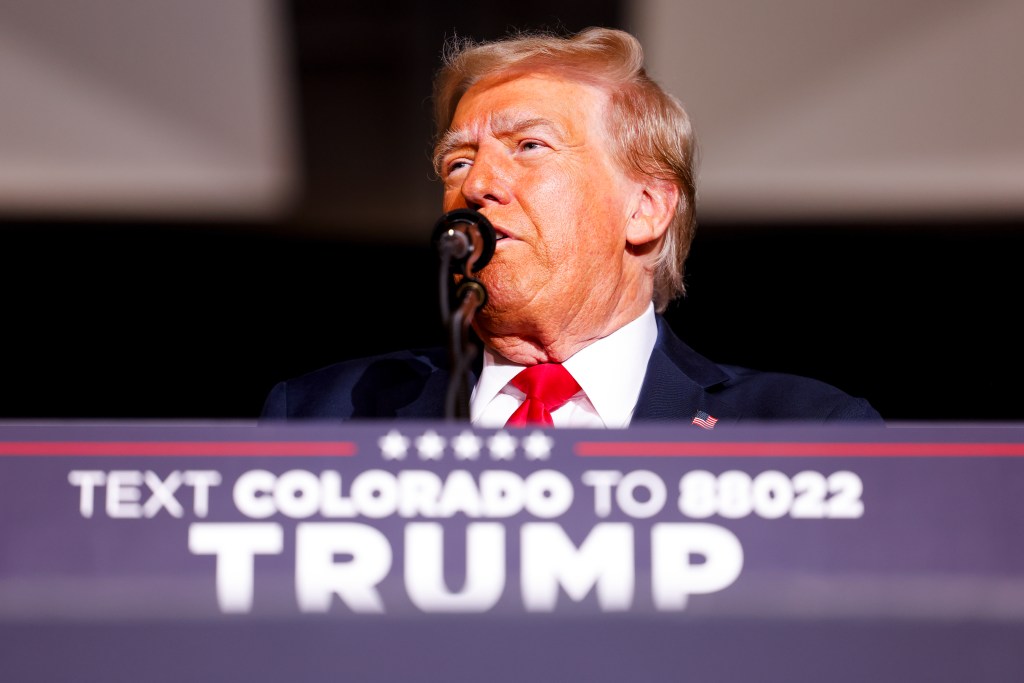
Former President Donald Trump has drawn criticism for vetoing a bipartisan bill aimed at providing funding for water infrastructure in southeast Colorado. The veto, announced on January 1, 2024, has raised concerns among local officials and residents who argue that his actions undermine essential services in an area that predominantly supports his party.
The legislation was designed to ensure clean water access for communities in southeast Colorado, an initiative that had garnered support across party lines. Critics suggest that Trump’s decision stems from personal grievances with Republican figures in the state, particularly Lauren Boebert, who has publicly called for the release of documents related to Jeffrey Epstein, and Tina Peters, who has faced legal challenges related to election security.
In a letter to the editor, Lakewood resident Mike Filion expressed frustration, noting that Trump’s actions harm his own constituents. He indicated that if the Republican Senate had taken a firmer stance during both of Trump’s impeachment hearings, the former president might not have pursued a second term.
The discourse surrounding Trump’s veto has been polarized. Some local Republicans suggest that Democratic leaders in Colorado, such as Attorney General Phil Weiser, who has initiated multiple lawsuits against the Trump administration, are partially to blame for provoking his anger. Terri Tilliss, a Parker resident, has countered this notion, stating, “No president of our United States should exact any wrath against any state at any time for any reason. Full stop!”
The implications of Trump’s veto extend beyond partisan politics. Many in Colorado are concerned about the potential impact on public health and safety. Clean water access is a critical issue, particularly in regions that have faced environmental challenges. Public sentiment, as expressed by residents like Steve Lorenz from Littleton, reflects a desire for leadership that prioritizes the needs of the people over political vendettas.
In addition to the water funding issue, Denver is also facing scrutiny regarding its bid to host the 2028 Democratic National Convention. Critics argue that the event would serve more as a means for political capital for Mayor Mike Johnston rather than as a solution to the city’s existing challenges. With the Trump administration’s recent announcement to freeze $10 billion in funding for social services in five Democratic-led states, including Colorado, skepticism regarding the viability of this bid has intensified.
Further complicating the situation, C. Greenman from Lakewood highlighted concerns over recent power outages in Boulder County, arguing that while public discontent is directed at Xcel Energy, the outages were precautionary measures to prevent potential fires. This reflects a broader conversation about infrastructure safety, especially following the devastating Marshall fire.
The upcoming 2026 midterms and the 2028 presidential election are seen as critical junctures for Colorado’s political landscape. Many residents hope for a shift in leadership that will prioritize the welfare of constituents over political retribution. The outcome of these elections could significantly influence policy decisions affecting critical areas such as water access and infrastructure safety.
In summary, Trump’s veto has sparked a fervent debate over governance and accountability in Colorado. As citizens grapple with the implications of this decision, it remains clear that the intersection of politics and public welfare is a crucial concern for many. The response from local leaders and voters will likely shape the future political landscape in the state.