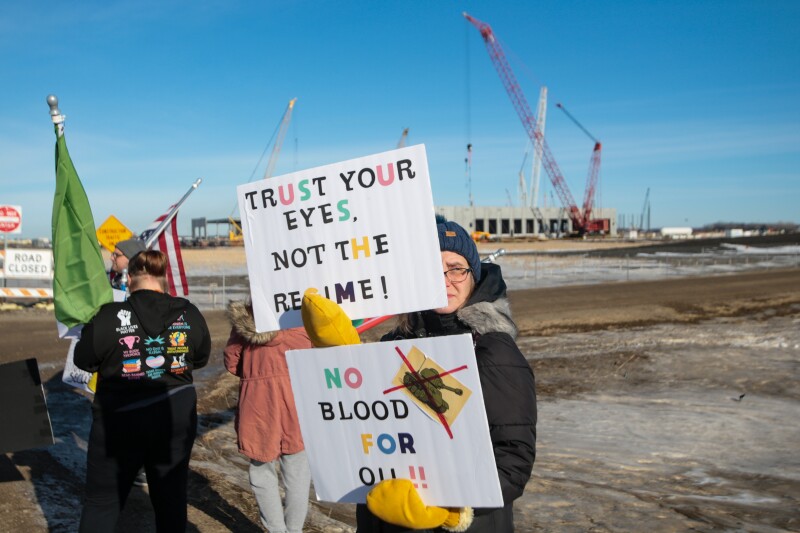
A reported visit by Vice President JD Vance to a data center under construction near Harwood, North Dakota, prompted an impromptu protest on Monday, January 12, 2024. Activists gathered near the site of the $3 billion artificial intelligence data center after learning about the anticipated tour. However, it was later revealed that the visitor was not Vance but U.S. Secretary of Labor Lori Chavez-DeRemer.
Members of Indivisible Fargo-Moorhead quickly mobilized around noon, organizing a demonstration at a gravel road intersection close to the construction site. Approximately 20 individuals participated, chanting slogans such as “JD Vance has got to go” and displaying signs condemning fascism.
Chavez-DeRemer is currently on a nationwide tour, visiting all 50 states as part of her “America At Work Tour,” which she announced on her social media account on January 11, 2024. According to Harwood Mayor Blake Hankey, the Secretary and her entourage arrived at the nearby Fargo Jet Center earlier that morning. Witnesses reported seeing a convoy of black limousines departing from the Jet Center to the data center site.
Despite the initial confusion regarding the visitor’s identity, protest organizer Lyn Dockter-Pinnick emphasized the demonstrators’ intentions. They aimed to voice their opposition to policies enacted by Immigration and Customs Enforcement (ICE), U.S. military actions in foreign nations, and broader issues related to immigration.
Dockter-Pinnick stated, “No good comes from that kind of occupation. No good comes from using military force against civilians in peaceful times.” This protest coincided with heightened tensions in the region following the recent fatal shooting of Renee Good by an ICE officer in a Minneapolis neighborhood.
The demonstration also attracted supporters from various organizations. Michael Southam, co-founder of FM Volunteers for Ukraine, joined the protest to show solidarity. He highlighted concerns regarding ICE detentions of Ukrainians in the Twin Cities who are awaiting asylum decisions or temporary protected status, which could shield them from deportation.
Southam remarked on the atmosphere of fear surrounding recent ICE activities, saying, “Some people are scared to leave their homes. Others are really afraid that ICE will break into their homes or into their apartments.”
Dockter-Pinnick further criticized the portrayal of immigrants by some politicians, asserting that many of those detained are legal immigrants rather than dangerous criminals. She argued that labeling immigrants as adversaries aligns with fascist tactics, which her father, a World War II veteran, fought against.
“We’re really, really concerned for our neighbors, and we’re really, really concerned about what is happening in our country,” she concluded, encapsulating the sentiments of those gathered at the protest.
This event underscores ongoing debates surrounding immigration policy and law enforcement practices in the United States, reflecting a broader concern among activists regarding the treatment of vulnerable populations.