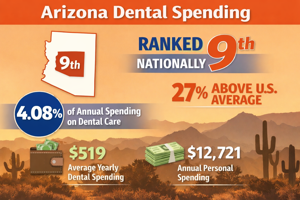
Research by Thorncrest Dental reveals that residents of Arizona allocate a significant portion of their personal budgets to dental care, ranking ninth in the United States for spending burden. Arizonans spend approximately 4.08% of their annual personal expenditures on dental services, which is notably higher than the national average of 3.2%.
This translates to around $519 spent on dental care from an average annual budget of $12,721. The findings indicate a growing financial strain on families and individuals in Arizona, as they prioritize oral health amid rising costs.
Comparative Analysis of Dental Spending
The study sheds light on the discrepancies in dental care expenditure across states. With Arizonans dedicating a larger percentage of their income to dental treatments, the implications for families can be profound. The 27% increase over the national average suggests that Arizona residents may be facing unique challenges in accessing affordable dental care.
Factors contributing to this higher expenditure may include the cost of dental services, limited insurance coverage, and a greater prevalence of dental health issues. The burden of these expenses can affect overall financial stability, prompting discussions about the need for improved dental care accessibility.
Impacts on Families and Policy Implications
As the data highlights the financial commitment required for dental care, it raises questions about the adequacy of insurance plans and the availability of affordable treatment options. Many families may find themselves having to choose between essential expenditures and necessary dental services, which could ultimately impact their long-term health.
Policymakers might consider these findings as they evaluate healthcare strategies and potential reforms aimed at reducing the financial burden of dental care on residents. Addressing these challenges could lead to better health outcomes and improved financial security for many households in Arizona and beyond.
The findings from Thorncrest Dental serve as a crucial reminder of the importance of oral health and the economic factors that influence access to care. As the conversation around healthcare affordability continues, the data highlights the need for ongoing attention and action in addressing dental care spending.