A federal judge in Minnesota has ordered the release of Garrison Gibson, a Liberian man, following his controversial arrest by federal immigration agents. The ruling came just four days after heavily armed officers forcibly entered Gibson’s home on January 11, 2026, using a battering ram. U.S. District Judge Jeffrey Bryan stated that the agents violated Gibson’s Fourth Amendment rights against unlawful search and seizure.
In his decision, Judge Bryan emphasized that the agents entered Gibson’s residence without his consent and without a warrant. “To arrest him, Respondents forcibly entered Garrison G.’s home without his consent and without a judicial warrant,” he noted. This ruling highlights growing concerns regarding immigration enforcement practices, particularly in light of the Department of Homeland Security’s (DHS) recent uptick in immigration arrests.
The DHS has described its operations in Minnesota as its largest enforcement effort to date, having arrested more than 2,500 people since November 29. Gibson’s attorney, Marc Prokosch, expressed his satisfaction with the judge’s order, stating that he filed a habeas corpus petition to challenge the legality of Gibson’s imprisonment. Prokosch described the arrest as a “blatant constitutional violation,” asserting that the agents lacked a proper warrant.
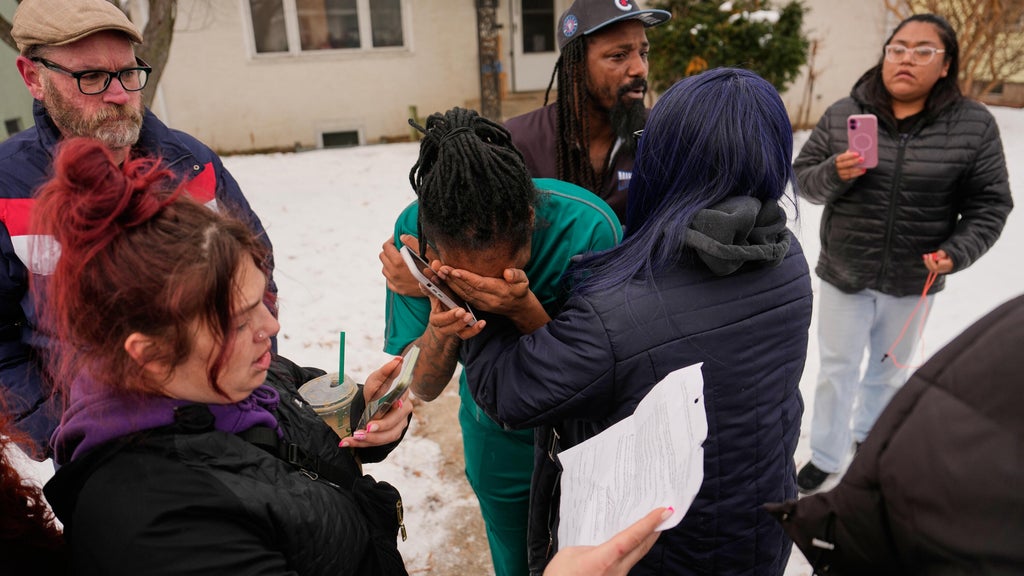
During the raid, Gibson’s wife and their nine-year-old child were present in their Minneapolis home. Prokosch added that Gibson’s wife was deeply shaken by the incident, which has raised significant concerns about the impact of such enforcement tactics on families.
Gibson, aged 37, was previously held at an immigration detention center in Albert Lea, Minnesota, after being transferred from a large camp at the Fort Bliss Army base in El Paso, Texas. Court records indicate that Gibson fled the Liberian civil war as a child and had been living legally in the United States under an order of supervision, requiring regular check-ins with immigration authorities. Just days before his arrest, Gibson had fulfilled this requirement by meeting with immigration officials at regional offices, where agents have been conducting enforcement raids.
Judge Bryan’s order pointed out that officials failed to provide sufficient notice regarding the revocation of Gibson’s order of supervision. He stated that the regulations were not adhered to, as Gibson was not given an opportunity for an interview immediately following his detention.
The DHS has not yet responded to inquiries regarding the judge’s ruling or Gibson’s case. A spokesperson for the department, Tricia McLaughlin, previously mentioned that Gibson had a “lengthy rap sheet” that included various offenses. However, court records reveal that his legal history is limited primarily to a single felony drug conviction in 2008, which was later dismissed, alongside minor drug arrests and a few traffic violations.
The situation in the Twin Cities has intensified following recent incidents involving immigration enforcement. The community is still reeling from the fatal shooting of Renee Good during a confrontation with agents on January 7. On the day prior to Gibson’s arrest, another man was shot and wounded by an immigration officer after a reported attack with a shovel and broom handle.
As immigration policies continue to draw scrutiny and provoke public discourse, this case underscores the ongoing tensions surrounding enforcement practices and the rights of individuals impacted by such actions.