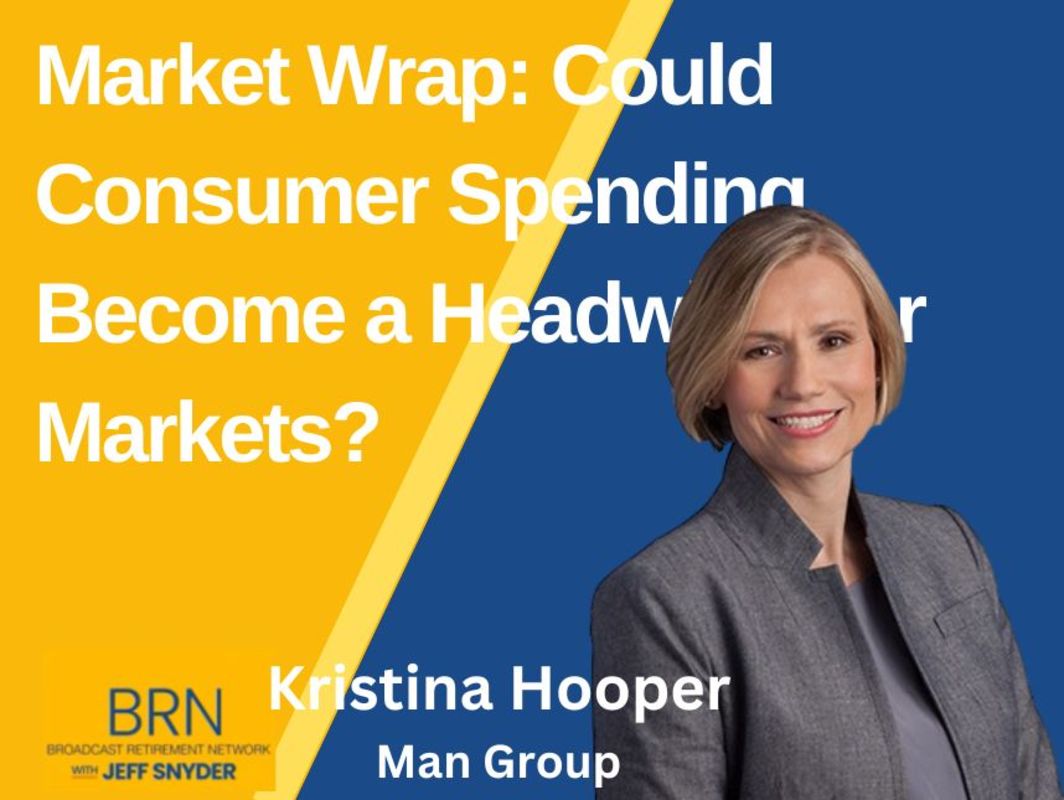
Market analysts are increasingly concerned that consumer spending could become a significant hindrance to stock market performance. This week, Kristina Hooper, Chief Market Strategist for Man Group, provided insights on recent market trends during a discussion with Jeffrey Snyder from Broadcast Retirement Network. The conversation highlighted a week marked by subtle shifts in investor sentiment and major economic indicators.
Market Performance Overview
The S&P 500 experienced a slight decline this week, while the Russell 2000 index stood out with better performance. Hooper attributed the unexpected strength of the smaller-cap index to a complex interplay of economic factors, suggesting that anticipated interest rate cuts from the Federal Reserve may be further off than previously thought.
The week began with an announcement from Jay Powell, Chair of the Federal Reserve, regarding subpoenas issued to the Fed, which raised concerns about its independence. While political responses from senators emphasized the need to maintain this independence, the situation may extend the timeline for potential rate cuts. Hooper believes that the Fed will likely be cautious in its approach to rate adjustments until uncertainties are resolved.
Sector-Specific Insights
Technology stocks faced modest declines, reflecting broader concerns around capital expenditures related to artificial intelligence (AI). Despite ongoing enthusiasm for AI, Hooper noted potential setbacks in tech spending. The Duke CFO Study published in December revealed that many Chief Financial Officers are not witnessing the productivity gains they had anticipated from AI investments. This uncertainty may prompt companies to reconsider their capital spending strategies.
Factors impacting AI spending include difficulties in sourcing rare earth elements, which are essential for data center operations. Many of these resources are concentrated in China, complicating supply chains. Additionally, growing community opposition to data centers due to their high energy demands could lead to increased regulatory challenges.
Hooper also highlighted the looming expiration of subsidies under the Affordable Care Act (ACA), which could affect approximately 20 million Americans. With average premium increases projected at 114%, this change may significantly impact consumer disposable income. Furthermore, the resumption of student loan payments and the potential for wage garnishment could further strain American households, as over 42.5 million Americans carry student debt averaging over $39,000.
These emerging headwinds raise questions about the sustainability of consumer spending and its potential effects on overall economic growth.
Long-Term Perspectives for Investors
For long-term investors, Hooper emphasized the importance of portfolio diversification. Many investors tend to adopt a “set it and forget it” strategy, neglecting necessary rebalancing. She encouraged a reassessment of portfolio exposure across different asset classes and regions, particularly as European markets have recently outperformed U.S. markets.
With the possibility of weaker returns from the U.S. market, Hooper suggested that investors consider reallocating some profits to capitalize on opportunities in Europe and emerging markets. Additionally, incorporating alternative investments can provide diversification benefits, as these assets often exhibit lower correlations with traditional equities and fixed income.
Amid an environment filled with uncertainty, the key takeaway for investors is to prioritize diversification in their strategies. Hooper concluded with a reminder that in unpredictable times, it is crucial to avoid placing all investments in one area.
In summary, while the markets seem to be navigating a complex landscape of economic indicators and geopolitical events, the potential impact of consumer spending concerns cannot be underestimated. As analysts like Hooper continue to monitor these trends, investors are advised to stay vigilant and responsive to changing conditions.