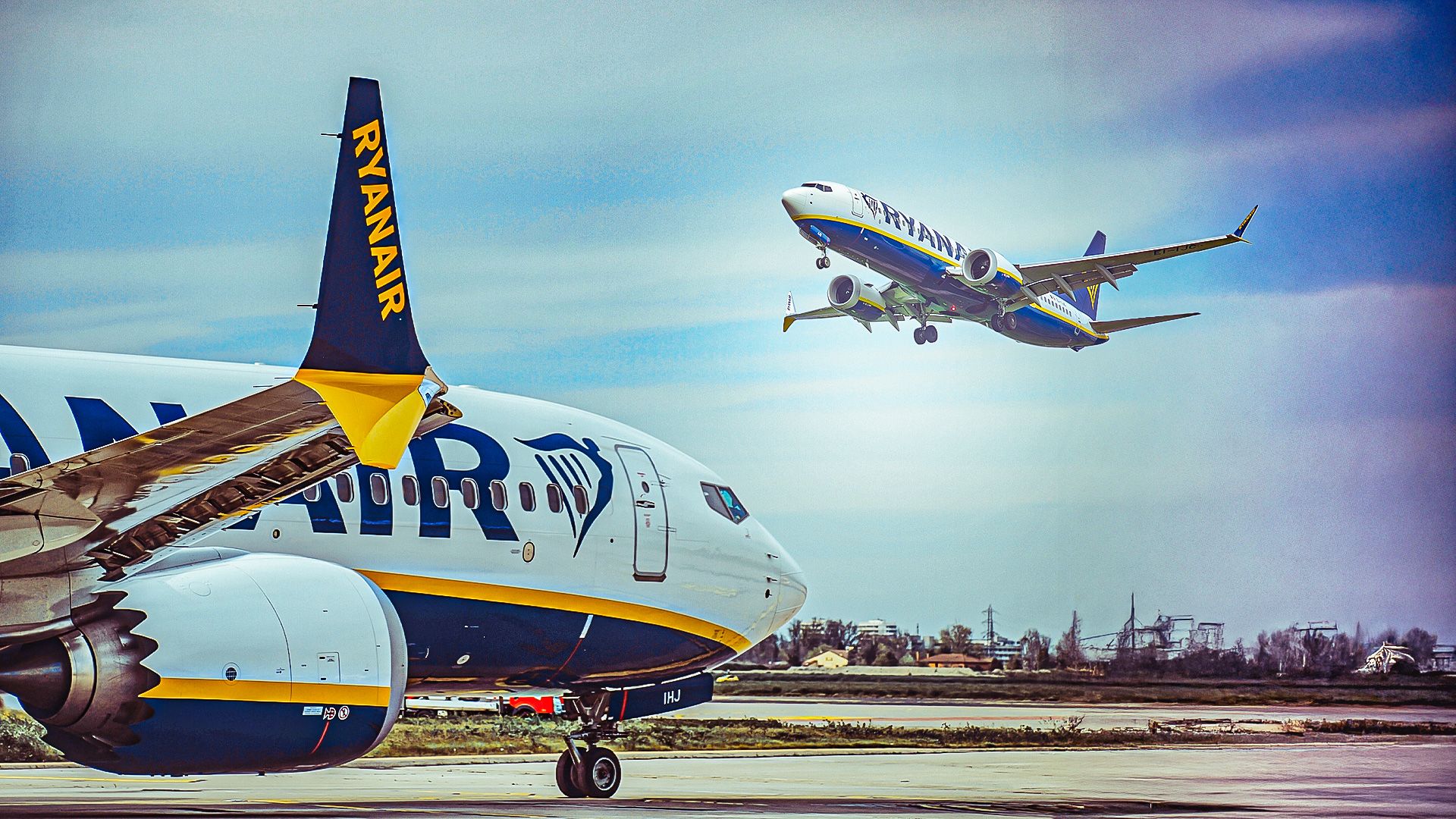
SpaceX founder Elon Musk has publicly criticized Ryanair after the budget airline opted against implementing the company’s Starlink satellite Wi-Fi across its fleet. This decision was announced by Ryanair’s CEO, Michael O’Leary, who cited financial concerns regarding the installation’s weight and drag penalties. The situation escalated into a public feud, marked by personal insults exchanged between O’Leary and Musk.
O’Leary revealed earlier this week that Ryanair would not invest in Starlink, claiming that the installation would incur a “two percent fuel penalty” due to added weight and drag. Musk responded on social media platform X, asserting that O’Leary was “misinformed,” and was supported by Michael Nicolls, Vice President of Starlink Engineering. According to Nicolls, their analysis indicated that the fuel penalty for a Boeing 737-800 would be no more than 0.3%.
The disagreement took a turn for the worse during O’Leary’s interview with Newstalk, where he dismissed Musk, labeling him “very wealthy, but still an idiot.” He further claimed that the costs associated with equipping aircraft with Starlink could reach $250 million annually, translating to an extra dollar for every passenger. Musk retaliated on X, calling O’Leary an “utter idiot,” and suggested he would buy Ryanair to replace O’Leary himself.
Starlink’s Technological Challenges and Advantages
The integration of Starlink on aircraft involves installing additional hardware, such as antennas and radomes, which increases the aircraft’s weight and aerodynamic drag. O’Leary’s estimate of a two percent fuel penalty contrasts with Starlink’s assertion that their design minimizes these effects. Nicolls pointed out that the older Wi-Fi terminals were less efficient, while Starlink’s newer models boast a thinner profile that significantly reduces aerodynamic penalties.
A 2025 study from Cornell University demonstrated that Starlink provides superior Wi-Fi speeds and reliability compared to legacy systems. This advancement enables data-intensive activities like streaming and video conferencing, with download speeds reportedly exceeding 200 Mbps, comparable to standard home Wi-Fi.
Market Implications for Ryanair and Competitors
While Ryanair could benefit from the performance of Starlink, O’Leary has expressed skepticism about passengers’ willingness to pay for in-flight Wi-Fi. He noted that while travelers are likely to use free Wi-Fi services, they may resist paying even one Euro for access, particularly on shorter flights. This sentiment reflects a broader trend among ultra-low-cost carriers (ULCCs), who often face challenges in monetizing ancillary services like Wi-Fi.
In contrast, many airlines are embracing Starlink, with Lufthansa recently announcing plans to equip its entire fleet of around 850 aircraft with the technology. Over 30 airlines, including airBaltic, Alaska Airlines, Qatar Airways, and United Airlines, have either implemented or announced agreements with Starlink to enhance onboard connectivity.
As the aviation industry increasingly adapts to passenger demands for connectivity, the dispute between Musk and O’Leary highlights the competitive pressures airlines face in providing modern in-flight services. Ryanair’s decision not to adopt Starlink may have implications for its market position, especially as other carriers expand their offerings in response to consumer preferences for reliable in-flight internet access.