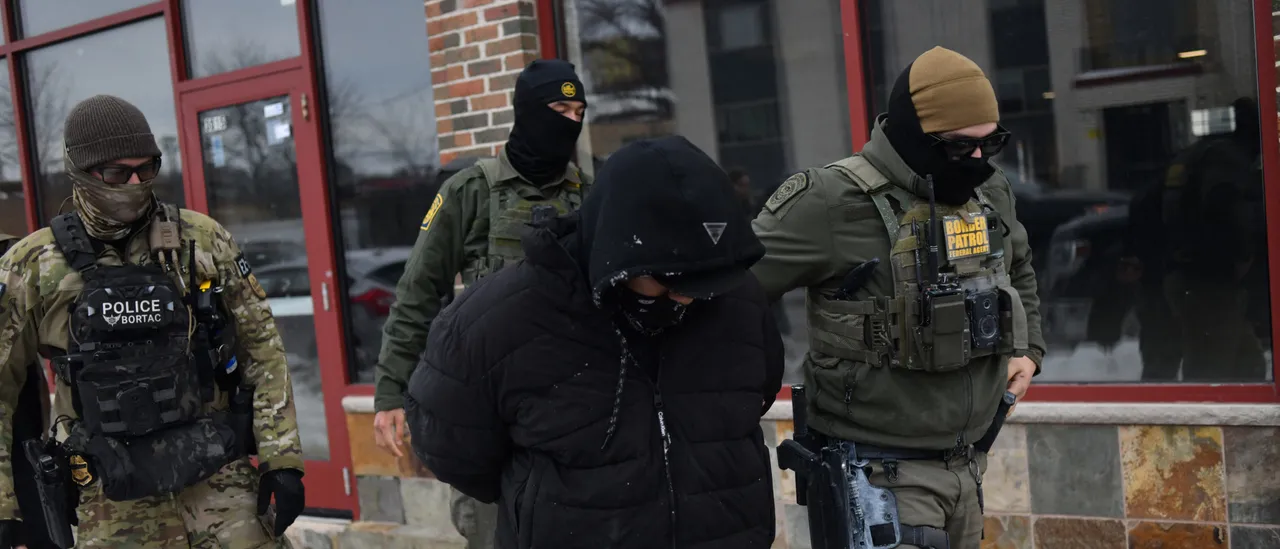
Three employees at El Tapatio Mexican Restaurant in Willmar, Minnesota, were detained by U.S. Immigration and Customs Enforcement (ICE) agents on January 15, 2026, following an unusual encounter where the agents dined at the establishment. The situation unfolded when a dishwasher and two owners of the restaurant closed early after learning that ICE agents had visited for lunch.
The restaurant has remained closed since the incident, but the owners’ son announced plans to reopen for customers soon. In a statement to Willmar Radio, Willmar Mayor Doug Reese emphasized that “ICE is a federal agency carrying out federal responsibilities,” while also encouraging respect for peaceful protests.
According to a statement from the Department of Homeland Security (DHS), the focus of the detentions was on an individual identified as Jose Rosario Gomez. DHS Assistant Secretary Tricia McLaughlin explained that officers conducted a vehicle stop later that day, apprehending Gomez along with two additional individuals, one of whom had a final order of removal from an immigration judge.
The incident has led to noticeable changes in the community. Residents reported an increase in police activity on the streets, and some local businesses chose to close their doors in response to the heightened tensions. Despite these developments, streets appeared to return to their usual state shortly thereafter.
In a separate incident on the same day, ICE agents faced hostility at a restaurant in Minneapolis. Diners reportedly shouted expletives at the agents, demanding their departure, which forced them to leave the establishment.
Willmar is located approximately two hours west of Minneapolis, where anti-ICE protests have persisted for two weeks following the fatal shooting of a protester who attempted to run over agents with her vehicle. This ongoing unrest reflects the divided opinions surrounding immigration enforcement in the region.
The events at El Tapatio highlight the complexities surrounding immigration enforcement and local responses, illustrating how federal actions can directly impact community dynamics and individual lives.