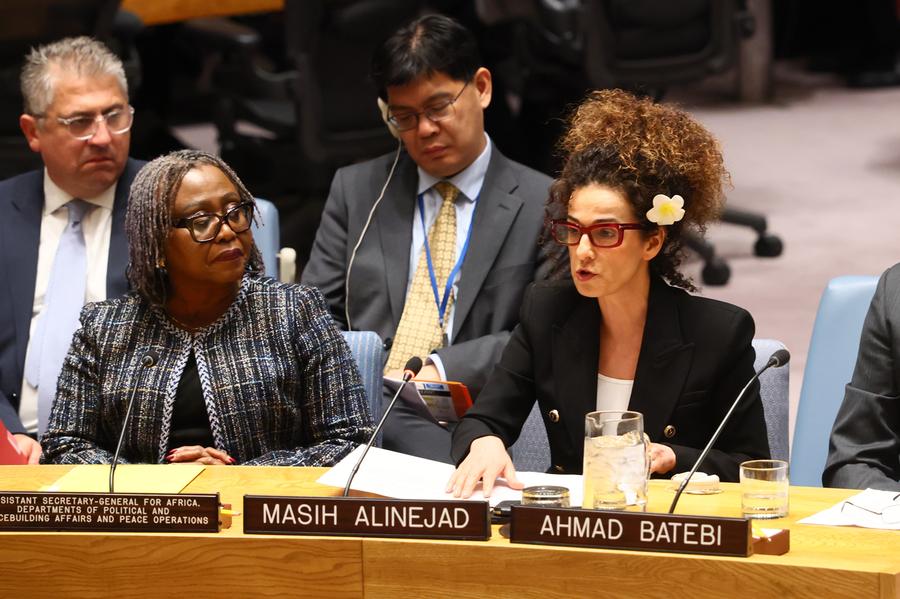
UPDATE: Iranian dissident Masih Alinejad delivered a powerful address to the UN Security Council today, condemning the UN’s silence regarding the Iranian regime’s violent crackdown on protests. This marks the first time the Security Council has convened to discuss the ongoing unrest in Iran since protests erupted several weeks ago.
Alinejad’s urgent plea comes as global attention heightens on Iran, where authorities have reportedly killed numerous protesters in their efforts to suppress dissent. She sharply criticized UN Secretary-General António Guterres for his muted response to the Iranian government’s human rights violations, stating, “The secretary-general has not spoken publicly against the massacre.”
This critical moment raises questions about the UN’s credibility and its apparent reluctance to confront the Iranian regime, which has been accused of widespread human rights abuses. Alinejad, who has faced multiple assassination attempts due to her activism, shared her harrowing personal experiences, including her family’s persecution and her own exile.
On social media, she recounted, “I am a woman from a small village in northern Iran. Jailed for protesting. Beaten for showing my hair. Forced into exile.” Her emotional testimony highlights the dire situation faced by many in Iran and challenges the international community to take action.
Despite the UN’s long-standing reputation as a defender of human rights, recent developments suggest a troubling inconsistency in its stance. Afsaneh Nadipour, an Iranian representative, was elected to the UN Human Rights Council last year, and the Iranian regime is set to chair the UN Conference on Disarmament in 2024. Critics argue that these appointments undermine the UN’s credibility and expose a double standard in its approach to human rights.
As Alinejad’s address echoed through the chamber, the tension was palpable. Footage later revealed that the Iranian delegate appeared visibly shaken, his legs quivering under the table. This moment of vulnerability illustrates the growing awareness of the regime’s failures, but the question remains: will the UN respond?
The implications of Alinejad’s testimony extend beyond the Security Council. Her words challenge political leaders and institutions globally to confront their own complicity in ignoring the plight of the Iranian people. The silence from major figures, including media outlets and public personalities, further complicates the narrative. Alinejad’s call to action serves as a reminder that human rights should transcend political biases.
As the world watches, the urgency for the UN to address the human rights crisis in Iran has never been more critical. Alinejad’s poignant remarks serve as a rallying cry for action and accountability. The international community now faces a crucial moment: will it rise to the occasion, or will the silence continue?
Stay tuned for updates as this developing story unfolds.