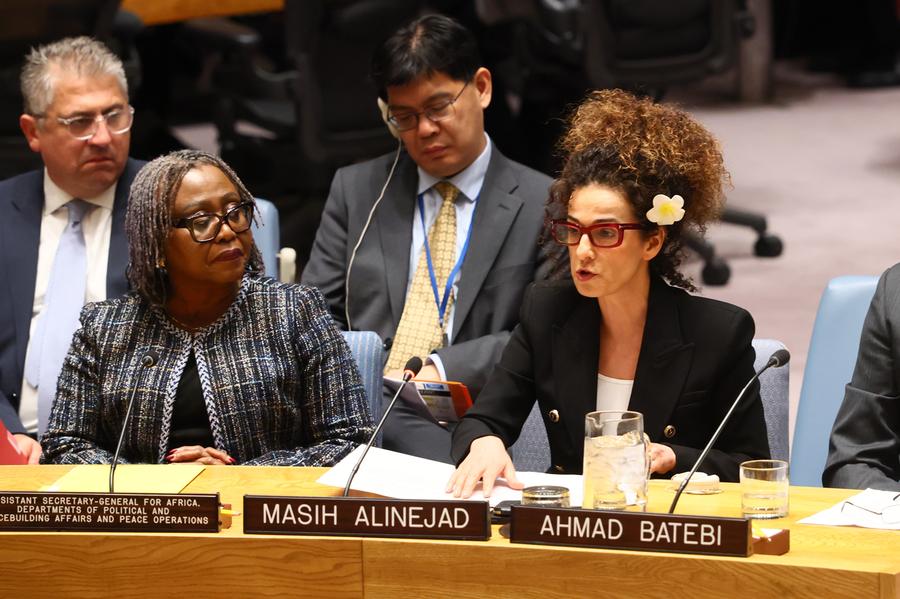
Masih Alinejad, an Iranian dissident and prominent human rights activist, has publicly criticized the United Nations for its perceived inaction regarding the Iranian regime’s ongoing human rights abuses. During a recent address to the UN Security Council, Alinejad highlighted the stark contrast between the UN’s silence on Iran and its vocal criticisms of other nations, particularly Israel.
UN’s Inconsistent Response to Human Rights Violations
The UN Security Council convened on October 7, 2023, to discuss the uprisings in Iran, marking the first formal discussion on the matter since protests erupted across the country. Alinejad, who has faced multiple assassination attempts by the Iranian government, seized the opportunity to question UN Secretary-General António Guterres about his lack of public condemnation regarding the regime’s actions. “The secretary-general has not spoken publicly against the massacre,” she stated, urging him to consider the plight of the Iranian people.
Alinejad’s remarks were particularly striking given Guterres’ history of cautious language when addressing the Iranian regime. Notably, he has refrained from labeling the government’s actions as genocide, a term that has been used frequently in discussions about other countries. This inconsistency raises concerns about the UN’s commitment to human rights, especially when Iranian representatives, such as Afsaneh Nadipour, were recently elected to advisory roles within the UN Human Rights Council.
The UN’s track record of condemning Israel more than any other nation has long been criticized. For instance, the UN Human Rights Council had condemned Israel over 70 times prior to the escalation of violence in Gaza, while fewer resolutions were passed against Iran despite its documented human rights violations. Alinejad’s testimony has brought this disparity into sharper focus.
Personal Testimony and Broader Implications
During her address, Alinejad shared her personal experiences of repression and exile, stating, “I am a woman from a small village in northern Iran. Jailed for protesting. Beaten for showing my hair.” She recounted the harassment faced by her family, including her brother’s imprisonment and her mother’s interrogation, underscoring the regime’s brutal tactics to suppress dissent.
“Assassins were sent to New York, three times, to kill me. And now I’m supposed to sit next to them at the UN Security Council,” Alinejad said, emphasizing the irony of her presence at the UN.
Her emotional appeal resonated with many, especially as footage showed the Iranian delegate visibly shaken during her testimony. This moment exposed the reality that the Iranian government is aware of its international image and the growing scrutiny of its actions.
Despite Alinejad’s powerful statements, the broader question remains: Will the UN respond to the growing calls for accountability? The organization has faced criticism for its perceived complicity in allowing regimes like Iran to operate with minimal oversight. Such indulgence contrasts sharply with the UN’s vocal stance against other nations, raising questions about its integrity and effectiveness in promoting human rights.
The UN’s response to the Iranian protests reflects a troubling trend where political considerations overshadow human rights advocacy. Alinejad’s testimony serves as a stark reminder of the urgent need for the UN to reassess its priorities and take a firmer stance against oppressive regimes.
As the international community grapples with these issues, the UN’s reputation hangs in the balance. The challenge lies not just in acknowledging the severity of the situation in Iran but in translating that acknowledgment into meaningful action. The world watches closely to see whether the UN can reconcile its past actions with the current cries for justice from the Iranian people.