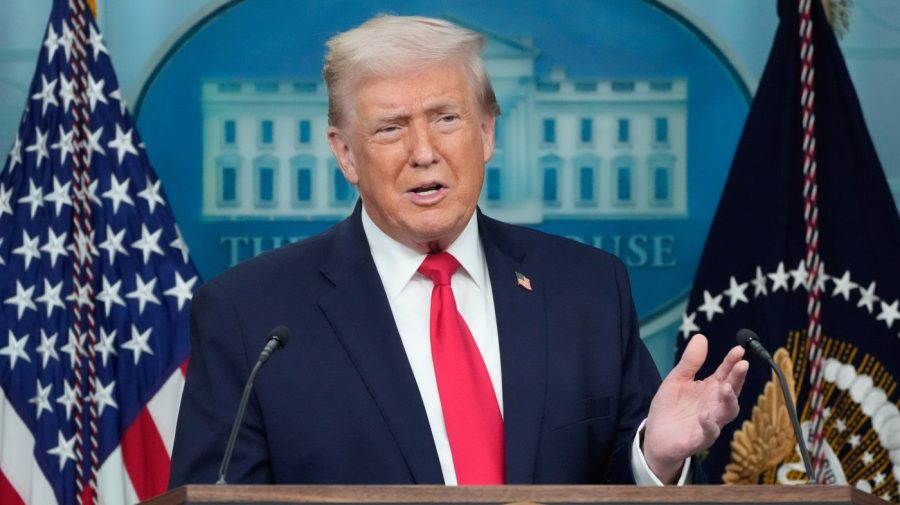
President Donald Trump reiterated his interest in acquiring Greenland while preparing to attend the annual Davos economic summit. During a press briefing on January 16, 2024, he suggested that the U.S. could explore alternative methods to tariffs for the potential acquisition of the territory, which is currently an autonomous region of Denmark.
Trump’s comments come on the heels of previous discussions he initiated in 2019 regarding the purchase of Greenland. At that time, he faced a swift rebuke from the Danish government, which declared the island was not for sale. Despite this setback, Trump has maintained a strong interest, viewing Greenland’s vast natural resources and strategic location as beneficial to U.S. interests.
At the Davos summit, which gathers global leaders and business executives, Trump is expected to discuss a variety of topics, including international trade and energy policy. His remarks about Greenland could provoke renewed discussions on U.S.-Denmark relations, particularly given the sensitivity surrounding the territory’s status.
In addition to emphasizing his desire for U.S. control over Greenland, Trump hinted at a broader strategy that could encompass diplomatic negotiations or economic incentives aimed at fostering a more favorable response from Denmark. “There are various ways we can approach this,” he stated, indicating a willingness to consider options beyond financial transactions.
The potential acquisition of Greenland reflects Trump’s broader approach to foreign policy, often prioritizing American economic interests. If pursued, this initiative could raise questions regarding international law and the rights of sovereign nations. Experts point out that any attempt to acquire territory through coercive means could set a concerning precedent in global relations.
As Trump prepares for the discussions in Davos, the international community will be watching closely to see how his proposals regarding Greenland unfold and whether they will influence U.S. foreign policy in the Arctic region. The implications of such a move could resonate beyond bilateral relations, affecting geopolitical stability in the area.
The dialogue surrounding Greenland and the Arctic region is particularly significant as climate change continues to open new shipping routes and access to untapped natural resources. For many, the situation is a reminder of the complexities involved in international diplomacy and territorial sovereignty.
Trump’s upcoming appearance at Davos may provide a platform for further elaboration on his vision for Greenland and the strategic interests of the United States in the evolving global landscape.