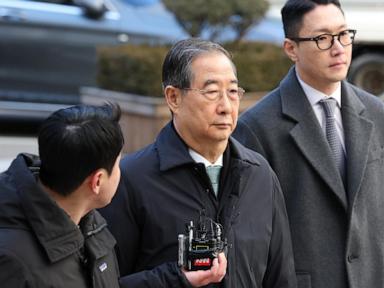
A South Korean court has sentenced former Prime Minister Han Duck-soo to 23 years in prison for his role in a rebellion connected to the imposition of martial law by then-President Yoon Suk Yeol. The ruling, delivered by the Seoul Central District Court on Wednesday, signifies a significant legal development in the aftermath of the controversial martial law declared in December 2024.
This landmark verdict marks Han as the first official from the Yoon administration to be convicted of rebellion charges. Han served as one of the three caretaker leaders during the martial law crisis that ultimately led to Yoon’s impeachment and subsequent removal from office. The court’s decision not only sets a precedent for future cases involving Yoon and other associates facing similar charges but also highlights the gravity of rebellion accusations in South Korea.
Rebellion carries severe legal ramifications in the country, and recent developments have intensified scrutiny on Yoon himself. An independent counsel has recommended the death penalty for Yoon, alleging that he was the mastermind behind the rebellion. The Seoul Central District Court is scheduled to rule on Yoon’s rebellion charges on February 19, a date that many observers view as critical for the future of South Korean politics.
The conviction of Han Duck-soo comes amid a broader context of political upheaval and public unrest in South Korea, where the martial law imposed under Yoon’s leadership has faced widespread criticism. Citizens have expressed concerns over the potential erosion of democratic principles during this turbulent period.
As the legal proceedings continue, the implications of Han’s sentence may reverberate throughout the political landscape. Analysts suggest that this case could influence public perception of Yoon and the legitimacy of his administration. The outcome of the upcoming ruling on Yoon’s charges will likely be pivotal not only for his political future but for the stability of South Korea’s governance as a whole.
While the legal battles unfold, the nation watches closely, as the decisions made in these courtrooms will shape the course of South Korean politics for years to come.