The Syrian government has regained control of Raqqa and Tabqa, marking a significant shift in the balance of power in northern Syria. On January 18, 2026, Syrian government forces successfully captured these key areas from the Syrian Democratic Forces (SDF), a Kurdish-led coalition that had been the de facto authority in the region after the defeat of the Islamic State.
As dawn broke over the Euphrates River, military vehicles flooded toward the Tabqa Dam. Soldiers celebrated their advance, taking photographs in a gesture of victory. One soldier, identified as Abu Khaled from the Syrian army’s 82nd Division, expressed the emotional weight of the moment: “The last time I came to Raqqa, it was on a school trip. Today, I’m coming to liberate it.”
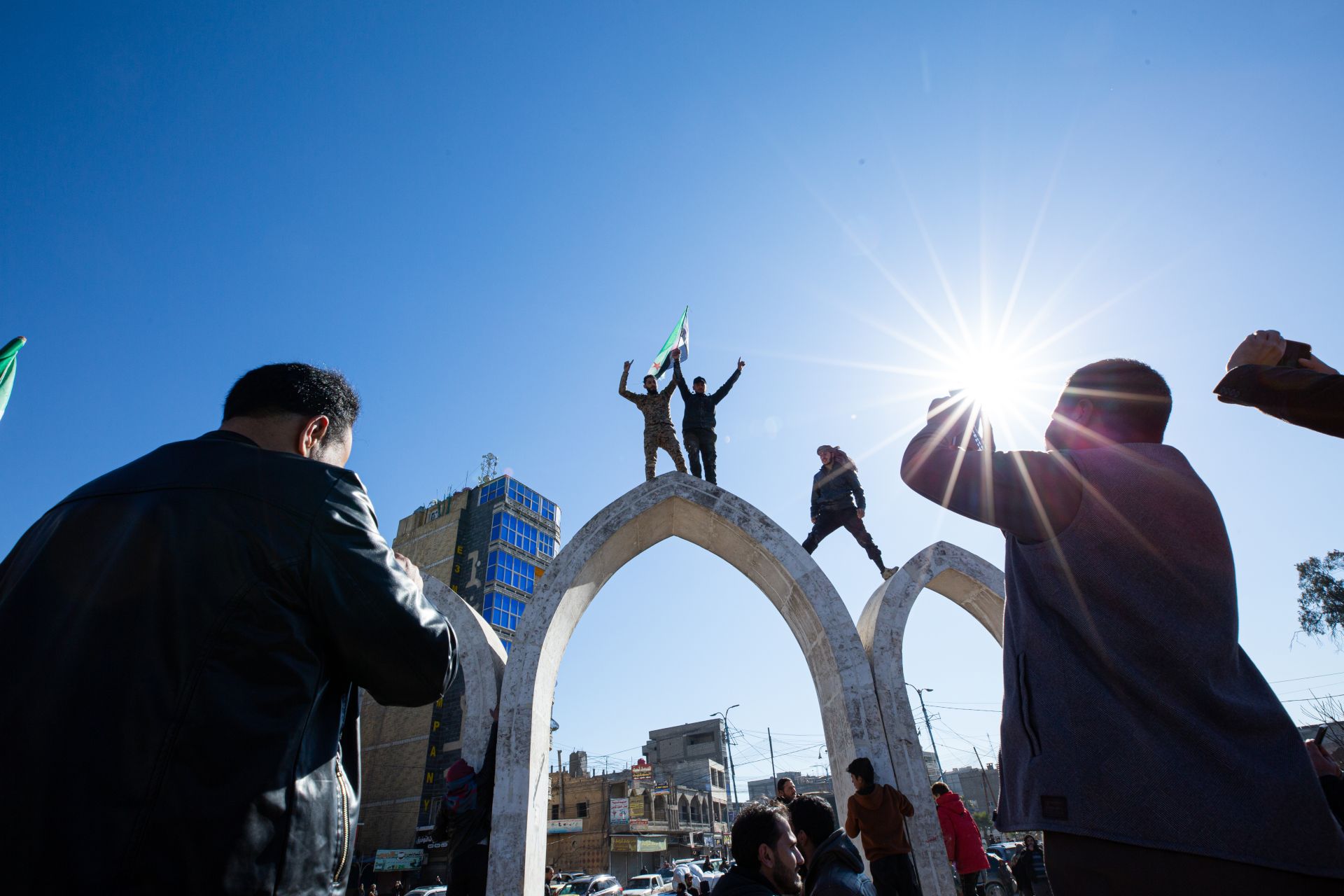
The day following the capture, January 19, Raqqa’s central square became a scene of jubilation. Groups gathered to celebrate what they termed the “liberation,” although the atmosphere was tinged with tension. Gunfire echoed in the background as many shops remained shuttered, and the air was thick with the smell of gunpowder.
Celebrations amid a complex backdrop
Raqqa, predominantly Arab, had been under SDF control for years, and the shift back to Syrian government authority brought forth mixed emotions. In December, residents had been prohibited from celebrating the anniversary of President Bashar al-Assad’s regime, leading to feelings of repression and marginalization among the local population. One resident, Ahmed al-Boch, who had previously been detained for attempting to celebrate, remarked, “For the first time, I feel like I belong to this country.”
Abdulmajid Tuma, a 45-year-old local, described his community’s historical grievances under SDF rule, stating, “We felt like fourth-class citizens.” Tuma emphasized that despite Raqqa’s rich resources, including oil and agriculture, the local Arab population had been sidelined. “As Arabs, if you were not with them, you had no rights,” he asserted.
Despite the celebratory atmosphere, the humanitarian situation remains precarious. Clashes had damaged vital infrastructure, including a bridge over the Euphrates, which the SDF bombed before their withdrawal. Residents are now forced to use small boats for transportation and supplies. Abu Hussein, a local fisherman, expressed frustration at the new reality: “The old bridge was destroyed. Now we cross by boat.”
Concerns of reprisal and community fragmentation
The recent developments have sparked fears among the Kurdish community, who have largely fled Raqqa. Many have left due to fears of reprisals, particularly after a statue of a Kurdish militia fighter was toppled in a symbolic act of defiance against Kurdish self-rule. A Kurdish notable living in the area spoke anonymously, expressing grief over the loss of his community’s identity and the potential for violence. “Many left because they had nothing left to fight for,” he said, tears in his eyes.
Following the government’s advance, an agreement was reached between Syrian authorities and SDF commander Mazloum Abdi, aimed at preventing further bloodshed. The agreement, consisting of 14 clauses, establishes a ceasefire and formalizes the transfer of Raqqa and Deir ez-Zor provinces back to the Syrian state. It also mandates the absorption of Kurdish forces into the Syrian defense and interior ministries on a case-by-case basis.
In a press conference on January 20, the newly appointed mayor of Raqqa, Abdulrahman Salameh, asserted the importance of equal rights for all residents, including Kurds. “We will ensure equal treatment for everyone,” he stated, although many remain skeptical about the future.
Future uncertainties in Hasakah
While celebrations echoed in Raqqa, the nearby city of Hasakah held its breath. Home to a diverse population of Armenians, Assyrians, Kurds, Yazidis, and Arabs, the community’s future remains uncertain. Patricia, a 22-year-old Armenian media worker, voiced her concerns: “Until now, the autonomous administration and the SDF provided protection. What comes next is uncertain.”
As sporadic clashes continue and calls for general mobilization circulate among the Kurdish population, the situation remains volatile. The fate of the Rojava project, once seen as a beacon of hope for Kurdish autonomy, now hangs in the balance as Syrian government forces consolidate their control in the region.