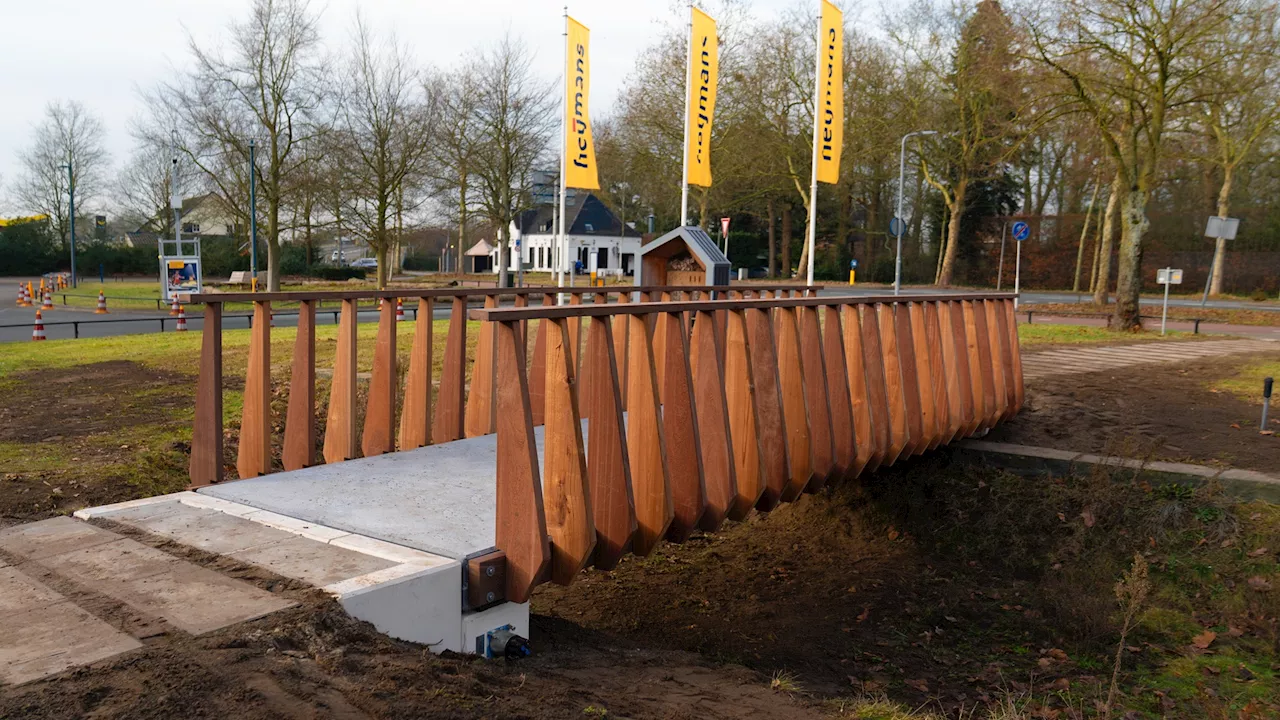
Heijmans, in partnership with climate tech firm Paebbl, has introduced the world’s first bridge constructed using CO2-neutral concrete. This innovative pedestrian bridge, located in the Netherlands, demonstrates that structural concrete can be produced without contributing to climate change.
The bridge spans 7 meters and incorporates a concrete mix that substitutes a significant portion of traditional materials with carbon-storing and recycled alternatives. By combining Paebbl’s CO2-mineralizing material with biochar and recycled aggregates, the project achieved a remarkable outcome. The resulting structure contains no primary sand or gravel and is composed of 75 percent circular raw materials. Despite the unconventional composition, the concrete met all structural strength requirements, according to the project partners.
A notable feature of this bridge is its ability to permanently sequester carbon dioxide. Approximately 66 kg of CO2 is captured within the bridge deck alone, contributing to the overall CO2 neutrality of the concrete mix.
Innovative Concrete Mix Reduces Carbon Footprint
The concrete mix utilized in this project replaced 30 percent of the conventional cement with Paebbl’s carbon-storing material, resulting in an embodied carbon reduction of nearly 30 percent compared to a low-carbon reference concrete. Cement production is responsible for about 8 percent of global carbon emissions, making it one of the most carbon-intensive materials. Reducing cement content while maintaining performance is a significant challenge in the construction industry.
Nick Vervoort, Innovation Manager at Heijmans, emphasized the importance of addressing the climate crisis through innovation. “This bridge proves that carbon-neutral structural concrete is not a future aspiration; it’s achievable today. For the first time, CO2-neutral concrete has been poured using an innovative mix of materials: Paebbl, biochar, and recycled concrete,” Vervoort stated. He expressed pride in the project, highlighting that the concrete mix is fully CO2-neutral and incorporates 75 percent circular raw materials.
A New Era for Infrastructure
The material developed by Paebbl accelerates natural mineralization processes, effectively capturing CO2 and locking it into a stable mineral form within construction materials. Ana Luisa Vaz, Vice President of Products at Paebbl, noted that achieving a 30 percent cement replacement rate in structural concrete is a significant milestone. “This demonstration pedestrian bridge shows that carbon-storing materials are not just viable for decorative or non-structural uses; they are ready for real infrastructure,” she said.
Paebbl claims its materials can permanently store up to 300 kg of CO2 for every 1,000 kg produced while reducing embodied carbon in construction by up to 30 percent. This project was a collaborative effort involving a consortium of Dutch and European partners. Heijmans led the construction, while HCM Cement provided the cement formulation. Van der Kamp B.V. managed concrete production, CarStorCon Technologies integrated biochar, and Urban Mine supplied recycled aggregates.
The partners assert that this bridge sets a new standard for circular, carbon-neutral structural concrete and points towards a future where buildings and infrastructure could serve as long-term carbon sinks rather than significant emitters. The successful completion of this project marks a pivotal moment in sustainable construction practices and showcases the potential for innovative materials to transform the industry.