Leaders from Denmark and Greenland reaffirmed their non-negotiable stance on sovereignty following comments from U.S. President Donald Trump, who indicated a potential Arctic security agreement that could provide the U.S. with extensive military access to Greenland. In a recent interview, Trump mentioned discussions with NATO Secretary General Mark Rutte, suggesting a framework that would grant the U.S. “total access” to the territory.
While the specifics of this proposed deal remain unclear, Trump stated, “we’re going to have all the military access we want.” In response, NATO spokesperson Allison Hart confirmed that Rutte did not propose any compromise on the sovereignty of Greenland during talks with Trump.
In a notable shift, Trump recently abandoned plans to impose tariffs on eight European nations, reversing a prior stance aimed at exerting U.S. control over the semiautonomous territory. On that same day, Jens-Frederik Nielsen, Prime Minister of Greenland, expressed cautious relief, stating he was unaware of the details surrounding the agreement Trump referenced.
Denmark’s Commitment to Sovereignty
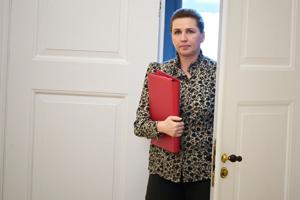
Danish Prime Minister Mette Frederiksen emphasized that discussions regarding Arctic security should involve all NATO members. In a public statement, she reiterated, “We cannot negotiate on our sovereignty,” and assured that Denmark aims to engage in constructive dialogue with its allies regarding Arctic security, including discussions on enhancing U.S. military capabilities in Greenland.
The U.S. has maintained a military presence in Greenland, operating under a treaty established in 1951 that allows for military base establishment with Danish and Greenlandic consent. Hart affirmed that NATO remains committed to preventing any economic or military foothold by Russia or China in Greenland.
Following the announcement of potential military enhancements, Nielsen indicated that Greenland is open to hosting NATO missions. “Respectful dialogue through the right channels is what we have been seeking from the get-go,” he remarked during a press conference in the island’s capital, Nuuk. A collaborative working group involving U.S. Vice President JD Vance and Secretary of State Marco Rubio was formed last week to explore these discussions further.
International Reactions and Future Implications
In Copenhagen, public sentiment reflected skepticism towards Trump’s sudden policy reversal. Local residents voiced concerns about the reliability of U.S. assurances. “I think the man has said many things and done a lot of different things,” said Louise Pedersen, a young entrepreneur. Another resident, Poul Bjoern Strand, expressed distrust, stating, “I don’t really trust anything Mr. Trump is saying.”
Internationally, reactions varied. German Chancellor Friedrich Merz, addressing the World Economic Forum in Davos, underscored the need for European NATO allies to bolster Arctic security. “We will protect Denmark, Greenland, and the north from the threat posed by Russia,” he asserted, reinforcing the principles of sovereignty and territorial integrity.
As Frederiksen travels to the United Kingdom for discussions with British Prime Minister Keir Starmer, the focus on Arctic security remains pressing. Starmer acknowledged that the complexities of enhancing Arctic security are significant, but noted the potential for pragmatic cooperation following Trump’s withdrawal of tariff threats.
The evolving situation highlights the delicate balance of interests in the Arctic region, where geopolitical dynamics intersect with national sovereignty. With ongoing dialogues between Denmark, Greenland, and the United States, the path forward will depend on mutual respect for territorial rights and strategic collaboration.