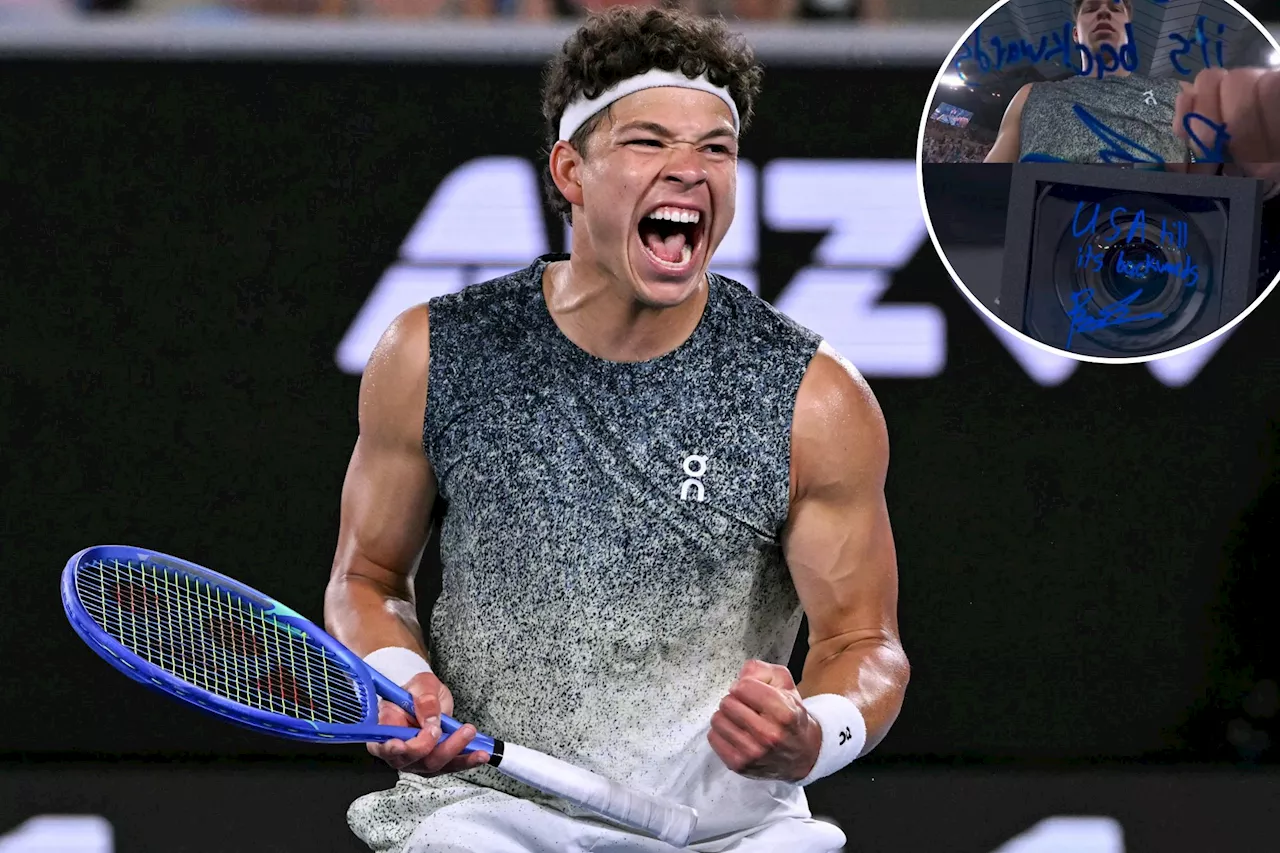
American tennis player Ben Shelton made headlines after his victory over Valentin Vacherot in the third round of the Australian Open, held on January 24, 2026. Following the win, Shelton engaged in a tennis tradition of signing a camera lens, but his message stood out: “USA ‘til it’s backwards.” This declaration resonated with themes of unwavering support for his country and has sparked conversations among American players about their connection to the United States.
In recent days, several American tennis stars, including Taylor Fritz, Coco Gauff, Madison Keys, and Amanda Anisimova, have faced similar inquiries regarding their perspectives on representing the U.S. A reporter at the tournament has been probing players about their feelings toward the nation, particularly in light of recent events and the broader political climate.
During a particularly poignant moment, Anisimova was asked if she felt any complications in her thoughts about playing for the U.S. given the challenges faced in the past year. She expressed that the context of current events indeed weighs on her mind.
In response to the reporter’s inquiries, Tennys Sandgren, another American player, suggested a shift in focus for the media. He remarked, “Bug reporter. Go write for the Economist if you have the chops. If not, ask her how her backhand felt and move on.” This comment reflects a growing frustration among athletes regarding questions that delve into political and social issues rather than focusing on their sporting achievements.
Gauff, who has been vocal about her thoughts on the state of the country, shared her hope for greater peace and kindness in public discourse. “I hope forward that we can have a lot more peace in our country and more kindness in the way we speak to each other,” she stated. She conveyed the fatigue that comes with being a public figure, particularly as a Black woman navigating the complexities of her identity within the current societal landscape.
Shelton’s gesture and the players’ responses highlight the ongoing dialogue about national identity and the role of athletes in reflecting societal issues. As the Australian Open progresses, these themes continue to resonate within the sporting community, showcasing a blend of personal expression and athletic achievement.
This incident at the Australian Open not only underscores the athletes’ dedication to their sport but also their commitment to addressing the broader implications of their platform. With the tournament unfolding in Melbourne, the spotlight remains on how these athletes balance their roles as competitors and representatives of their nation.