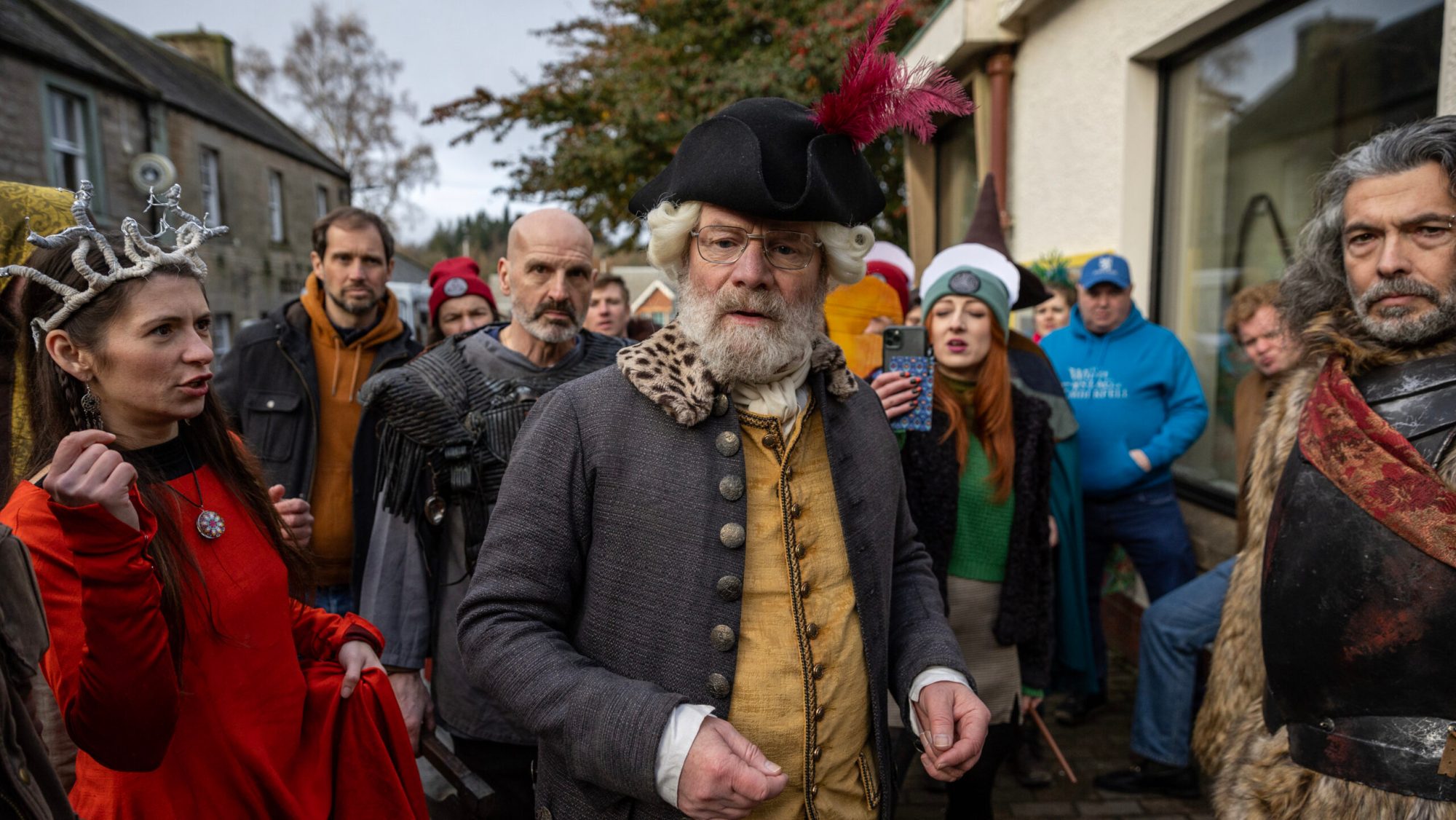
The fictional film The Fall of Sir Douglas Weatherford, directed by Seán Dunn, makes its world premiere at the International Film Festival Rotterdam (IFFR) on 30 January 2024. This feature debut explores the boundaries between fact and fiction, utilizing a mix of costumes, cosplay, and dark humor to delve into how personal and collective identities are shaped by narratives.
Starring acclaimed actor Peter Mullan, known for his roles in My Name Is Joe and Trainspotting, the film is set in the fictional Scottish village of Arberloch. The plot centers around a local tour guide named Kenneth, portrayed by Mullan, who dresses as Sir Douglas Weatherford, an 18th-century inventor and philosopher. Kenneth’s life takes a turn when a fantasy television show, based on the fictitious series The White Stag of Emberfell, descends upon the village, bringing with it a wave of flamboyantly dressed fans and overshadowing the local mythology.
Exploring Identity Through Narrative
The film tackles complex questions about identity and the stories we cling to, as Kenneth grapples with the reality that the world he knows is shifting. The irony lies in how the mythology surrounding Sir Douglas Weatherford is eclipsed by a fantasy narrative that resonates more with contemporary audiences. IFFR describes the film as “a darkly comic study of aging, identity and the fictions we cling to when everything around us shifts.”
Dunn’s inspiration for the film stemmed from a visit to a historic graveyard in Edinburgh with his wife, who is a fan of the Harry Potter series. They encountered a gravestone inscribed with the name Thomas Riddle, which Dunn’s wife recognized as the real identity of Voldemort. This revelation sparked Dunn’s interest in how history can be overshadowed by fiction, particularly in the context of Scotland’s own complex past.
“What is fantasy, and what are the stories we tell ourselves? And history is a fantasy as well, in its own way,” said Dunn.
Dunn further elaborates on Scotland’s narrative, noting how the nation often perceives itself in relation to its larger neighbor, England. He pointed out the cultural implications of Scotland’s history, suggesting that while the nation prides itself on egalitarianism, it has also participated in imperial endeavors.
Collaborating with Talent
The collaboration with Mullan has been a highlight for Dunn, who admires the actor’s ability to improvise and enrich the script with his insights. Mullan’s experience with fantasy roles, particularly as King Durin III in The Lord of the Rings: The Rings of Power, adds another layer to his performance as Kenneth.
Dunn expressed his appreciation for Mullan, stating, “He’s such a great, great actor. I feel really lucky and fortunate that he agreed to do it.” Mullan’s improvisational skills contributed significantly to the film’s dynamic, making the creative process enjoyable for the director.
With a history of appreciating fantasy narratives, Dunn shares his mixed feelings towards franchises like Game of Thrones. While he acknowledges their cultural impact, he is more interested in the sociological aspects and how communities adapt to these narratives for tourism. “I was more interested in the sociological aspect,” he remarked about the phenomenon of location tours in Northern Ireland following the show’s production.
As the film progresses, Kenneth faces an existential crisis, forcing him to confront his beliefs and the evolving nature of identity in a rapidly changing world. Dunn believes this theme resonates with many viewers, especially in light of the tumultuous cultural shifts of the past decade.
Looking ahead, Dunn is already working on new projects. He has written several scripts, including one set in the late 19th century that explores themes of identity and guilt. Another project involves a character caught up in conspiracy theories during the Y2K era. “I’m just trying to be creative and keep the juices flowing,” he stated.
With its unique take on fantasy and identity, The Fall of Sir Douglas Weatherford promises to engage audiences at IFFR and beyond, marking a significant entry in the contemporary cinematic landscape.